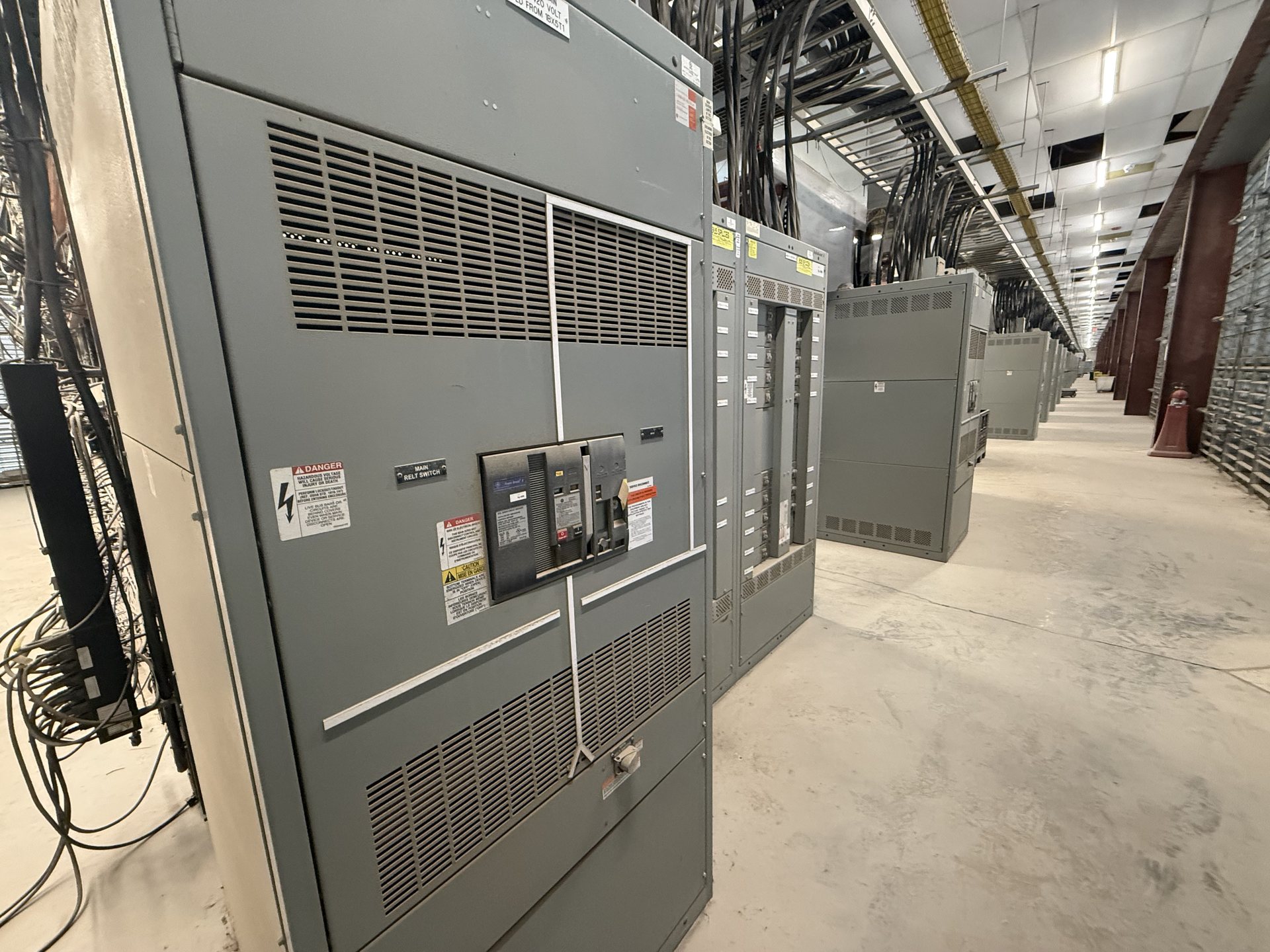
When the MCC Appears in a Compressed-Air Inventory
A motor control center may appear in an industrial surplus inventory because existing records associate it with compressed-air equipment. That association is a useful starting point, not proof that every item nearby belongs in the electrical lot. In a hypothetical Florida facility, the inventory could identify an MCC serving air-system motors while listing compressors separately. Keep the recorded relationship clear and mark ownership or inclusion questions as unresolved until reviewed.
The MCC itself may comprise multiple vertical sections, removable buckets, or other components, depending on its configuration. Record the sections and buckets as they are identified in accessible records or existing photographs; do not infer a complete count from a partial view. If labels name a room, process, or air-system function, preserve the wording. Unknown configuration, condition, and voltage should remain unknown rather than being filled in by assumption.
Build an Inventory Around Sections and Buckets
A section-by-section schedule helps distinguish a complete-looking group from a partial surplus lot. Use existing asset registers, drawings, or photographs to note section identifiers and any bucket labels that are legible in those materials. If records show only some buckets, say that the remaining positions are undocumented instead of treating them as empty or included. This supports a review of the actual offer scope without asking the seller to inspect equipment.
Where available records identify voltage class, include it as recorded and connect it to the relevant section or equipment group. MCCs may be encountered across different voltage classes, but the applicable class for a particular asset cannot be assumed from its compressed-air role. If voltage is absent, conflicting, or unclear, label it unknown or disputed. Florida Switchgear Buyers considers used, surplus, and decommissioned switchgear and related equipment in all voltage classes, subject to review.
Preserve Labels and Known Accessories
Labels can help explain how a bucket or section was described in the facility’s records, even when the equipment’s present condition or intended use has not been verified. Transcribe accessible label information faithfully, including abbreviations, and distinguish recorded wording from an owner’s interpretation. A note such as “air compressor” may identify an association, but it should not be expanded into an unsupported motor rating, control function, or compatibility claim.
List accessories only when existing documentation or photographs identify them, and indicate which section or bucket each item is associated with if that relationship is documented. A schedule might distinguish recorded accessories from items merely visible in a broader room photograph. Do not assume that loose components belong to the MCC, or that a listed accessory is present now. Missing records and uncertain associations are useful facts for review, not reasons to manufacture a complete package.
Separate MCC Equipment from Compressors
A compressed-air inventory can combine electrical controls with mechanical equipment, but the two should not automatically be treated as one sale lot. Identify compressors separately and state whether they are offered, excluded, or still under consideration. If ownership records do not resolve the question, mark inclusion unknown. This distinction allows the proposed electrical equipment scope to be reviewed without implying that a compressor is part of an MCC purchase.
The same separation applies to piping, air receivers, building systems, and other facility contents that may appear in a common decommissioning list. Florida Switchgear Buyers buys electrical switchgear and related equipment; a possible purchase of an MCC does not amount to a commitment to buy every asset associated with compressed air. Nor is equipment purchasing and removal a general facility demolition or decommissioning service. Describe the electrical lot specifically and leave other scope questions explicit.
Share Existing Information Without Testing
For an initial review, owners can share accessible photographs and documentation already on hand, such as inventory sheets, labels recorded in images, or relevant equipment schedules. Helpful context may include known section and bucket counts, listed accessories, recorded voltage, and the separate status of compressors. If a detail is unavailable, say so. Sellers do not need to test equipment, produce new measurements, or establish operating condition for an inquiry.
Electrical equipment can present serious hazards, so only qualified professionals should handle it. Do not open, energize, isolate, disconnect, move, or otherwise handle an MCC to answer inventory questions or obtain photographs. Any necessary work on purchased equipment is handled by qualified personnel as part of the purchased-equipment process. That boundary keeps an information request separate from electrical work and avoids asking an owner to take unsafe steps for a possible sale.
Review the Lot and Consider the Purchase Scope
Florida Switchgear Buyers makes cash offers for equipment it elects to purchase and pays upfront for purchased equipment. Whether an MCC, particular sections, buckets, or documented accessories are included depends on review; an inventory entry alone is not acceptance. If equipment is purchased, the company handles crane, rigging, disconnects, loading, freight, and hauling for those purchased assets. This concerns the purchased equipment, not unrelated compressors or general facility demolition.
Owners considering a surplus or decommissioned MCC can send the records they already have for review and identify what remains uncertain. Contact Florida Switchgear Buyers at (614) 715-3047 or saleselectricalbuyers@gmail.com. Include a clear separation between the electrical lot and any compressors not offered, where that is known, and avoid presenting estimates as verified facts. The resulting discussion can focus on the assets actually proposed for purchase and the information available about them.