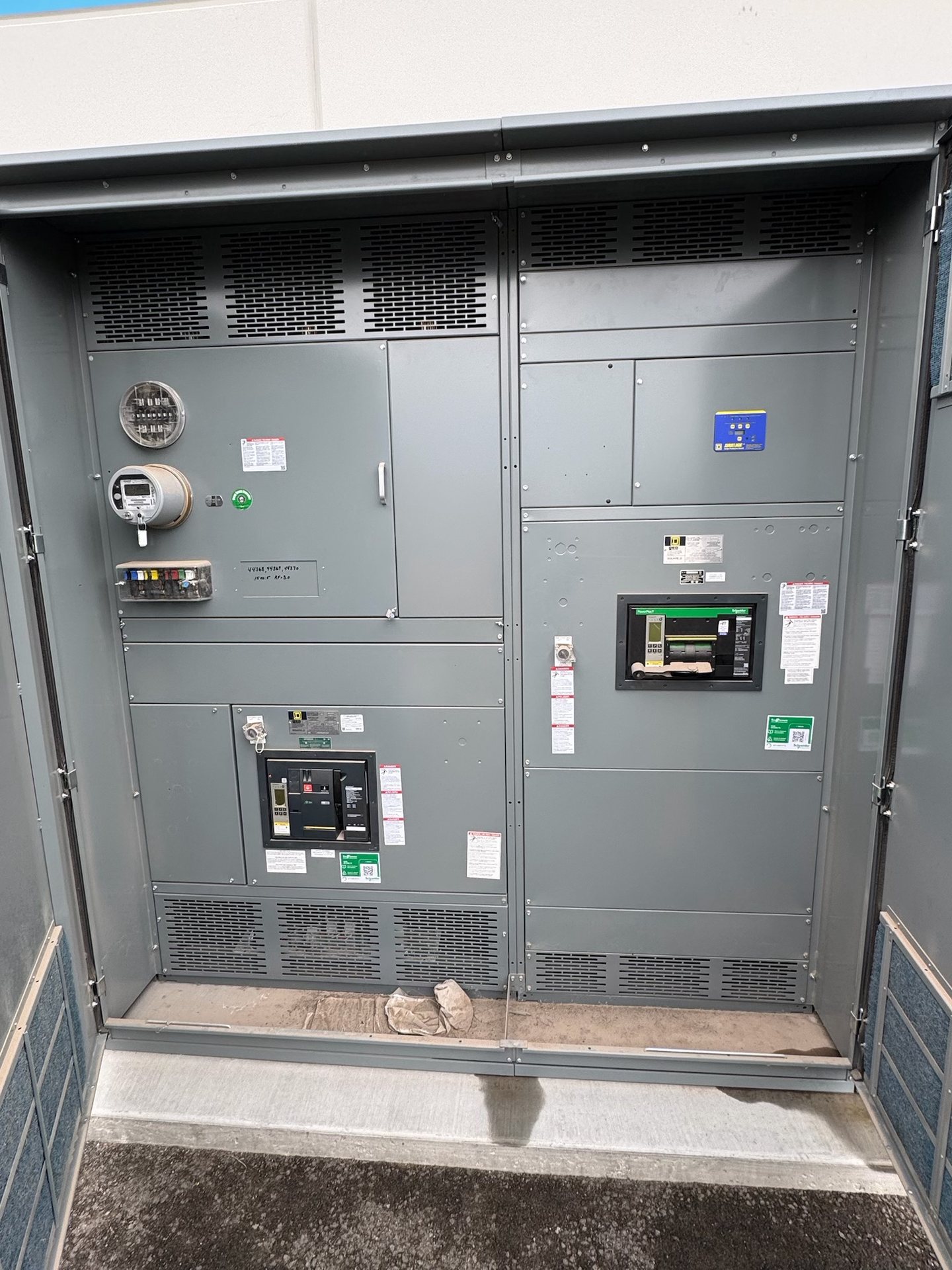
Start with the lot boundary
For a hypothetical Florida power plant, begin by defining what the proposed lot includes—not by treating every electrical asset in a room or building as part of one sale. A seller might group switchgear lineups, motor control centers (MCCs), and separately stored breakers, while excluding equipment whose ownership or disposition is still under review. That boundary helps the decision maker authorize a clear set of assets for buyer review.
A useful handoff distinguishes equipment being considered for purchase from the wider decommissioning work at the facility. Florida Switchgear Buyers purchases used, surplus, and decommissioned switchgear and related equipment, including equipment from closed power plants. This is an equipment transaction, not a proposal to demolish a plant or perform general electrical services. The specific assets offered for purchase remain subject to review.
Sort by equipment type and visible rating
Organize the inventory by asset type before combining items into a lot. Identify switchgear as switchgear, MCCs as MCCs, and standalone or spare breakers as breakers when that distinction is visible from existing records or photographs. If a breaker appears to belong to a lineup, note that relationship as reported rather than silently counting it as a separate asset; the buyer can then review the lot structure against the available information.
For each group, transcribe voltage or other ratings only when they are legible in accessible documentation or existing photographs. Keep the wording tied to its source—for example, “rating shown on nameplate photo” differs from a value copied from an older schedule. Do not infer a rating from equipment appearance or neighboring gear. If a label cannot be read, mark the rating unknown rather than filling the gap with an estimate.
Make mixed-voltage groupings legible
A lot containing more than one voltage class should show those differences explicitly. A simple inventory can separate assets into rating groups while retaining each item’s type and any available identifier. That structure gives the decision maker a way to confirm what is actually being offered and helps the buyer assess the proposed mix without assuming that equipment with similar housings, functions, or locations has matching ratings.
If records describe a lineup as one assembly but photographs show multiple sections or separate devices, preserve both pieces of information and flag the mismatch for review. Do not resolve conflicting descriptions by selecting whichever rating seems more plausible. The seller can identify which document or image supplied each detail; the buyer can review the discrepancy before determining whether any of the described equipment fits the purchase scope.
Track records, gaps, and authority to offer
The information handoff may involve a person compiling records, a decision maker confirming which assets may be offered, and a buyer reviewing the proposed lot. Keep those roles distinct. An inventory prepared for convenience is not itself confirmation that every listed item is available for sale. Where authority, ownership, or disposition is unresolved, label the affected assets accordingly and wait for the appropriate decision maker to clarify the offer boundary.
Records may be incomplete, outdated, or inconsistent. Note missing drawings, unreadable identifiers, discrepancies between a schedule and a photograph, or uncertainty about whether a breaker is included with a lineup. These are information gaps, not findings about equipment condition. Existing accessible documents and photographs may be shared; seller testing is not required, and missing facts should remain identified as unknown rather than being presented as verified.
Share information without handling equipment
The seller’s role can remain documentary: provide existing accessible records and photographs, describe how the proposed lot is organized, and identify questions that still need an authorized answer. Do not open, energize, test, isolate, disconnect, move, or otherwise handle equipment to prepare the inquiry. Only qualified professionals should handle electrical equipment, and no seller testing is necessary for Florida Switchgear Buyers to consider a purchase.
When equipment is purchased, Florida Switchgear Buyers handles the associated crane, rigging, disconnects, loading, freight, and hauling for those purchased assets. That does not mean every asset shown in an inventory will be accepted, or that the company undertakes facility-wide removal or demolition. The offer and precise purchase scope depend on review, so the written asset list should distinguish items proposed from items confirmed for purchase.
Set a clear review handoff
A concise handoff can pair the asset grouping with its visible rating, available identifier, source of information, and any unresolved question. For example, a hypothetical lot might list one group of switchgear, a separate MCC group, and breakers whose relationship to either group is uncertain. Use that grouping to identify the items offered, link each to available records, and flag uncertain relationships for review.
For review of used, surplus, or decommissioned electrical equipment in any voltage class, contact Florida Switchgear Buyers at (614) 715-3047 or saleselectricalbuyers@gmail.com. The company makes cash offers and pays upfront for equipment it purchases. Any offer and the exact assets included are contingent on review; the information provided helps clarify the proposal but does not establish acceptance, value, or timing.