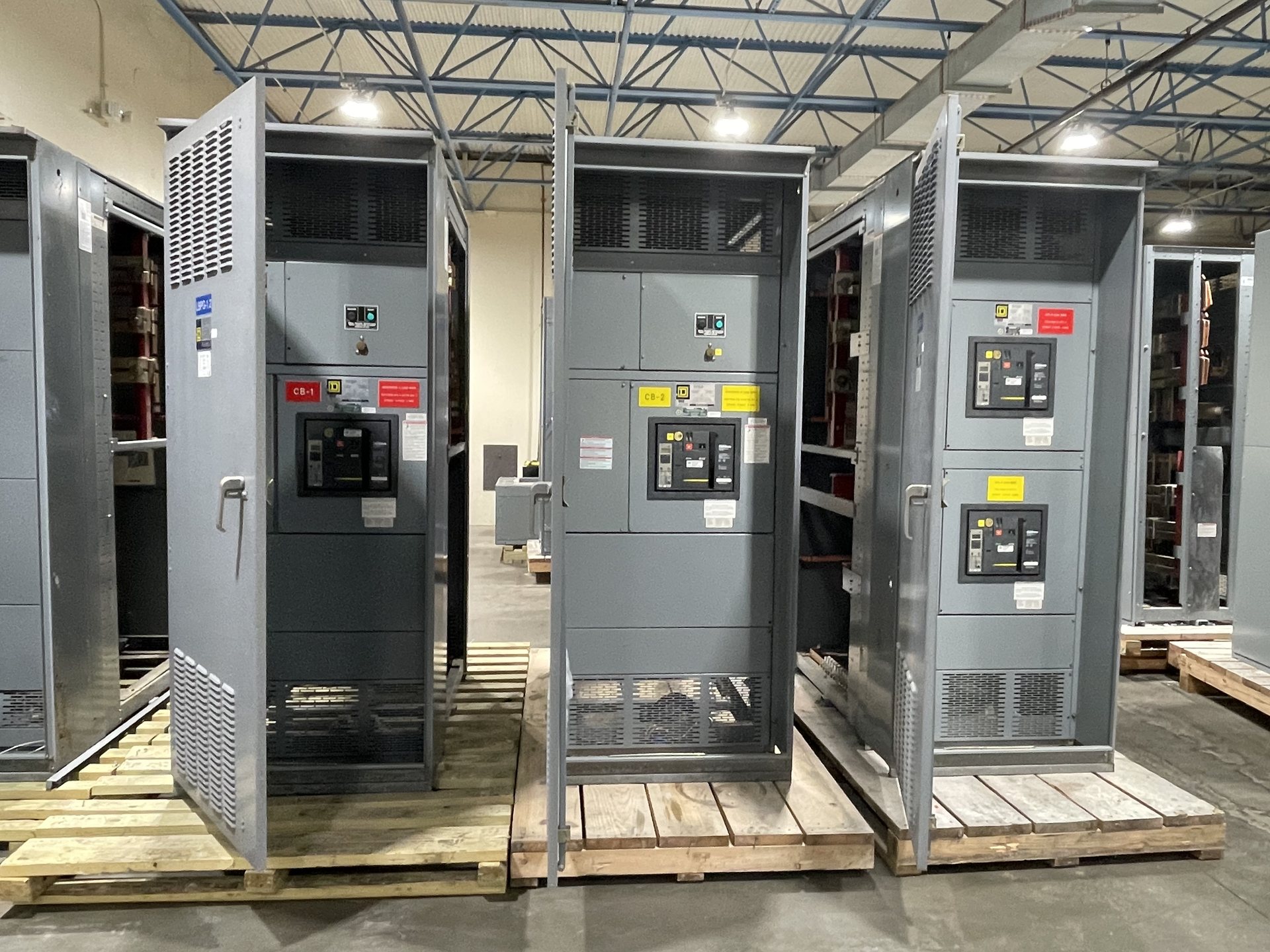
Separate the stored spares from the lineup
Imagine a hypothetical Florida power plant preparing to offer electrical equipment after a planned closure. Its owner must decide whether to describe a cabinet of stored spare breakers as part of a switchgear lineup or as a separate group. That distinction matters: a spare may be associated with a lineup in records, but its presence in storage does not establish that it matches, fits, or operates with equipment still documented in the lineup.
Start with how each breaker is represented in the available records, not with an assumption about its intended use. A breaker listed on a lineup schedule may be an installed or lineup-associated asset; a breaker recorded in a storeroom inventory may be a spare. If labels or records do not make that distinction clear, preserve the uncertainty. Do not combine separate groups merely because their descriptions appear similar.
Build a count that can be explained
For each group, record the count supported by an existing inventory, schedule, or other accessible documentation. Keep the lineup count separate from the stored-spare count, and note whether either figure is documented, estimated from a record, or unknown. If paperwork lists a quantity but no current visual record is available, say what the paperwork states rather than presenting the count as independently verified.
A count is more useful when its boundaries are clear. For example, a record might list breakers under one lineup designation while a separate storeroom list gives a quantity without identifying the related lineup. Report those as two documented entries and leave the association open. If a count cannot be established from information already available, mark it unknown; sellers do not need to inspect or handle equipment to fill the gap.
Preserve labels and identifiers as found
Existing photographs can help reviewers distinguish a lineup designation, a breaker label, and a storage identifier. Share accessible images of labels and records if available, along with the wording as it appears. Do not infer that two differently recorded identifiers refer to the same asset, and do not silently correct a label that appears inconsistent. A transcription marked uncertain is more useful than a confident but unsupported interpretation.
Keep descriptions tied to what can be read or documented. A label may identify a manufacturer, model, or other designation, but that information alone does not establish compatibility, condition, or operability. Brand names, when present, serve only to identify equipment; they do not imply affiliation or endorsement. If a photograph is unavailable or a marking cannot be read in existing records, state that plainly instead of supplying a likely value.
Describe associations without asserting a match
A stored spare may be associated in records with a particular lineup, but that association is not confirmation that it is interchangeable with a breaker shown in the lineup documentation. Preserve the source of the association: for example, identify it as a note on an inventory or a reference in a schedule, if that is what the accessible record says. If no source is available, describe the relationship as unknown rather than presenting a match as established.
The same care applies when records use similar descriptions for a lineup breaker and a spare. Similar wording can support a useful review lead, not a conclusion about physical fit or suitability. A seller can provide the documents and photographs already accessible and flag conflicting descriptions. No seller testing is necessary, and nobody should be asked to energize, open, isolate, disconnect, move, or otherwise handle equipment to establish a relationship.
Make gaps visible in the offer information
A concise record can distinguish confirmed documentation from unanswered questions: lineup designation, documented breaker count, stored-spare count, readable identifiers, recorded associations, and unknowns. These are reporting fields, not claims that every facility has complete records. If a schedule is missing, a label is illegible in an existing photograph, or an inventory does not tie a spare to a lineup, name that limitation directly rather than filling it with an assumption.
Uncertainty does not by itself determine whether equipment will be considered. Florida Switchgear Buyers reviews used, surplus, and decommissioned electrical switchgear and related equipment in all voltage classes, including equipment from decommissioned data centers and closed power plants. Any offer, and the precise assets included, depends on review. A documented gap should therefore be presented accurately; it should not be converted into a claim about acceptance, value, condition, or operability.
Plan the handoff around purchased assets
When discussing a possible purchase, identify which breakers or lineup assets are being offered and keep separate groups distinct in the records. Florida Switchgear Buyers makes cash offers and pays upfront for equipment purchased. For purchased equipment, it handles crane, rigging, disconnects, loading, freight, and hauling; this is equipment purchasing and removal for assets bought, not a promise of wholesale facility demolition or general electrical service.
Only qualified professionals should handle electrical equipment. Sellers need not test equipment, and should not be directed to perform live-equipment checks or physical handling to prepare an offer. To share existing accessible records or photographs and discuss which assets may be reviewed, contact Florida Switchgear Buyers at (614) 715-3047 or saleselectricalbuyers@gmail.com. The specific equipment considered remains subject to review; no acceptance or schedule is guaranteed.