Decide What Is Actually Being Offered
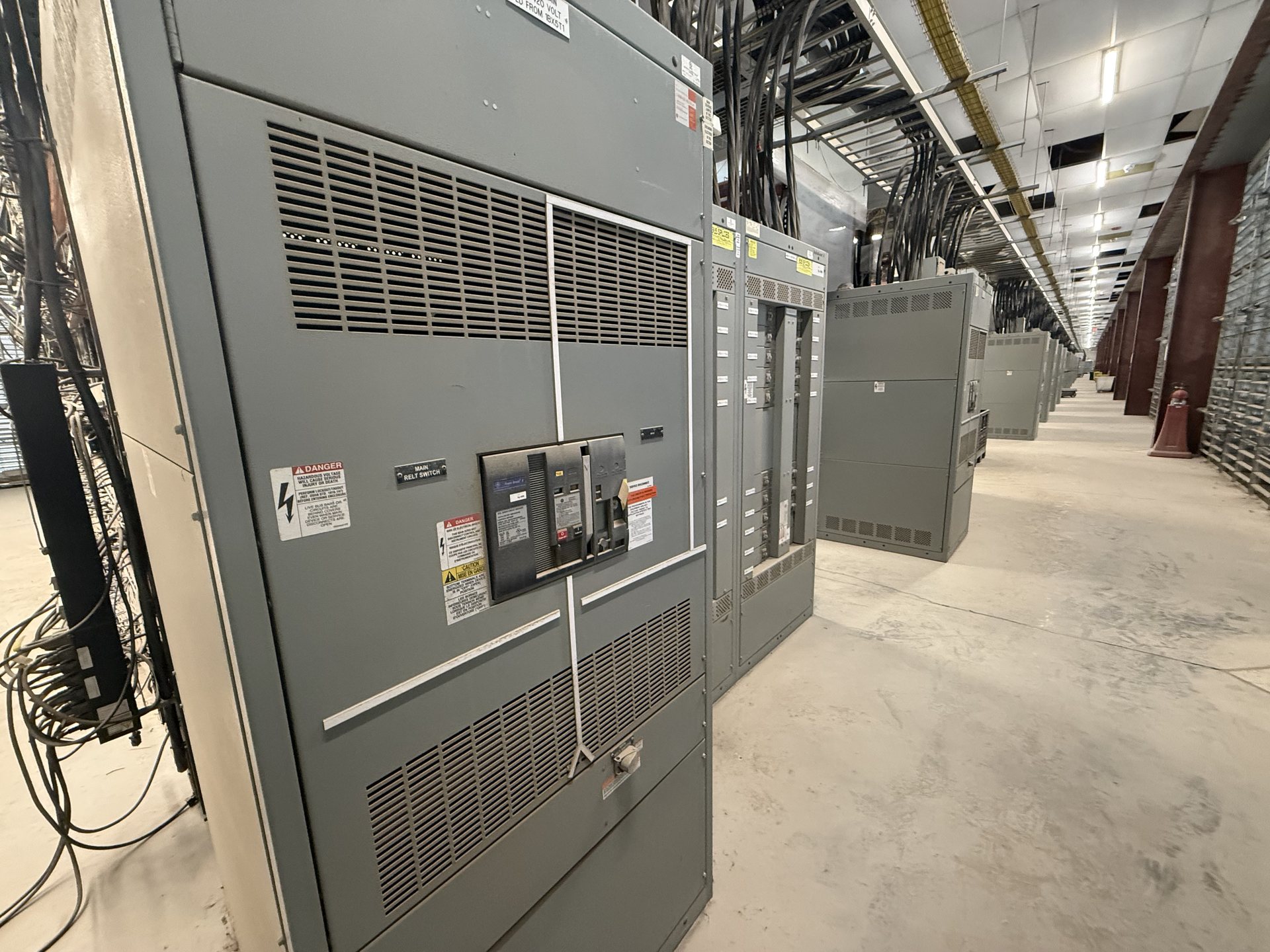
Imagine a hypothetical Sebring warehouse owner reviewing a stored electrical inventory before deciding whether to seek a sale. The owner sees a complete lineup in one area, loose switchgear sections elsewhere, and spare breakers kept separately. Treating all of it as one undifferentiated lot could obscure what is present and what should be considered together. A clear first step is to describe each group as it is currently stored, without disturbing it.
A lineup may represent an assembled or associated group, while individual sections may be stored apart or lack known companions. Spare breakers are separate items and should not be assumed to match a lineup merely because they are nearby. The seller can identify these categories in ordinary language and note which items appear grouped together. Whether components are suitable or complete remains for review; appearance alone does not establish compatibility or value.
Create an Inventory That Reflects the Storage Layout
Record quantities by category: for example, the number of apparent lineups, individual sections, and spare breakers, using “unknown” where counting is not possible from accessible records or views. If sections are kept in different warehouse areas, label those groups separately rather than combining them into a single count. This helps a buyer assess the proposed scope and reduces the chance that a separate item is accidentally treated as part of another group.
Use existing labels, records, or photographs that are already accessible. Visible manufacturer names and rating information can be transcribed as shown, with unclear characters marked uncertain instead of guessed. A rating on one section should not be attributed to every stored section or breaker unless documentation supports that connection. If labels are obscured or unavailable, report that limitation; the seller does not need to open equipment or perform any inspection to fill the gap.
Keep Identity, Quantity, and Grouping Distinct
A useful inventory entry connects each visible identity to a defined group: a description, apparent quantity, storage grouping, and any legible manufacturer or rating details. If a lineup has identifiable sections, note the count only when it can be established from existing information or an accessible view. Record loose breakers separately, including quantity if known, rather than implying they are included with a lineup or belong to a particular section.
Where paperwork uses different names from warehouse labels, preserve both descriptions and explain that their relationship is uncertain. A seller might have a document listing a lineup and a separate box of breakers, without confirmation that the breakers were supplied for that equipment. Share that distinction rather than resolving it by assumption. Review can then consider the described assets and available evidence, while the precise items considered for purchase remain contingent on that review.
Describe Condition Without Testing
Condition notes should separate known history from present uncertainty. A seller may know that equipment was removed from service, or may simply have inherited a stored inventory with no reliable operating records. State what is known, identify the source if useful, and leave unknown whether the equipment functions, is complete, or has been maintained. No seller testing is necessary, and a lack of test results should not be presented as proof of either failure or readiness.
Photographs already available may help show exterior appearance, labels, grouping, and storage context. They do not establish internal condition or operational performance, and there is no need to create images by opening or handling equipment. If a photo cannot show a rating clearly, note that it is unreadable rather than interpreting it. Only qualified professionals should handle electrical equipment; do not test, energize, isolate, disconnect, move, or open it for an inventory or sale inquiry.
Clarify Warehouse Authority and Access Information
Identify who has authority to discuss the proposed sale and who can coordinate warehouse access, if those are different people. A warehouse contact may control entry without having authority to approve a transaction; conversely, an owner or representative may need to arrange access through another party. Share the relevant names or roles and any known access process through normal business communication, without assuming a visit or access arrangement has been approved.
Useful access information can include the warehouse contact, applicable entry requirements, and whether the stored groups can be viewed from an existing permitted area. Mark details that have not been confirmed as unknown. Do not promise that equipment can be reached, loaded, or removed until the buyer has reviewed the assets and access circumstances. This prevents a count or photograph from being mistaken for confirmation that every item is available for purchase or removal.
Request a Purchase Review, Not a Facility Service
Florida Switchgear Buyers purchases used, surplus, and decommissioned electrical switchgear and related equipment in all voltage classes, including equipment from decommissioned data centers and closed power plants. For equipment it purchases, it handles crane, rigging, disconnects, loading, freight, and hauling; this is not a promise to remove items outside the reviewed purchase. The company makes cash offers and pays upfront for equipment purchased. An offer and the precise assets purchased depend on review.
A Sebring seller can share the inventory, existing accessible documentation or photographs, condition uncertainties, and warehouse contact information for consideration. No testing is required, and the seller should leave equipment handling to qualified professionals. To begin a discussion, contact Florida Switchgear Buyers at (614) 715-3047 or saleselectricalbuyers@gmail.com. A review is a basis for considering a potential equipment purchase, not a commitment to buy every listed item or provide general electrical contracting or facility demolition.