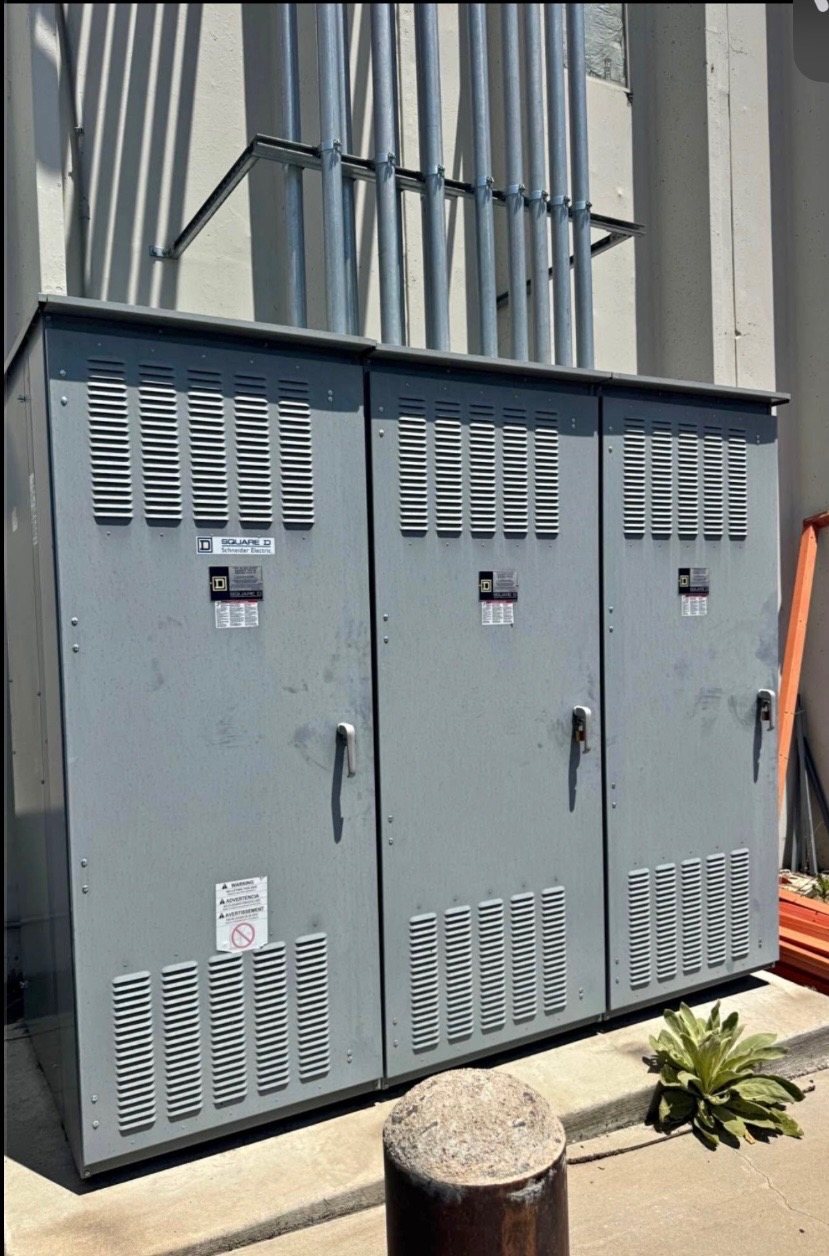
A hypothetical decision: sell the lineup, not the building
Imagine a hypothetical Florida facility preparing to retire a production area. Its owner is considering whether to sell a medium-voltage breaker lineup rather than treat it as part of a broader building-removal decision. That distinction matters: a lineup may contain multiple sections and separately identifiable breakers, and a possible equipment purchase concerns the assets reviewed for purchase—not wholesale facility demolition or general electrical work.
Before describing the equipment, the owner can decide what is known and what remains uncertain. Perhaps a drawing identifies the lineup voltage, while accessible nameplates show model markings for some breakers but not others. The owner need not resolve gaps by testing or handling equipment. Existing records and photographs, if safely available, can help establish what is being offered for review without turning assumptions into specifications.
Separate lineup sections from individual breakers
A medium-voltage lineup is not necessarily one indivisible item for identification purposes. Its sections may have distinct labels or functions, while breakers within those sections may carry their own manufacturer, model, or serial markings. A seller’s inventory is more useful when it distinguishes the overall lineup from each breaker that can be identified in existing records, rather than applying one description to every component.
That distinction also helps avoid overstating what is included. If a facility record names a lineup but does not list its breakers individually, describe the lineup as documented and mark individual breaker identities as unknown. If a breaker appears in a photograph but its marking is unreadable, record that limitation instead of inferring a model. The purchase scope and any offer depend on review of the particular assets presented.
Record voltage and markings as available
Voltage information can come from existing, accessible documentation or clearly readable markings already captured in photographs. Record the wording as shown when possible, and note whether it refers to the lineup or to a particular breaker; those references should not be assumed interchangeable. If documents conflict, identify the discrepancy and provide both references rather than choosing one without support. Missing voltage information is an unknown, not a reason for seller testing.
Model markings can narrow identification, but they do not by themselves establish condition, completeness, compatibility, or value. A useful record may include a transcription of visible manufacturer and model text, alongside the source—for example, an existing equipment schedule or a photograph. Brand names serve only to identify equipment; they do not indicate an affiliation or endorsement. No seller testing is necessary to submit equipment for review.
Make incomplete records useful
Industrial records are sometimes incomplete, especially when equipment has been altered, relabeled, or documented at different levels of detail. A single-line drawing might show sections without listing breaker models; an asset register might name a breaker but omit its section. Share what is available and identify the gap plainly. Do not fill it with a likely-sounding rating, operating history, or configuration that the records do not establish.
Photographs can supplement documents when they already exist and can be shared safely. A wide view may help show how many lineup sections are represented, while existing close views may make markings legible. No one should open, energize, isolate, disconnect, move, or otherwise handle electrical equipment to obtain information. Questions about access or equipment condition belong with qualified professionals responsible for the site.
Distinguish equipment purchase from site work
A possible sale of medium-voltage equipment is not a request for a buyer to demolish a plant, remove unrelated infrastructure, or provide general electrical services. Florida Switchgear Buyers considers used, surplus, and decommissioned electrical switchgear and related equipment across all voltage classes, including equipment from decommissioned data centers and closed power plants. Whether a particular lineup section or breaker is included depends on review of the assets offered.
For equipment purchased, Florida Switchgear Buyers handles crane, rigging, disconnects, loading, freight, and hauling, with purchased-equipment work handled by qualified personnel. The seller is not expected to perform those tasks or test equipment. This boundary is important when planning a facility’s wider retirement: the potential transaction covers only the equipment determined to be purchased, not every activity involved in decommissioning the site.
Prepare a review without assuming an outcome
A concise submission can identify the facility equipment as a medium-voltage lineup, state any documented voltage, distinguish section identifiers from individual breaker identifiers, and flag missing or conflicting information. Include accessible records or photographs if available, and label unknowns directly. Florida Switchgear Buyers makes cash offers and pays upfront for equipment purchased; neither acceptance nor the precise purchase scope is guaranteed before review, and no price or schedule should be assumed.
For a review, contact Florida Switchgear Buyers at (614) 715-3047 or saleselectricalbuyers@gmail.com. A seller can start with the facts already at hand and leave technical verification to qualified professionals. If only the lineup is identified, say so; if particular breakers have readable model markings, list those separately. Clear boundaries between documented facts and unknowns make a possible equipment purchase easier to assess without requiring unsafe investigation.