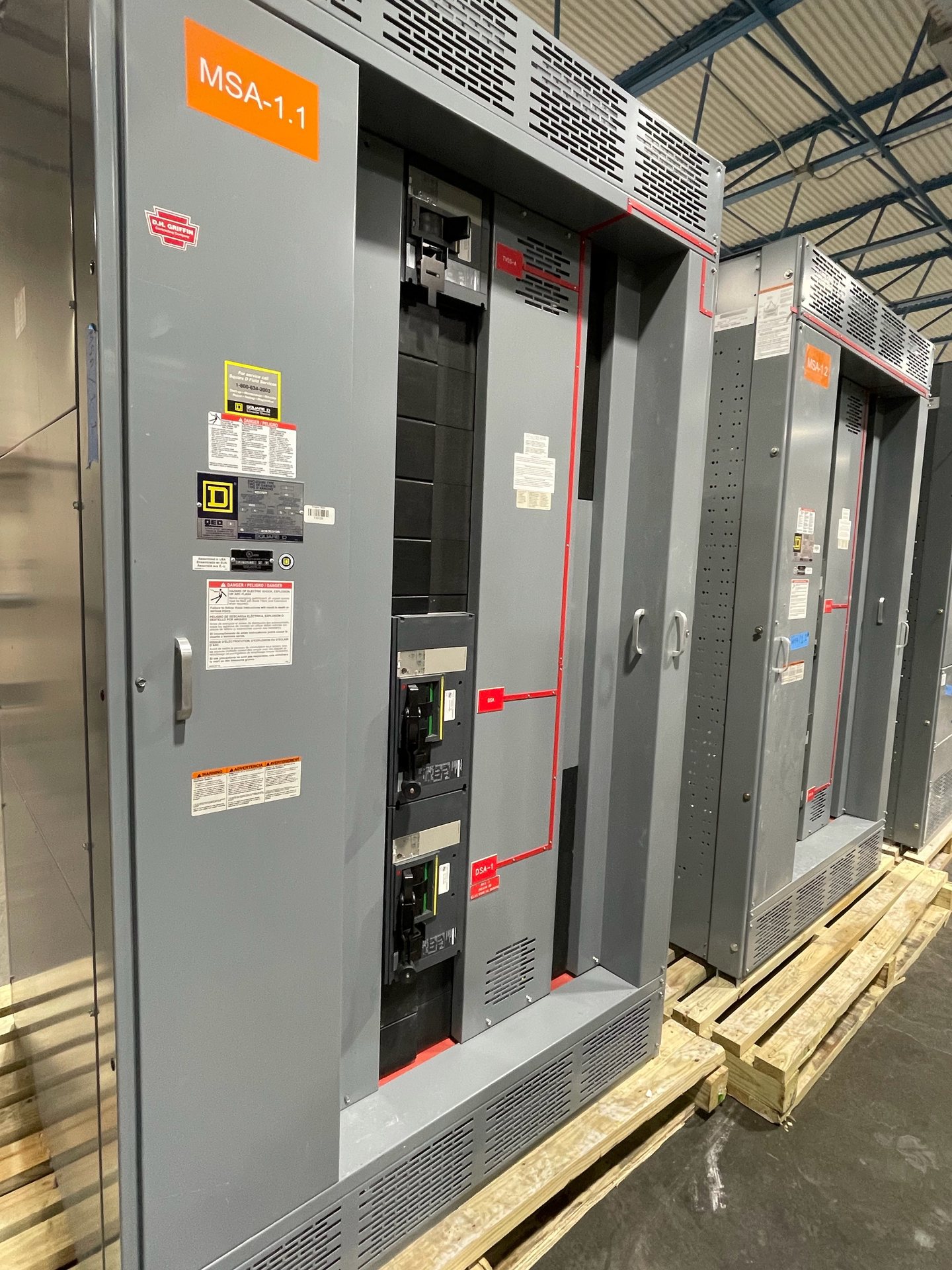
Start with the retirement boundary
Imagine a hypothetical Florida data center preparing to retire one server hall while keeping adjacent halls in service. The owner must decide whether a busway run and several plug-in tap-off units belong in the sale inventory or remain part of the operating facility. That decision begins with the retirement boundary, not with an assumption that every visible busway component is surplus.
Mark each asset in the inventory as retired, retained, or uncertain, using records the facility already has. A run serving both a retired hall and an active area should not be presented as wholly available unless the documentation supports that conclusion. Florida Switchgear Buyers considers used, surplus, and decommissioned switchgear and related equipment, but the precise assets purchased depend on review.
Describe runs separately from units
Record busway runs as identifiable line items rather than combining them with plug-in tap-offs. For each run, note the visible manufacturer or product markings, any legible catalog or identification numbers, stated rating information, approximate quantity or length if documented, and the source of those details. If a marking cannot be read from existing photos or records, enter “unknown” rather than estimating.
List tap-off units separately, with visible markings and quantities where available. A unit’s appearance or location near a particular run does not establish that it fits that run or belongs to it. If an existing schedule or asset record explicitly associates the tap-off with a busway section, preserve that reference; otherwise leave the association unconfirmed for review.
Keep records tied to evidence
Useful supporting material can include accessible asset schedules, removal plans, purchasing records, equipment labels already photographed, or drawings that identify the hall and circuit area. Share only information already available; a seller does not need to test equipment or produce new technical findings. Where records conflict, identify the discrepancy and name each source instead of choosing one as fact.
A practical inventory can distinguish “visible marking,” “recorded specification,” and “unknown.” For example, a drawing may list a run’s rating while a photo shows a different or unreadable label; report both observations and flag the mismatch. This helps reviewers assess what is documented without treating a drawing, an uncertain label, or a seller’s assumption as definitive equipment identification.
Separate retired assets from retained infrastructure
A hall boundary on a floor plan may not align neatly with the busway boundary. If a run crosses from a retired area into a retained one, identify the documented sections and explain where the records place the division. If no record establishes a separable retired section, describe the run as uncertain or retained pending clarification rather than offering an entire shared path as surplus.
The same care applies to tap-offs removed from service but still associated in records with an active run. A unit can be retired while the busway remains in operation; conversely, a tap-off near the retired hall may not be part of its equipment inventory. Keep status, physical grouping in existing records, and any documented association as separate fields so one does not imply another.
Prepare for a purchase review safely
Photographs and records should be gathered only from material already accessible to the seller without approaching, opening, energizing, isolating, disconnecting, or moving equipment. Electrical equipment must be handled only by qualified professionals. No seller testing is necessary. If information cannot be obtained safely or is absent from existing documents, label it unknown and let the review proceed on what is available.
Florida Switchgear Buyers handles crane, rigging, disconnects, loading, freight, and hauling for equipment it purchases. Those activities relate to purchased assets; they do not constitute a general data-center demolition or decommissioning service. The seller’s inventory should therefore identify equipment proposed for purchase, while broader facility retirement work remains a separate matter for the facility’s qualified personnel and contractors.
Submit a clear, bounded inventory
When the inventory is ready, include the facility area identifier, run descriptions, separate tap-off entries, quantities, visible markings, record references, and the retired, retained, or uncertain status of each item. A concise note explaining gaps or conflicting records is more useful than filling blanks with guesses. Florida Switchgear Buyers buys used, surplus, and decommissioned electrical switchgear and related equipment in all voltage classes, including equipment from decommissioned data centers.
For review, contact Florida Switchgear Buyers at (614) 715-3047 or saleselectricalbuyers@gmail.com. The company makes cash offers and pays upfront for equipment it purchases; the offer and exact purchase scope depend on review. An inventory is a basis for that review, not a promise that every listed run or tap-off will be accepted, and no price or schedule should be assumed before assessment.