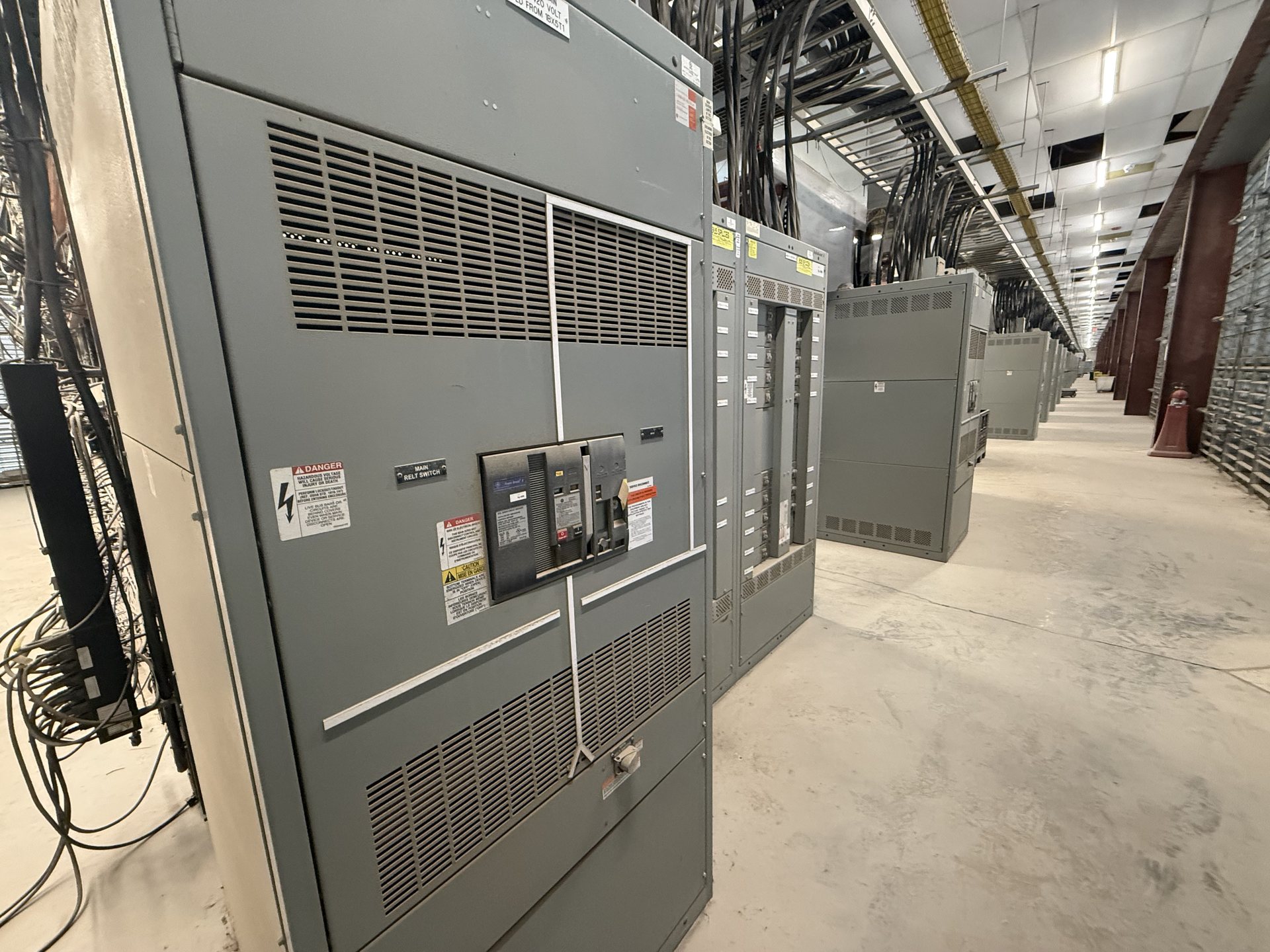
Start with the decision to sell, not an assumed lineup
Imagine a hypothetical Florida data center preparing to retire electrical equipment. Its owner may find a record labeled “tie section” and wonder whether to offer that section alone or describe a larger switchboard lineup. The distinction matters: a tie section is not interchangeable with a main or distribution section, and the label alone does not establish how the lineup is arranged or what equipment is available for purchase.
Before preparing an equipment inventory or inquiry, use existing accessible records to identify each section separately, where those records permit. Describe a main section, tie section, and distribution section as distinct assets rather than combining them under one general switchboard label. If no drawing or record confirms a tie, or whether the lineup has two mains, leave that arrangement unknown instead of treating a familiar configuration as fact.
Separate identification from configuration
A tie section may be identified in a drawing, equipment schedule, or other available documentation, but its presence does not by itself prove a two-main-and-tie arrangement. The lineup could be described incompletely, or the records may not show every connected section. Preserve the wording and context of the source record; do not infer the operating relationship, switching sequence, or section boundaries from a label alone.
When records show several sections, give each one its own description and note how the source identifies it. For example, an inventory could list a recorded main section, a recorded tie section, and a distribution section as separate entries, while stating that the overall arrangement is unconfirmed. If a section cannot be matched confidently to a record, mark the identification uncertain rather than assigning it based on appearance or presumed function.
Capture ratings and drawings that are actually available
Record ratings only when they appear in accessible documentation or are otherwise clearly available to share. Keep each rating with the section it describes; a value listed for one main should not be applied to the tie or distribution section without supporting records. If a rating is missing, illegible, or not linked to a particular section, identify it as unknown or unverified. No seller testing is necessary to prepare this information.
Drawings can help distinguish section labels and show what the records claim about the lineup, but their presence does not settle every question. Note whether a drawing is available and which sections it appears to depict; avoid presenting a partial, outdated, or uncertain drawing as a complete verified configuration. Existing accessible photos may also be shared if available. Do not create new photos by approaching, opening, or handling electrical equipment.
Describe gaps without filling them with assumptions
An inventory is more useful when it separates documented facts from unresolved details. A seller might know that a schedule names a tie section but have no drawing showing its relationship to the mains. In that case, record the named section and the missing relationship as two separate points. Similarly, do not assume that similarly named sections have matching ratings, condition, or contents merely because they appear in one lineup.
Equipment history and present condition may also be incomplete. If the owner does not know whether a section was removed, altered, or left in place, say so rather than treating an old record as proof of current contents. Avoid making claims about operability, compatibility, or value from labels and drawings alone. The buyer reviews the information provided; the offer and the precise assets considered for purchase depend on that review.
Keep seller preparation separate from electrical work
Preparing records does not require the seller to test, energize, isolate, disconnect, move, or open equipment. Only qualified professionals should handle electrical equipment. If information cannot be obtained from existing accessible documentation or photos, it can remain unknown for review. This keeps an inventory focused on what the seller can safely and accurately report, rather than encouraging investigation that requires access to electrical apparatus.
Florida Switchgear Buyers purchases used, surplus, and decommissioned switchgear and related equipment across all voltage classes, including equipment from decommissioned data centers. For equipment it purchases, the company handles crane, rigging, disconnects, loading, freight, and hauling through qualified personnel. Those arrangements concern purchased assets; they are not a promise to accept every listed section or a general facility demolition or decommissioning service.
Present a reviewable inquiry without promising an outcome
A clear submission lets the buyer assess what is being offered: identify the recorded main, tie, and distribution sections separately; include available ratings and drawings; and flag missing or uncertain details. The buyer makes cash offers and pays upfront for equipment purchased. Neither a cash offer nor the purchase of one section establishes that other sections will be included; both the offer and exact purchase scope remain contingent on review.
For a purchase inquiry, contact Florida Switchgear Buyers at (614) 715-3047 or saleselectricalbuyers@gmail.com. Share only records and photos that are already accessible, and distinguish confirmed inventory details from unknowns. A hypothetical facility with a documented tie section can present that section for consideration without claiming a two-main arrangement; if records do not establish the configuration, the review can begin with that limitation plainly stated.