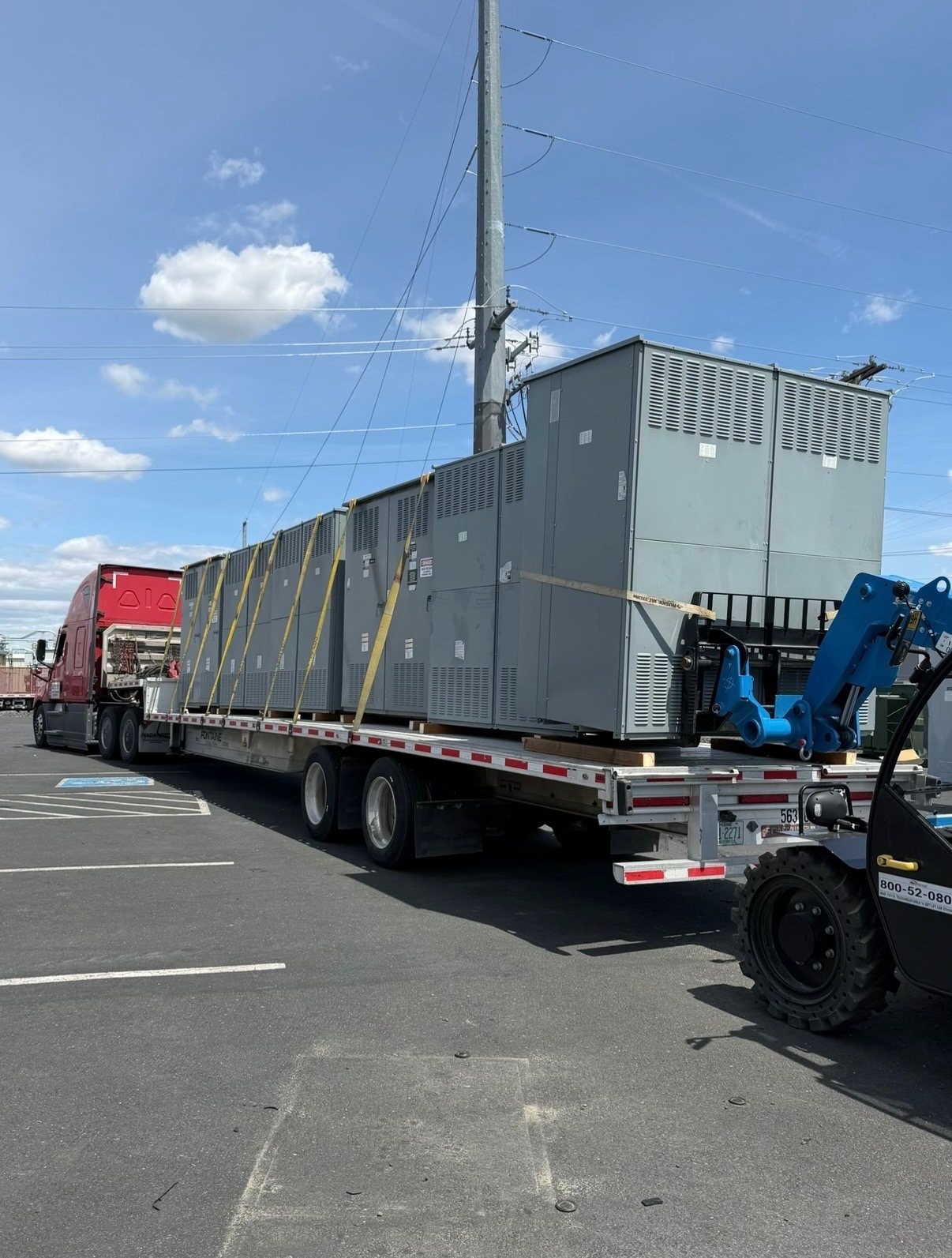
Identify the complete incoming service assembly
An incoming service switchboard inquiry calls for more than a broad equipment label. A facility record may name one switchboard while its drawings, schedules, or asset register describe a main section and several distribution sections separately. Those distinctions help establish what equipment is being considered and whether the proposed sale concerns the complete assembly or only identified portions. Existing records and accessible photographs can provide useful context; unknown details should remain unknown.
For example, a hypothetical Florida facility might have an asset tag for the incoming switchboard, a one-line drawing showing a main section, and a separate schedule listing distribution sections. That does not by itself establish that every listed item is present, included, or still owned by the same party. Compare available descriptions and labels, and note conflicts rather than resolving them through assumptions or by handling the equipment.
Separate main and distribution sections in the records
The main section and distribution sections may be represented differently across documents. One record could treat them as a single asset, while another assigns separate identifiers or describes downstream equipment independently. When seeking review, share the names and identifiers as they appear in each accessible record. If a drawing is old, incomplete, or marked for a different configuration, identify that limitation instead of presenting it as a confirmed description of the current installation.
Photographs already available from a safe, authorized vantage point may help show the arrangement and visible identification labels. They are supplementary, not a substitute for professional assessment, and a photo cannot establish internal condition, operating status, or exact contents. Sellers do not need to open enclosures, test components, energize equipment, or arrange new images. If a section cannot be identified from existing materials, state that plainly and leave confirmation to qualified professionals.
Define ownership and the proposed sale boundary
Before discussing a possible purchase, determine who has authority to offer each identified asset. A facility owner, tenant, equipment lessor, lender, or other party may have different rights in the switchboard and related sections. The records available to a seller may not settle those rights. If ownership is shared, subject to an agreement, or uncertain, flag the issue and obtain the appropriate internal or legal clarification before representing the equipment as available for sale.
The sale boundary matters as much as the asset name. A proposal might concern the incoming switchboard alone, the main and distribution sections together, or only specifically identified equipment. It should not silently include adjacent panels, cables, building systems, or other property merely because they appear in the same room or on a drawing. Florida Switchgear Buyers reviews the described assets, and the precise equipment considered for purchase depends on that review.
Do not infer disconnection or utility ownership
An incoming service position does not establish who owns the equipment or whether it has been disconnected. Records may identify a utility interface, service entrance, or facility equipment without resolving ownership boundaries or present electrical status. Those are separate questions requiring appropriate documentation and qualified professional judgment. Do not treat a label, an old drawing, or a planned facility closure as proof that equipment is safe, disconnected, or privately owned.
If a hypothetical facility’s records conflict about a service boundary, preserve the discrepancy in the inquiry. For instance, one document may list the switchboard as a facility asset while another refers to utility-related equipment nearby; neither wording alone settles the ownership of every section. The seller should not attempt to verify status by operating, isolating, disconnecting, or moving equipment. Any electrical work or assessment belongs with qualified professionals, not a sale inquiry.
Prepare a useful review without seller testing
A concise record package can include the asset register entry, available one-line or layout drawings, section identifiers, and existing photographs. Add the source and date where known, and distinguish recorded facts from estimates or unresolved questions. If documents cover only the main section, say whether distribution sections are separately documented or simply not described in the materials at hand. This makes the scope clearer without implying that missing information has been verified.
No seller testing is necessary. Florida Switchgear Buyers buys used, surplus, and decommissioned electrical switchgear and related equipment across voltage classes, including equipment from decommissioned data centers and closed power plants. It makes cash offers and pays upfront for equipment purchased. Any offer and the exact assets purchased remain contingent on review; no particular condition, acceptance, price, or schedule should be assumed from the records alone.
Distinguish equipment purchase from facility demolition
A possible purchase of a switchboard is not a proposal to demolish a facility or perform general electrical work. For equipment purchased, Florida Switchgear Buyers handles crane, rigging, disconnects, loading, freight, and hauling. That scope concerns the purchased equipment; it should not be read as a commitment to remove unrelated building systems or undertake wholesale decommissioning. The assets and work involved depend on the review and the agreed purchase scope.
Owners considering a sale can describe the incoming switchboard, explain how the records divide its main and distribution sections, and identify any ownership or service-boundary questions that remain open. Existing documentation or photographs may be shared; sellers need not test or handle equipment. For an inquiry, contact Florida Switchgear Buyers at (614) 715-3047 or saleselectricalbuyers@gmail.com. The review can then address which specific equipment, if any, is considered for purchase.