Scope the cubicle and breaker as separate assets
For a hypothetical Florida power plant preparing surplus equipment for review, begin with the items that records actually identify: the generator breaker cubicle, any removable breaker associated with it, and related components whose ownership and inclusion are clear. Treat the cubicle and breaker as distinct offered assets even when they have operated together. This lets a buyer assess the proposed scope without assuming that every component shown in a lineup is included.
Describe the physical boundary using existing drawings, equipment schedules, or accessible photographs rather than estimates. A lineup drawing may show adjacent cubicles, bus connections, or control sections, but a shared illustration does not establish that those items are offered. If the breaker is absent, separately stored, or its status is uncertain, say so. Florida Switchgear Buyers considers used, surplus, and decommissioned switchgear and related equipment in all voltage classes; purchase scope remains subject to review.
Record visible identifiers without handling equipment
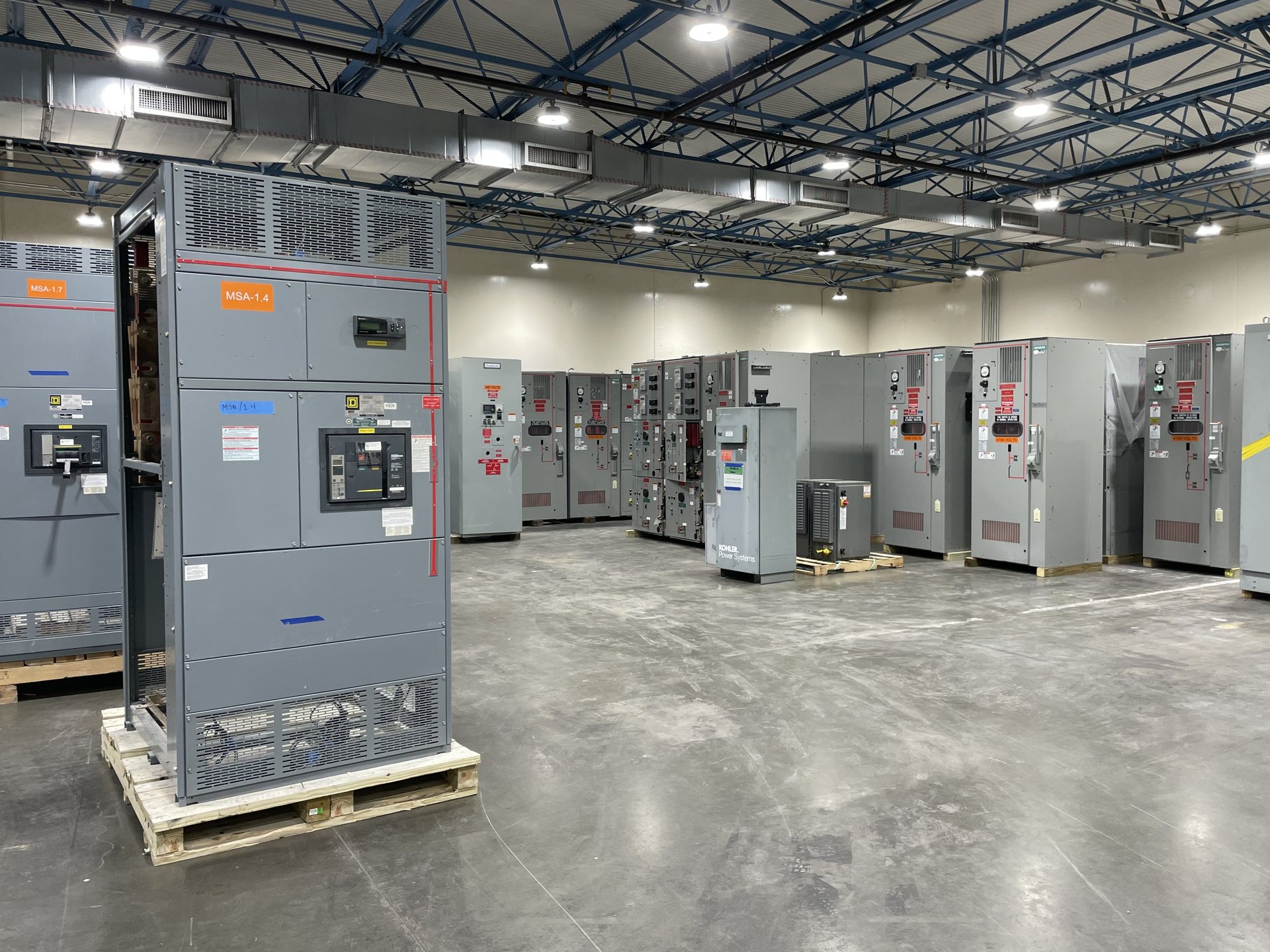
Photographs can help distinguish the offered cubicle from similar sections: useful views may include an existing overall lineup image and close-ups of visible nameplates, labels, or door markings. Share only images already accessible to your staff; do not open a cubicle, remove a cover, or approach equipment to obtain a better view. If a label cannot be read in an existing image, mark the identifier unknown instead of filling the gap from memory.
Record the breaker’s visible identifiers separately from those on the cubicle, where existing documentation or safe, accessible photographs make that possible. A breaker model or rating shown in one record should not be assigned to the cubicle unless the record clearly ties them together. Brand names may help identify equipment, but they do not establish compatibility, condition, or affiliation with the buyer. No seller testing is necessary for a purchase discussion.
Use records to show what is known
A concise document set might include available equipment lists, one-line diagrams, lineup drawings, operating or maintenance records, and prior inventory notes. Send relevant pages rather than treating a large plant archive as proof that every listed item remains present. Where records conflict—for example, one schedule lists a breaker while a later inventory does not—retain the discrepancy and identify the source and date of each record if known.
Separate recorded facts from assumptions about condition or completeness. A document may identify a generator breaker cubicle without confirming that its breaker is present, that controls are included, or that the equipment is serviceable. If the cubicle’s voltage class, configuration, or associated components are not established by available records, label each as unknown. The buyer can review what is provided; a seller does not need to create technical findings or certify performance.
Define controls and uncertain boundaries
Associated controls deserve their own scope line. Existing labels or drawings may indicate control compartments, relays, wiring, or other equipment, but do not assume that every item serving the breaker is part of the cubicle sale. Note whether records identify a control component, whether it is visibly part of the offered assembly, or whether its relationship is unknown. This distinction can prevent an apparently complete offer from silently including equipment the owner has not authorized for sale.
Likewise, distinguish the cubicle from connected bus, cabling, foundations, neighboring switchgear, and plant systems. Those connections can appear together in records while having different ownership or removal boundaries. Do not try to establish boundaries by opening, energizing, isolating, disconnecting, or moving equipment. Only qualified professionals should handle electrical equipment, and any purchased-equipment work is coordinated by qualified personnel rather than treated as seller-directed handling.
Coordinate a purchase, not a plant demolition
Florida Switchgear Buyers purchases equipment, not whole-facility demolition or general decommissioning work. If a hypothetical owner is closing a plant, identify the specific cubicle, breaker, and related equipment proposed for sale; keep unrelated building, site, and system removal outside that equipment scope. The buyer’s review determines which assets, if any, are purchased. For equipment it purchases, the buyer handles crane, rigging, disconnects, loading, freight, and hauling; this does not make the buyer responsible for general plant work.
Before coordinating access, clarify who can provide existing records and who is authorized to discuss the assets. Do not arrange seller testing or ask staff to prepare equipment for removal. Any site access or work involving electrical equipment must be addressed with the owner’s qualified personnel and the buyer’s coordination for assets purchased. The company makes cash offers and pays upfront for equipment purchased, but neither acceptance nor the precise purchase scope is established before review.
Make the first buyer conversation specific
A useful opening conversation can state that the proposed assets are a generator breaker cubicle and, if applicable, a separately identified removable breaker; summarize visible identifiers; and flag missing or conflicting records. Explain what is clearly included, what is expressly excluded, and what remains unknown. This gives the buyer a practical basis to review the opportunity without turning an incomplete inventory into a claim about condition, compatibility, or value.
To discuss a possible sale, contact Florida Switchgear Buyers at (614) 715-3047 or saleselectricalbuyers@gmail.com. Share available documentation and photographs that can be provided safely, and identify which records are uncertain. The buyer can then review the proposed equipment and determine whether to make an offer and which assets it may purchase. No seller test or live-equipment handling is required; any purchase and associated removal remain contingent on that review.