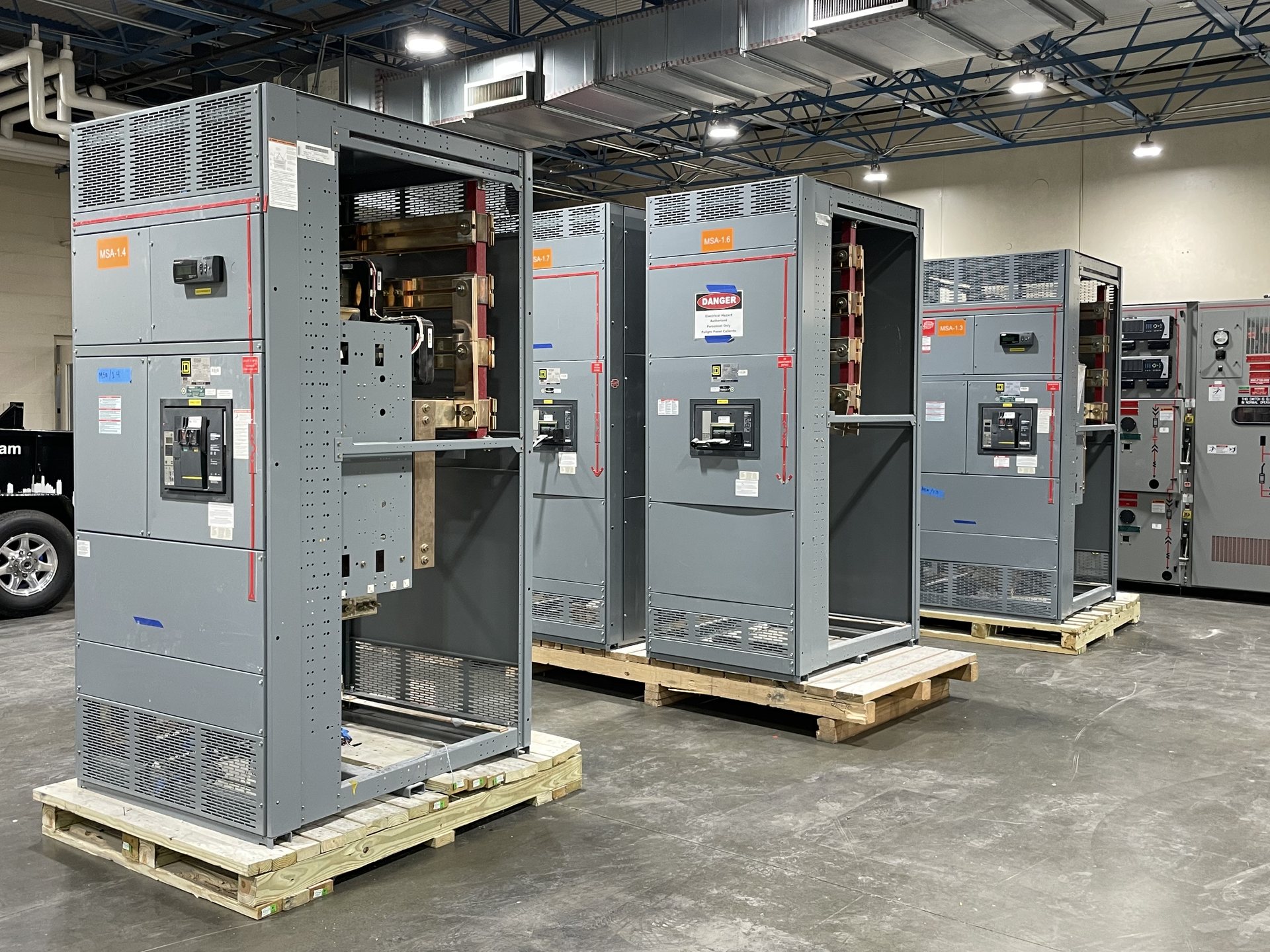
Define the feeder lineup, not just the voltage class
An auxiliary medium-voltage feeder inquiry is easier to assess when it describes a coherent lineup rather than naming a voltage class alone. For a hypothetical Florida power plant, existing one-line diagrams or equipment schedules may identify the feeder lineup’s nominal voltage and the section IDs assigned to its cubicles. Those records can help distinguish the lineup from other switchgear in the same building, without assuming that every adjacent section is included in the sale.
Share accessible records and photos already available, and identify which document or image supports each detail. If a section label is obscured or a schedule appears outdated, mark the point unknown instead of inferring it from neighboring equipment. Florida Switchgear Buyers reviews used, surplus and decommissioned switchgear in all voltage classes, but the specific assets considered for purchase depend on review. Seller testing is not required.
Count breakers against the sections they serve
Breaker quantity is useful, but a bare count can conceal important differences in scope. If a lineup schedule lists feeder breakers by section, provide that count alongside the section IDs and note whether the record includes spare or otherwise unassigned breaker positions. A hypothetical lineup with several feeder cubicles and one spare position should not be described as having an additional feeder breaker unless the available record establishes that distinction.
Where records and visible nameplates do not agree, preserve both observations and label the discrepancy. A photo might show a breaker identifier that is absent from an older schedule; that does not establish whether the breaker was replaced, reassigned or removed from service. Do not open compartments or handle equipment to resolve the conflict. Qualified personnel handle work on purchased equipment, while the review can proceed using existing accessible information and clearly stated unknowns.
Separate sale candidates from retained station assets
At a power plant, nearby equipment may still serve station loads even when a feeder lineup is being considered for sale. The inquiry should therefore distinguish the sections proposed for review from assets the owner intends to retain, such as a section identified in records as serving a continuing auxiliary load. A physical boundary or shared arrangement may not be apparent from a broad equipment-room photo, so state the intended scope section by section where records allow.
If the owner has not determined whether an adjacent section is releasable, describe it as excluded pending a decision rather than quietly including it in the candidate count. That makes the difference between the proposed purchase scope and the wider station installation clear. Florida Switchgear Buyers buys equipment, not whole-facility demolition or general electrical services. Any offer and the precise assets purchased are contingent on review; listing an item does not establish acceptance.
Use records to describe condition without testing
For this inquiry, useful condition context is what the owner already knows from accessible records, prior documentation or existing photographs—not a new seller inspection or test. A maintenance record may state that a breaker was last documented at a particular time, while a photo may show exterior condition. Present the source and date if known, and avoid turning a past record into a claim about current operating condition.
Missing test reports, incomplete maintenance files or uncertain service history should be identified plainly. Do not energize, isolate, open, disconnect or move equipment to supply missing details. No seller testing is necessary for a purchase inquiry. If a record gives a voltage or section identifier but does not establish breaker configuration, keep those as separate facts; the reviewer can assess the available information without treating an unknown as a confirmed specification.
Explain release timing as a planning uncertainty
A decommissioning plan may release feeder sections in stages, or the owner may still be coordinating which assets remain necessary. For a hypothetical Florida facility, distinguish the date a section is expected to become available from the date the owner has actually authorized its release. If the sequence depends on an internal decision or another station requirement, describe that dependency without presenting a projected date as settled.
Timing matters because equipment cannot be treated as available for purchase merely because it appears on a surplus list. State whether the release is confirmed, conditional or not yet determined, and update the review if that status changes. Florida Switchgear Buyers handles crane, rigging, disconnects, loading, freight and hauling for equipment it purchases. Those arrangements concern purchased assets; they do not constitute a promise of a removal date or a service for equipment outside the agreed purchase scope.
Submit a reviewable scope and confirm the next questions
A concise inquiry can bring together the feeder lineup’s documented voltage, section IDs, associated breaker count, retained sections and release status. Attach only records or photos already accessible, and label uncertain points so the review can focus on the actual scope rather than assumptions. If breaker identity or a boundary remains unclear, describe the discrepancy instead of expanding the candidate list to cover every possible interpretation.
For a purchase review, contact Florida Switchgear Buyers at (614) 715-3047 or saleselectricalbuyers@gmail.com. The company makes cash offers and pays upfront for equipment purchased; any offer and the exact equipment included remain subject to review. Qualified personnel handle work on purchased equipment. The owner does not need to test or handle the lineup to begin discussing it, and the inquiry does not imply that every listed section will be purchased.