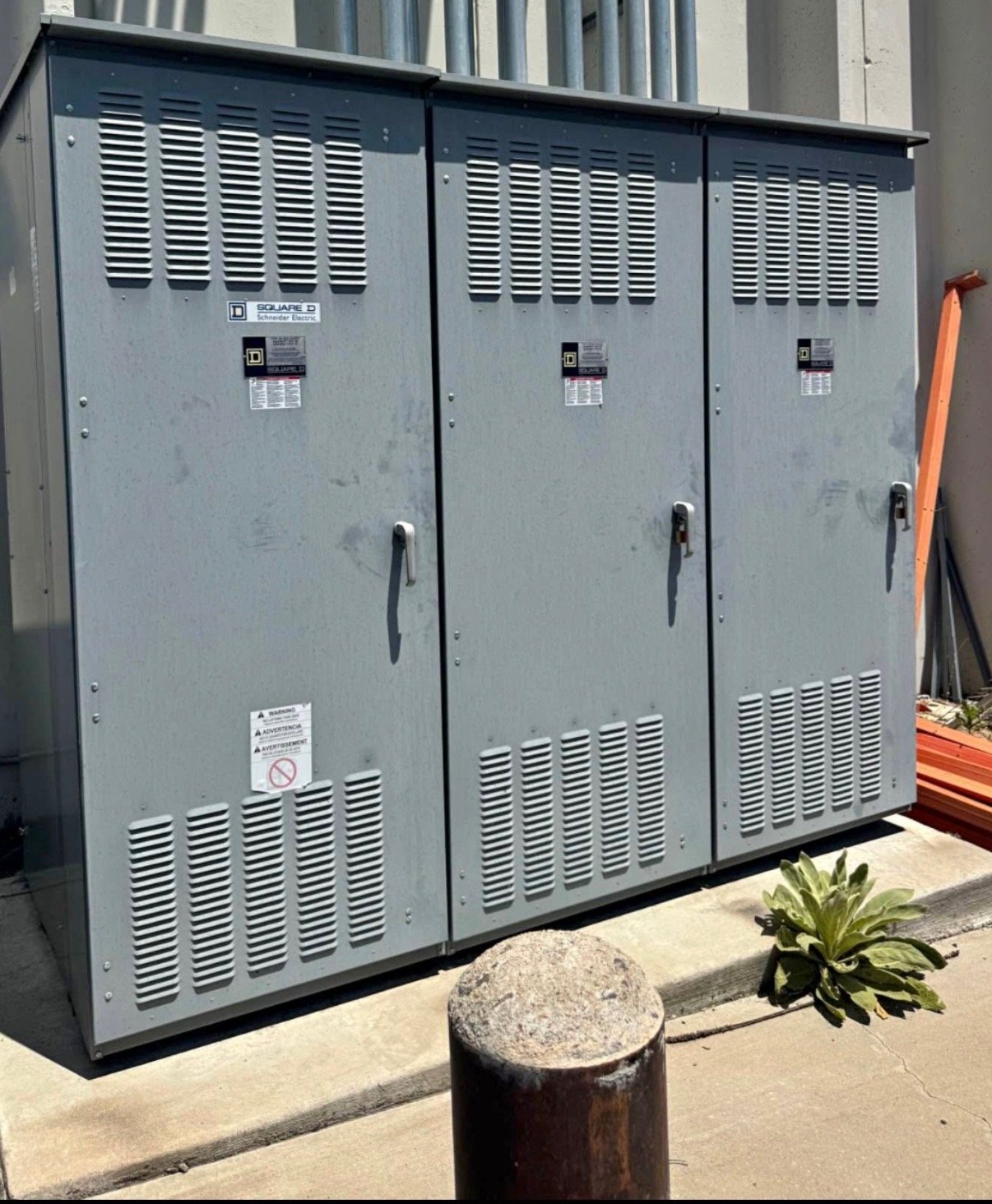
Start with the record, not an assumed configuration
At a hypothetical Florida power plant, a surplus schedule might describe “pump MCC buckets” without explaining whether that means removable units, complete motor-control-center sections, or both. Treat the wording as an inventory lead, not proof of a particular arrangement. Preserve the original description and identify its source, such as an equipment list, drawing index, or accessible label photograph, if one is available.
Build the initial record around identifiable sections and the buckets expressly offered. A section designation, lineup name, or drawing reference can help distinguish one group from another; bucket labels and recorded quantities can then be associated with that group. If the record does not establish which buckets belong to which section, mark that relationship unknown rather than inferring it from adjacent list entries or a presumed layout.
Separate section counts from bucket counts
An inventory can count MCC sections as complete assemblies, individual buckets, or both. Those are different quantities: three recorded sections do not establish how many pump-related buckets are included, and a bucket count alone does not establish that the surrounding sections are offered. State each count separately when records support it, and leave a field unconfirmed when no source identifies the quantity.
If several entries use similar labels, retain each label as recorded rather than combining them into a single total prematurely. For example, a hypothetical schedule might identify two sections and list several buckets under only one of them; that does not show whether the other section contains pump buckets. A note such as “bucket association not shown” is more useful than a clean-looking total that conceals uncertainty.
Use labels to explain what is being offered
Transcribe accessible nameplates, door labels, bucket tags, and inventory descriptions when they can be shared without anyone opening or handling equipment. Keep the source visible in the record: a tag reading “pump 2” is not necessarily the same thing as a drawing designation or a verified service description. If text is illegible, cropped, or inconsistent, record that limitation instead of completing the label from context.
Where a list distinguishes feeder, spare, or pump-related positions, preserve those distinctions and indicate whether the classification comes from a document or an existing photograph. A bucket described as “spare” should not be counted as a pump unit merely because it appears in a pump MCC schedule. Likewise, do not assume that matching labels establish equivalent contents, condition, ratings, or interchangeability.
Draw a clear boundary around motors and pumps
A pump-related MCC inventory identifies electrical equipment only to the extent the records say it is included. The pump and motor served by a bucket may be separate assets, remain installed elsewhere, or be excluded from the offer; the label alone does not settle ownership or sale scope. List motors and pumps separately, and use “not included,” “included,” or “unknown” only when the seller’s records support that distinction.
This boundary matters when an inventory uses shorthand such as “pump package” or “pump circuit.” Those phrases can refer to different combinations of controls and driven equipment, so avoid treating them as confirmation that a pump, motor, cabling, or associated mechanical components are part of the electrical lot. A written scope that names sections and buckets while explicitly listing excluded motors or pumps reduces ambiguity during review.
Describe gaps without arranging seller testing
Useful inventory material may consist of records and photographs already accessible to the seller: schedules, drawings, nameplate images, or lists of removed equipment. No seller testing is necessary for Florida Switchgear Buyers to review a possible purchase. If operational history, internal configuration, or condition is absent from the available material, say “not documented” rather than asking staff to energize, open, inspect internally, or otherwise handle equipment.
Only qualified professionals should handle electrical equipment. Sellers should not open, test, energize, isolate, disconnect, or move MCC sections or buckets to improve an inventory; any work on purchased assets is handled by qualified personnel. Existing documentation can still support a preliminary discussion, while unknowns remain subject to review. Neither a pump label nor a recorded quantity establishes that an item will be accepted or what it may be worth.
Present the proposed lot for review
A concise submission can group each documented MCC section with its recorded pump-related bucket labels and quantities, then state whether associated motors or pumps are included, excluded, or unknown. Attach only available, accessible records and identify discrepancies—for instance, a section shown on a drawing but absent from a current schedule. This makes the proposed electrical-equipment scope legible without implying a verified site inventory or a commitment to sell every listed item.
Florida Switchgear Buyers considers used, surplus, and decommissioned switchgear and related electrical equipment across all voltage classes, including equipment from decommissioned data centers and closed power plants. It makes cash offers and pays upfront for equipment purchased; crane, rigging, disconnects, loading, freight, and hauling for purchased equipment are handled as part of that purchase. The exact assets purchased and any offer depend on review, not a promised acceptance or schedule. For discussion, contact (614) 715-3047 or saleselectricalbuyers@gmail.com. This is equipment purchasing and removal for purchased assets, not a proposal for wholesale facility demolition or general electrical services.