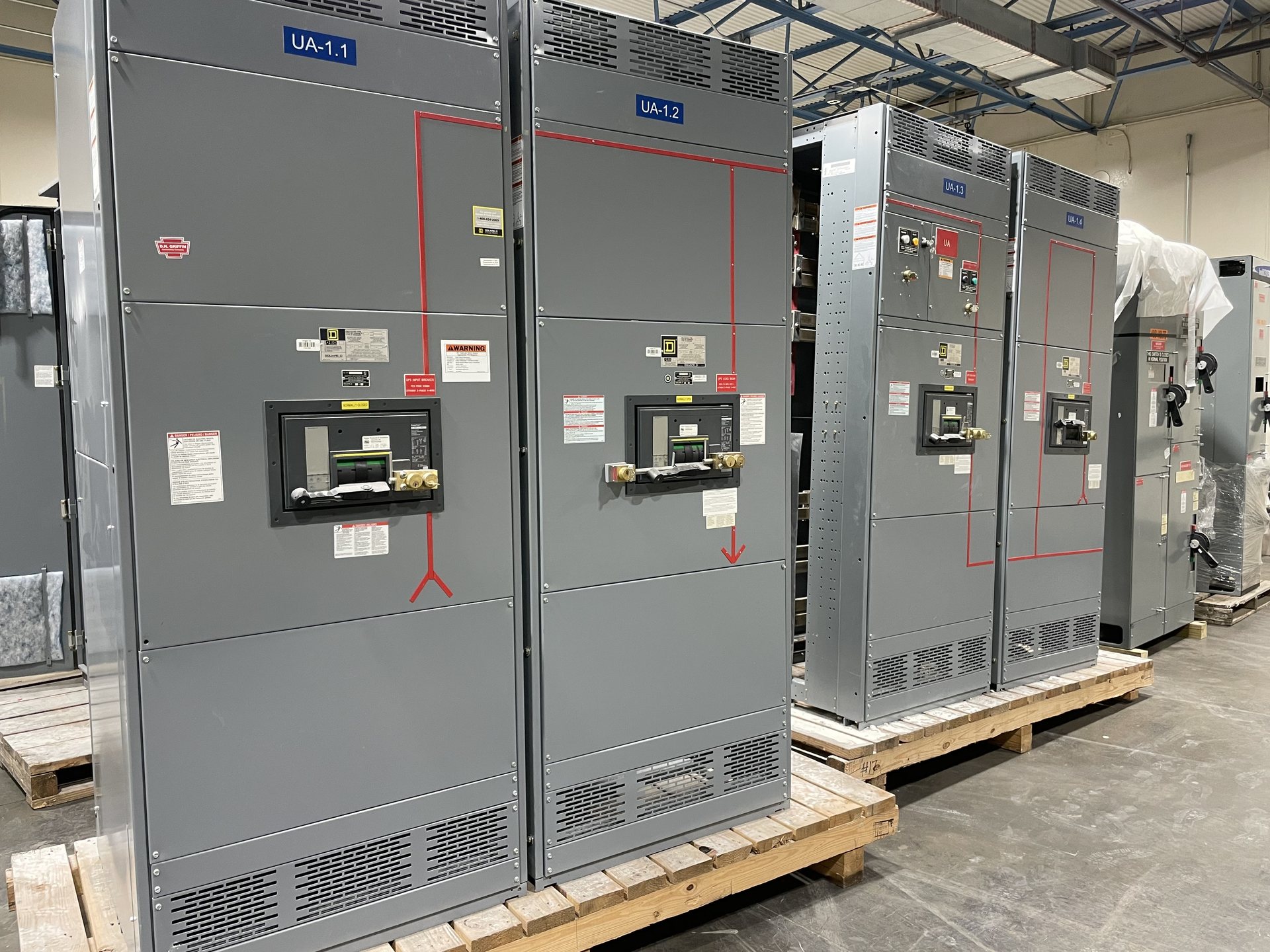
Define the Offered Assembly
A unit substation inquiry can cover more than one identifiable asset. An owner might describe a hypothetical Florida facility’s equipment as a transformer section, a switchgear section, and an associated enclosure or connection section. That description is a starting point, not proof that every part is a separate purchasable item. State which sections are offered and which are excluded, retained, or simply not yet identified.
This distinction matters when a plant is being decommissioned and equipment is documented as an assembly. If the owner offers only the switchgear section, say so even if it remains beside a transformer or other adjoining equipment. If the entire documented assembly is being considered, identify each known section rather than using “unit substation” as shorthand for everything in the area. Purchase scope is contingent on review.
Separate Switchgear From Associated Sections
Describe switchgear separately from the transformer and other associated sections, using the owner’s existing records or familiar asset labels. For example, a plant record might list a switchgear lineup and a transformer as separate entries; that does not establish that both are included in the sale. Conversely, a single inventory label may refer to several sections. Keep the source wording and note any uncertainty instead of resolving it by assumption.
A section boundary can affect how an inquiry is evaluated: the offered item may be a complete documented section, a portion of a recorded assembly, or a group of assets the owner wants reviewed together. Provide the best available description of what is included and what remains with the facility. Do not infer that connected or adjacent equipment will be purchased merely because it appears in the same photograph or record.
Share Existing Identification Records
Available nameplate information can help distinguish one section from another. Share readable photographs or copied details already accessible to the owner, such as manufacturer, model, serial number, or ratings shown on a plate. These details are identification aids, not a substitute for review and not a guarantee of condition, compatibility, or purchase. If a plate cannot be read or a record is absent, mark that fact as unknown rather than filling in a likely value.
A practical inventory can pair each offered section with its own available nameplate image and the record or location label the owner already uses. That can prevent a transformer plate from being mistaken for switchgear identification when several sections appear together. Do not approach, open, energize, test, or otherwise handle equipment to obtain information. Seller testing is not required; only qualified professionals should handle electrical equipment.
Make the Record Useful Without Testing
Existing documentation may include an asset register, decommissioning inventory, drawings, or photographs already held by the owner. Share only what is available and identify gaps plainly—for example, “switchgear nameplate not available” or “section boundary not confirmed.” A missing drawing does not establish that the assembly is incomplete, just as a complete-looking photograph does not establish that all components belong to the offered sale.
The inquiry need not resolve technical questions through seller inspection or testing. If the owner does not know whether two labels refer to the same section, preserve both labels and explain their source. If equipment condition is undocumented, describe it as unknown rather than calling it operational or defective. Florida Switchgear Buyers reviews used, surplus, and decommissioned switchgear and related equipment across all voltage classes, with purchase scope determined after review.
Understand Purchase and Removal Scope
A possible purchase of unit substation sections is not a proposal for general plant demolition or a broad decommissioning contract. Florida Switchgear Buyers buys used, surplus, and decommissioned electrical switchgear and related equipment, including equipment from closed power plants. Whether a particular transformer, enclosure, connection section, or other associated item is included depends on review; an inquiry describing an assembly does not guarantee purchase of every component.
For equipment purchased, the company handles crane, rigging, disconnects, loading, freight, and hauling. That responsibility concerns purchased equipment, not wholesale removal of a facility or general electrical services. Sellers should not disconnect or move equipment themselves. Qualified personnel handle electrical equipment, and the owner can provide existing accessible records and photographs for review without testing or manipulating the assets.
Submit a Clear, Bounded Inquiry
A concise submission can identify the actual location of the equipment, list the sections offered separately, note any associated sections excluded or still under consideration, and attach available nameplate images or records. Label uncertain ownership, boundaries, ratings, or condition as unknown. This lets the review focus on the actual proposed sale rather than treating every item in a unit substation description as included by default.
For an inquiry, contact Florida Switchgear Buyers at (614) 715-3047 or saleselectricalbuyers@gmail.com. The company makes cash offers and pays upfront for equipment it purchases; the offer and precise assets purchased are contingent on review. No seller testing is necessary. Include only information the owner already has access to, and leave handling, disconnects, and removal of purchased equipment to qualified personnel.