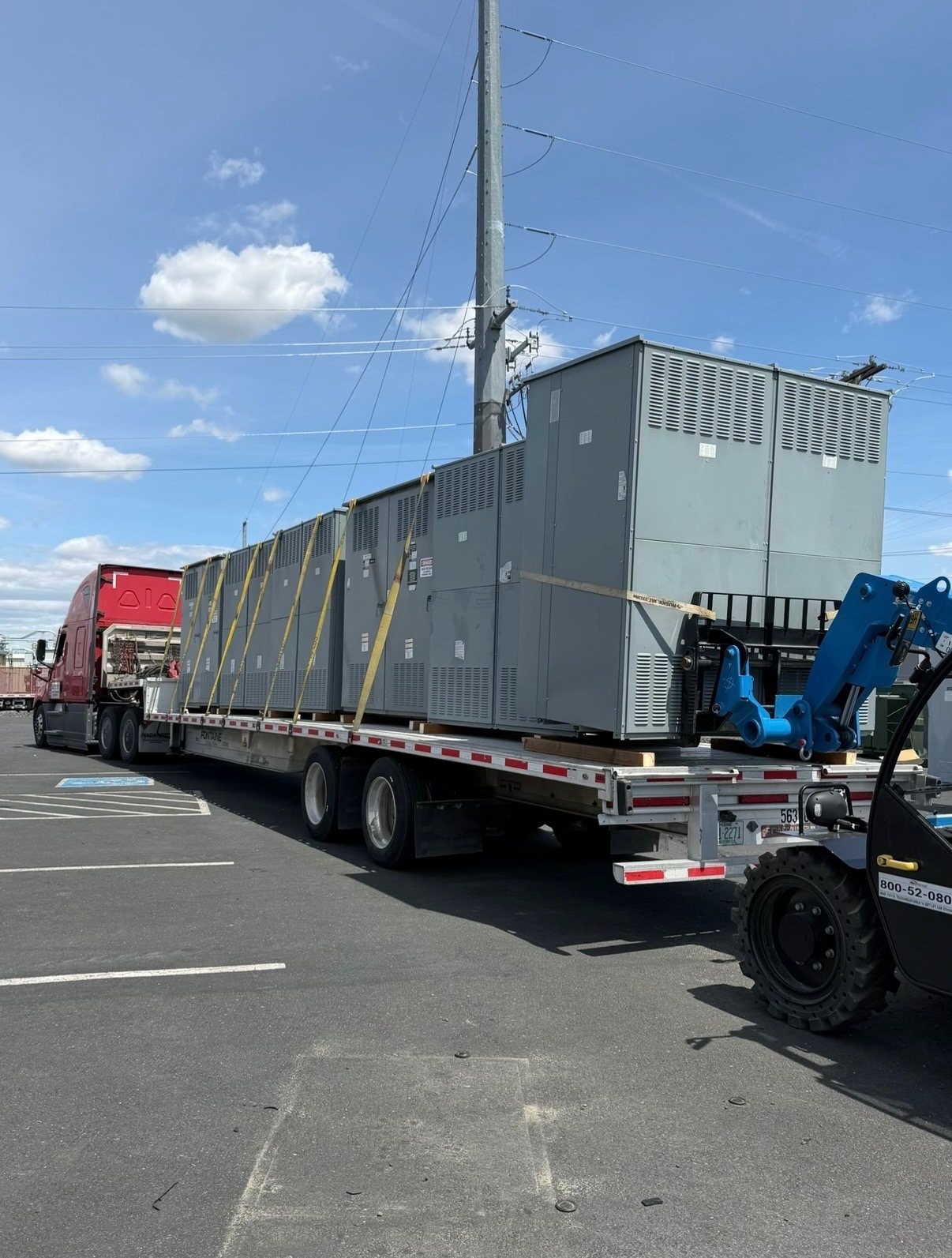
Start with the Seller’s Asset Boundary
A data center asset list may describe an incoming lineup, feeder lineup, or several medium-voltage sections as one item. Before presenting equipment for sale, establish what the seller believes the asset includes: the lineup itself, associated breakers, and any separately listed components. Treat the list as a starting point, not proof that every named item is present or included in the proposed sale.
Ownership deserves its own check. A facility operator may have used equipment that belongs to a landlord, lender, utility, or another party, while a record may combine owned and leased assets. Compare available ownership or disposal records with the proposed sale boundary. If authorization is unclear, label it unresolved rather than implying the seller can transfer equipment that may belong to someone else.
Match Lineup Sections to Identifiers
Reconcile the asset register against existing labels and records for each lineup section. Note the voltage markings as written, section identifiers, and any breaker IDs shown in accessible schedules, drawings, or photographs. A list that names one feeder lineup may correspond to several separately identified sections, or its identifiers may not match current labels. Preserve both versions and flag discrepancies for review instead of silently choosing one.
Descriptions such as “incoming” and “feeder” are useful seller-provided labels, but they do not establish the electrical topology. A hypothetical Florida facility might use those terms in an inventory even when available drawings are incomplete or use different naming. Do not infer which section supplies another, how a breaker is connected, or whether equipment forms one continuous lineup. Record what the seller’s documents call it and leave topology unknown unless supported by reliable records.
Capture Protective-Device Records Without Testing
Protective-device information can help distinguish similar-looking assets in a lineup. If accessible records identify breaker models, relay or trip-unit designations, settings, or associated device IDs, include those details with their source and date when available. Avoid translating a partial label into a complete specification. A missing setting sheet or unreadable identifier should remain an explicit gap, not a reason to test equipment or infer its capabilities.
Florida Switchgear Buyers does not require seller testing. Do not open, energize, isolate, disconnect, move, or otherwise handle equipment to verify a record or obtain a clearer label. Only qualified professionals should handle electrical equipment. Existing accessible photos and documents can be shared as they are; if a protective-device record cannot be located safely, mark it unknown and let the review proceed on the information available.
Reconcile Records, Photos, and Unknowns
A useful reconciliation makes conflicts visible. For each asset-list entry, compare the recorded description with accessible nameplate or section-label information, and note whether the evidence is a document, photograph, or seller transcription. If the list gives one voltage marking while a photo appears to show another, preserve both observations and identify the source of each. Do not declare either correct based on an image that may be incomplete or unclear.
The records may not establish whether every listed breaker remains with the lineup, whether a section was previously removed, or whether an identifier refers to a separate asset. Those points affect the proposed purchase boundary, so distinguish “listed,” “visible in available material,” and “unknown.” This careful wording helps prevent an inventory count from being mistaken for a confirmed physical count, without asking the seller to conduct an inspection or perform electrical work.
Define the Proposed Purchase Scope
Send a proposed scope that identifies the equipment the seller is offering and separates it from items merely mentioned in facility records. For example, if a schedule references several feeder breakers but the seller is offering only the lineup sections, state that distinction. If ownership, inclusion, or identity remains unsettled, disclose the uncertainty. An offer and the precise assets purchased depend on review; listing an item does not itself establish acceptance.
Florida Switchgear Buyers purchases used, surplus, and decommissioned electrical switchgear and related equipment across all voltage classes, including equipment from decommissioned data centers. It makes cash offers and pays upfront for equipment purchased. For purchased equipment, it handles crane, rigging, disconnects, loading, freight, and hauling. This is equipment purchasing and removal for assets purchased, not a promise to demolish a facility or provide general electrical services.
Prepare a Review Packet and Next Step
A concise packet can include the asset-list excerpt, available drawings or schedules, existing photos, section and breaker identifiers, protective-device records, ownership documentation, and a short register of conflicts or unknowns. Identify which descriptions are seller terminology and which come directly from records. There is no need to create new technical evidence or resolve every discrepancy before seeking review; a transparent gap is more useful than an unsupported conclusion.
For an equipment review, contact Florida Switchgear Buyers at (614) 715-3047 or saleselectricalbuyers@gmail.com. Share only documentation and photos already accessible to you, and identify the assets you believe are included. Any purchase scope remains subject to review. If purchased equipment requires disconnects or removal, that work is handled by qualified personnel; sellers should not undertake live-equipment handling or removal to prepare a submission.