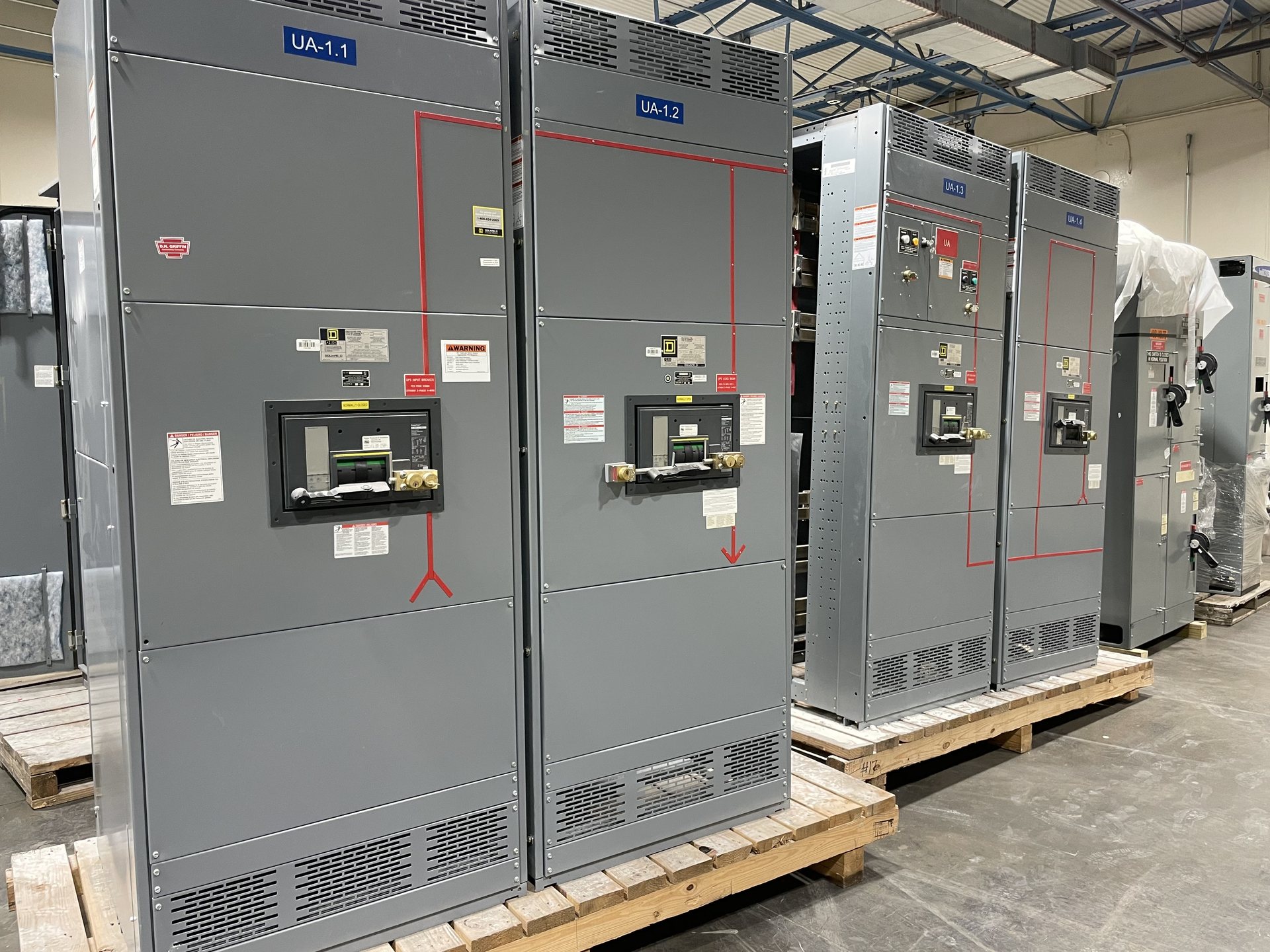
Define the equipment included in a possible sale
Start by describing which assets you are considering selling, rather than treating every item in a room or lineup as one inseparable lot. A seller might identify several switchgear sections and associated breakers, while excluding unrelated electrical equipment. Florida Switchgear Buyers reviews used, surplus, and decommissioned switchgear and related equipment across all voltage classes; the specific assets considered for purchase depend on review.
Use GE as the equipment marking reported by the seller, not as proof of a precise model, product history, or manufacturer relationship. If the marking is visible in an existing photograph or record, describe where it appears and whether it identifies a section, breaker, or lineup. If its location or meaning is unclear, say so. A reported brand name alone does not establish condition, compatibility, value, or acceptance.
Share existing voltage-class information
Provide any voltage-class information already recorded in equipment schedules, drawings, nameplates photographed earlier, or other accessible documentation. Keep the source attached to the claim: a drawing may describe the original installation, while a later inventory may use a different label. If the available records do not establish the class, mark it unknown rather than inferring it from appearance or from another asset in the lineup.
Where records distinguish sections or breakers by identifier, share those identifiers as written and note which document contains them. A lineup schedule may help separate assets proposed for sale from equipment that is staying, but it should not be treated as confirmation that records remain current. No seller testing is necessary. Do not open equipment, energize it, or handle electrical components to obtain information; only qualified professionals should handle electrical equipment.
Describe breakers and protective devices from records
Existing breaker schedules or documentation may name breaker identifiers and protective devices associated with particular sections. Share the wording as recorded, including gaps or ambiguous references, rather than translating it into a technical conclusion. For example, if a schedule lists a device but does not make clear which section it serves, preserve that uncertainty. The buyer can review the available information without asking the seller to test equipment.
If protective-device details are not in accessible records, state that they are unavailable. Do not remove covers, inspect internal components, or attempt to verify a device in place. Exterior information already visible in a safe location can be described or represented in existing photographs, but it should not be used to claim a particular operating condition. Brand, breaker, or device identifiers assist review; none independently proves suitability, performance, or purchase scope.
Clarify completeness and modification history
A useful description separates what appears to be present from what is known to be missing. Based on existing inventories or safe exterior views, you might note that a listed breaker is included, that an accessory is not shown in the records, or that completeness has not been checked. Avoid calling a lineup complete merely because it looks assembled from outside. The buyer’s review determines which individual assets, if any, are included in an offer.
Earlier modifications can complicate identification when original drawings, later schedules, and current exterior markings do not align. Report the mismatch and identify what is unknown: the date, scope, or effect of a change may not be documented. Do not remove panels or investigate wiring to resolve it. If a GE marking appears alongside another identifier, share both as observed in existing material, without assuming a replacement, upgrade, or known equipment history.
Coordinate records and removal for purchased assets
For decommissioned equipment, existing records may come from different periods or departments. Identify whether a document is an inventory, drawing, or other record when that is known, and distinguish documented facts from recollection. Photos already available can show exterior markings or general arrangement; there is no need to create images by approaching or handling equipment. Missing records are useful to identify plainly, so review can proceed with uncertainty visible.
If equipment is purchased, Florida Switchgear Buyers handles crane, rigging, disconnects, loading, freight, and hauling for those purchased assets. This is equipment purchasing and removal, not a promise of wholesale facility demolition or general electrical services. The seller should not disconnect, move, or prepare equipment. Qualified professionals must handle electrical equipment, and arrangements for the purchased assets are considered through the buyer conversation rather than assumed from a listing or photograph.
Discuss scope, offer, and payment directly
A focused conversation can begin with the seller-reported GE marking, the assets proposed for sale, available voltage-class records, section and breaker identifiers, known protective-device details, and any uncertainty about completeness or modifications. Florida Switchgear Buyers makes cash offers and pays upfront for equipment it purchases. An offer and the precise assets purchased are contingent on review; sharing information does not establish acceptance, price, payment terms beyond upfront payment, or a schedule.
For the buyer conversation, contact Florida Switchgear Buyers at (614) 715-3047 or saleselectricalbuyers@gmail.com. You can share accessible documentation and existing photographs, while clearly labeling facts that remain unknown. No seller testing is required, and no electrical handling should be undertaken to answer questions. A review can distinguish equipment that may be considered from items outside the proposed sale, without treating a brand marking or incomplete record as a purchasing commitment.