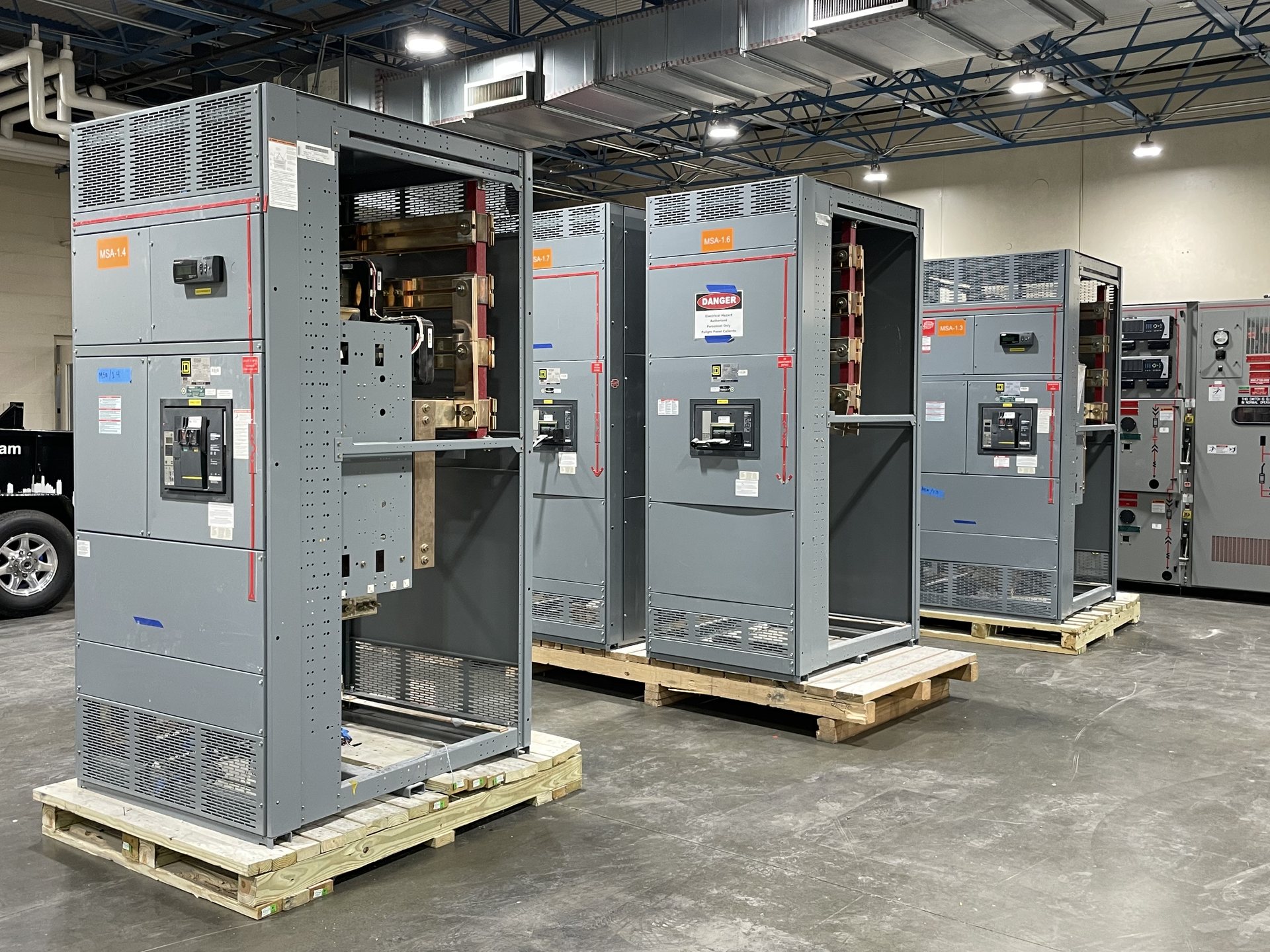
Separate busway sections from related equipment
When assembling a possible sale inventory, distinguish the straight busway sections from associated pieces rather than treating everything as one undifferentiated lot. Existing labels or records may identify marked ratings and section types; record those as shown, without converting them into a model identification or assuming what they can connect to. The Siemens name should be presented as the seller-reported marking, not as proof of product history, compatibility, or manufacturer involvement.
Keep plug-in units, elbows, and other identifiable components in separate counts when present. A record that says “busway parts” may obscure meaningful differences between sections and accessories, while a count by type helps reviewers understand what is actually being offered. If a component’s identity is unclear from accessible information, describe it as unknown rather than assigning a function or rating based on appearance.
Build a useful inventory from existing information
For each group of sections, note the quantity and any rating or type marking visible in existing records or safely accessible exterior photographs. Summarize lengths only where those measurements are already documented or can be reported without handling the equipment. If lengths vary, separate known groups or state that the inventory combines different lengths; an approximate or missing measurement should not be presented as verified.
Packaging and storage details can help explain how the inventory is organized without making claims about condition. Indicate, for example, whether records describe sections as boxed, bundled, or stored indoors, if that information is known. Note visible packaging or storage observations only from a safe position. Do not infer that equipment is complete, undamaged, suitable for reuse, or ready for installation from packaging or appearance.
Keep markings distinct from product conclusions
A nameplate transcription, purchase record, or prior inventory may support the seller’s identification of Siemens busway sections. Share the wording as recorded and distinguish it from conclusions that the documentation does not establish. A marked rating is useful inventory information, but it does not by itself establish present condition, compatibility with another system, or the exact scope of an offer. Missing model details or history can simply remain unknown.
Photographs may help clarify which pieces are being described, particularly when several section types or accessories are stored together. Use existing images or exterior views that can be obtained safely; do not open enclosures, remove covers, or approach equipment in a way that requires electrical handling. Florida Switchgear Buyers does not require sellers to test equipment, and only qualified professionals should handle electrical equipment.
Describe the proposed lot and its boundaries
State whether the proposed inventory includes only straight sections or also identified plug-in units, elbows, and related equipment. If some items are excluded, set them apart in the inventory so the review is not based on an assumed all-inclusive lot. This is especially useful when records combine busway with other electrical assets: list the equipment being offered, and label any uncertain or uncounted items rather than implying they are included.
Florida Switchgear Buyers buys used, surplus, and decommissioned electrical switchgear and related equipment across all voltage classes. Siemens-marked busway is subject to review like other offered equipment: the seller’s label does not establish acceptance, a particular purchase scope, or a value. The potential transaction concerns equipment selected for purchase, not a commitment to acquire every item at a site or every component grouped with the busway.
Plan removal only for equipment purchased
If equipment is purchased, Florida Switchgear Buyers handles crane, rigging, disconnects, loading, freight, and hauling for the purchased equipment. That boundary matters when a busway inventory sits within a larger electrical room or facility: a possible purchase and removal of selected assets should not be confused with whole-facility demolition or general electrical services. Do not assume that adjacent equipment, supporting structures, or unrelated materials are included.
The seller should not disconnect, move, test, energize, or otherwise handle busway to prepare it for review or removal. Leave electrical work to qualified professionals and share existing documentation or safely obtained exterior information instead. If a record does not establish whether sections are accessible, packaged, or associated with other items, say so. Review can proceed from what is known; unknown details should not be filled with guesses.
Submit the inventory for a contingent review
A concise submission can include the count by section type, marked ratings as transcribed, known lengths, separate counts for plug-in units and elbows, and any documented packaging or storage notes. Attach existing records or safe exterior photographs if available, and identify gaps plainly. This gives reviewers a clearer basis to consider the proposed assets while avoiding unsupported claims about model, condition, history, compatibility, or readiness for reuse.
Florida Switchgear Buyers makes cash offers for equipment it elects to purchase and pays upfront for equipment purchased. The offer and precise assets included remain contingent on review; neither the Siemens marking nor an inventory entry guarantees acceptance or a particular scope. To discuss an inventory, contact (614) 715-3047 or saleselectricalbuyers@gmail.com. Share only information already available and leave any uncertain identification or measurement marked unknown.