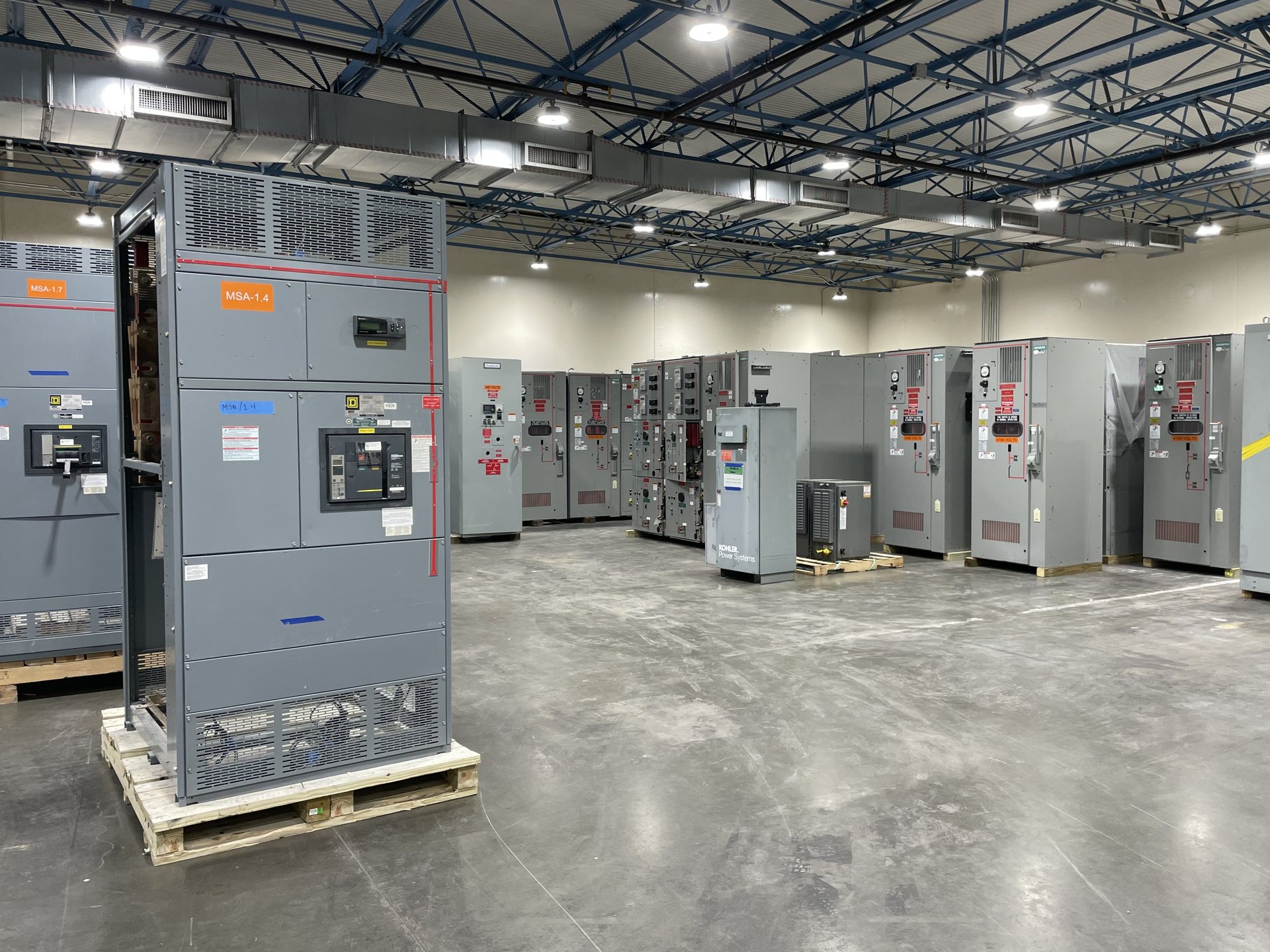
Define the bucket lot before discussing scope
Begin by describing the assets as Siemens MCC buckets only if that is how their markings are reported. The marking helps identify the equipment being offered; by itself, it does not establish a model, product history, condition, compatibility, or whether a buyer will purchase it. A useful first scope separates the buckets from the lineup and from other electrical equipment that may be part of a larger project.
Count what is visibly identifiable and note where it is situated: installed in a lineup, removed and stored separately, or divided between both locations. If the count is provisional because some positions or stored items cannot be confirmed from existing records or safe exterior views, label it as an estimate. Keep the installed and separately stored quantities distinct so the offer review can consider each group on its own terms.
Record markings and controller information
Share existing photographs or inventory records that show accessible exterior markings, bucket identification, and any known controller labels. Include the quantity associated with each marking when that relationship is known. A photograph can help clarify what is being offered, but do not approach, open, or reposition equipment to obtain one; only provide images already available or obtainable without handling electrical equipment.
Controller details may be incomplete, and that is useful to state plainly. For example, identify which buckets have a controller label recorded, which have no recorded label, and which labels are unreadable or not yet documented. Do not infer a controller type from appearance or assume matching markings mean matching configuration. No seller testing is necessary; unknown specifications should remain unknown rather than being filled in by guesswork.
Separate included assets from exclusions
Make clear whether the proposed lot includes only the Siemens-marked buckets or also associated items identified in existing records, such as separately stored parts or other switchgear. If items are excluded, describe the boundary in ordinary terms—for example, buckets are offered while the surrounding lineup is not. This prevents a review from treating nearby equipment as included simply because it appears in the same room or photograph.
For installed buckets, report their lineup location only as far as existing documentation or safe exterior observation allows. Distinguish a known position from a blank, unverified, or uncertain one. Do not represent an installed bucket as ready for removal or promise access. Electrical equipment must be handled only by qualified professionals, and sellers should not open, test, energize, isolate, disconnect, move, or otherwise handle it to prepare a sale.
Keep condition and history factual
Describe observable exterior condition without turning it into a technical conclusion. If existing photographs show labels, visible damage, or missing covers, identify what the image appears to show and when it was taken if known. Avoid claims that a bucket is operational, complete, suitable for a particular lineup, or ready for reuse unless those facts are established by qualified records; a buyer’s review may reach a different conclusion.
History can affect what information is available, but do not reconstruct it from the Siemens name alone. If maintenance records, purchase documents, or removal records exist, they may be shared as available. If origin, service history, storage conditions, or the reason for removal is unknown, say so directly. Florida Switchgear Buyers considers used, surplus, and decommissioned switchgear and related equipment across voltage classes, but any offer and the exact assets purchased depend on review.
Coordinate review and removal boundaries
A proposed sale is an equipment purchase, not a commitment to demolish a facility or perform general electrical work. For equipment purchased, Florida Switchgear Buyers handles the crane, rigging, disconnects, loading, freight, and hauling. The seller should identify any access or coordination constraints already known, such as site contact requirements or restrictions on when a qualified removal crew may work, without attempting to prepare or disconnect the buckets personally.
If the buckets remain in service or are part of an active lineup, explain that status rather than implying they are available for immediate removal. The site’s qualified professionals must manage electrical safety and any required operational decisions. Purchase scope remains subject to review, and removal arrangements concern only assets purchased. This distinction is especially useful when the seller is also discussing other equipment or a broader facility change with separate parties.
Prepare a focused buyer conversation
A concise inquiry can state the reported Siemens marking, the number of buckets believed to be included, which are on-lineup or stored separately, known controller labels, and what is excluded. Attach only existing records and safe exterior photographs, then flag uncertainties in the same message. Florida Switchgear Buyers makes cash offers and pays upfront for equipment it purchases; neither a particular offer nor acceptance of every listed asset should be assumed before review.
For a buyer conversation, call (614) 715-3047 or email saleselectricalbuyers@gmail.com. Be ready to clarify which counts are confirmed, what information is missing, and who can coordinate access through the site’s qualified professionals. A direct account of what is known—and what is not—gives the buyer a clearer basis to review the proposed lot without requiring seller testing or electrical handling.