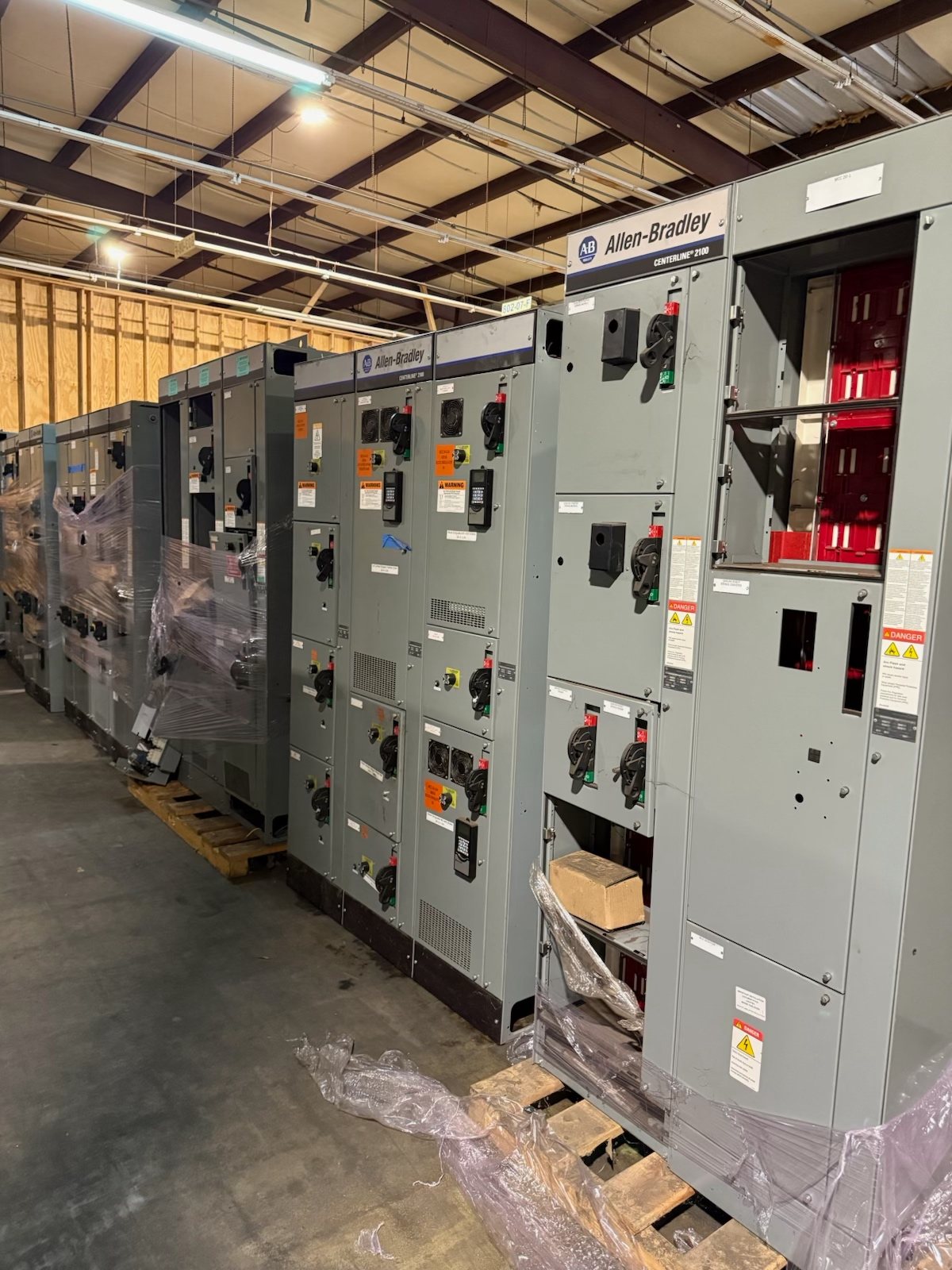
Start with the asset list, not an assumed model
When an asset list says “Siemens medium-voltage switchgear,” treat that wording as a starting description rather than a confirmed model or complete equipment history. Compare the entry with the exterior labels already visible to you, noting how the seller’s records identify the equipment and where the label appears. If the list gives a model or voltage that you cannot verify in existing records, mark it as unconfirmed instead of filling the gap by inference.
Reconciliation matters because a site inventory may describe a lineup as one asset while removal and purchase review require clarity about the sections being offered. Record the seller’s understanding of which lineup sections are included, and distinguish them from adjacent equipment or sections excluded from the offer. If boundaries are uncertain, state that plainly. Do not open, test, energize, disconnect, or move equipment to settle an inventory discrepancy; qualified professionals must handle electrical equipment.
Record visible markings and voltage carefully
Existing, safely accessible nameplate information can help distinguish what is documented from what is merely assumed. If a label shows a voltage, transcribe the marking as it appears and identify it as a label reading, not an independent technical verification. When the marking is obscured, absent from available photos, or difficult to read, report the value as unknown. Do not substitute a voltage from a neighboring asset or an older spreadsheet entry.
External labels may also show section identifiers, circuit or feeder names, ratings, or other notations, but what is present varies. Share only information visible without approaching or handling equipment, or use existing photographs. A label that appears to associate a section with a circuit does not by itself establish what is inside, whether the equipment is operational, or whether the circuit description remains current. Keep the transcription separate from any interpretation.
Match lineup sections to the offered scope
A useful reconciliation identifies each section the seller intends to offer and how that section is described in current records. For example, if a drawing names several sections but the asset list groups them under one entry, explain which sections are believed included and which are not. If no one can confidently match the drawing to visible exterior identifiers, preserve that uncertainty rather than assigning a section number based on position alone.
Include surrounding equipment in the description only to clarify the boundary of the proposed sale. A nearby transformer, bus connection, or other electrical asset should not be represented as part of the switchgear offer unless the seller intends to include it and identifies it separately. Florida Switchgear Buyers reviews the assets proposed for purchase; an inquiry does not mean every connected or adjacent item is included. Purchase scope depends on review, not on a broad facility inventory label.
Share existing drawings and control records
Existing single-line drawings, lineup schedules, equipment lists, and protective-control documentation may help explain how the seller’s records describe the equipment. Share available copies or relevant excerpts, and note their date or revision when that information is already shown. If a drawing is undated, marked preliminary, or appears inconsistent with an asset list, identify that limitation. There is no need to create new technical documentation or verify a drawing in the field for an inquiry.
Protective-relay or control information can be included when it already exists in records, but avoid presenting a document reference as proof of present configuration or condition. A schedule may reflect an earlier arrangement, and a control description may not identify every section offered. If the records do not specify which equipment a document covers, say so. Sellers do not need to test equipment or obtain additional records before asking about a possible purchase.
Keep unknown condition and history explicit
A seller-reported Siemens marking does not establish a particular model, product history, internal condition, or compatibility with another system. Keep those questions open unless reliable existing documentation answers them, and do not infer a condition from appearance or from a record that simply says “surplus.” If the operating history is unavailable, label it unknown. If a record states a known fact, identify the record rather than extending its statement beyond what it supports.
No seller testing is necessary for an inquiry. Do not energize, open, isolate, disconnect, move, or otherwise handle the equipment to gather details; only qualified professionals should perform electrical work. Existing exterior photographs and accessible records can be shared if available. Missing photos, drawings, nameplate details, and operating information can remain missing while the equipment is submitted for review, with the gaps clearly distinguished from confirmed facts.
Request a purchase review with clear boundaries
Florida Switchgear Buyers buys used, surplus, and decommissioned electrical switchgear and related equipment in all voltage classes, including equipment from decommissioned data centers and closed power plants. It makes cash offers and pays upfront for equipment purchased. Whether particular Siemens-marked medium-voltage sections are purchased, and the precise assets included, depends on review; the seller’s label alone does not establish acceptance or value.
To discuss an asset list and available records, contact (614) 715-3047 or saleselectricalbuyers@gmail.com. For equipment purchased, the company handles crane, rigging, disconnects, loading, freight, and hauling. That removal arrangement concerns purchased equipment; it is not a promise to buy every listed asset or an offer of wholesale facility demolition or general electrical services. Share what is known, identify what remains uncertain, and let the review determine the proposed scope.