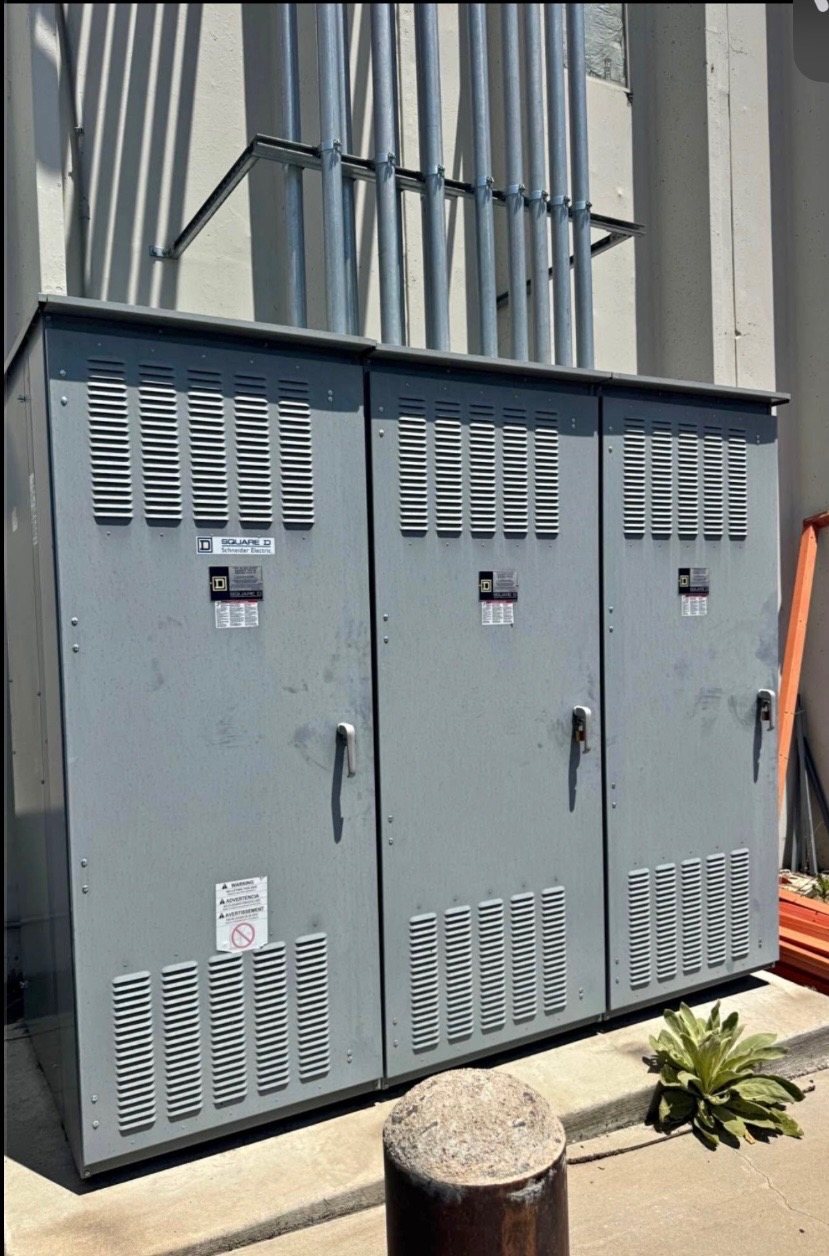
Start with the records that identify each lineup
For equipment marked Westinghouse metal-clad, begin with what existing documents and safe exterior photographs actually show. A lineup drawing, equipment schedule, or prior inventory may list cubicle positions and assigned functions; an exterior nameplate or label may provide other identifying details. These sources can describe different aspects of the equipment, so keep them separate rather than treating one as confirmation of the other.
Record the number of positions shown in an available document and whether that count appears to match the visible lineup, if it can be observed without approaching or handling electrical equipment. Note discrepancies as discrepancies, not as proof that a cubicle is missing or that a drawing is outdated. If a position count cannot be established from accessible material, mark it unknown and share the record as-is.
Separate installed breakers from removable inventory
Removable breakers can materially affect what is being offered, so describe their status precisely using existing inventories or other accessible records. A list may identify breakers as included, stored separately, absent, or of unknown status. Do not infer that every position has a breaker, or that a breaker belongs with a particular cubicle, unless the records support that relationship.
If breakers are documented separately, preserve the distinction between the lineup and the loose or stored equipment. An inventory might list quantities without identifying which position each unit serves; that is useful information, but not a verified assignment. Sellers do not need to test breakers or access equipment to answer these questions. Qualified professionals alone should handle electrical equipment; no seller handling is requested.
Compare labels without making model claims
Label consistency helps reviewers understand whether records may refer to the same equipment. Compare visible exterior markings with the names and identifiers appearing in existing schedules, inventories, or drawings, and report what matches or differs. The Westinghouse name here means the seller-reported marking; it does not establish a specific model, product history, manufacturer relationship, or compatibility with other equipment.
Where labels are obscured, unavailable, or recorded differently across documents, say so rather than resolving the discrepancy by guesswork. A photograph can show an exterior label if it already exists or can be obtained safely without approaching or handling electrical equipment. Do not remove covers, open compartments, energize, isolate, disconnect, or move anything to improve identification. Unknown details can remain unknown.
Share relay records and disclose gaps
Existing relay records may include inventories, settings documents, inspection files, or other material retained by the owner. Their presence can help describe what is documented, but it does not by itself establish present condition, operation, or suitability. Identify the record type and date when those details are already available; avoid reconstructing missing information or representing old paperwork as a current assessment.
A complete record set is not a prerequisite to asking about a potential purchase. If relay documents are unavailable, say that they are unavailable; if their scope is unclear, describe that limitation. Florida Switchgear Buyers does not require sellers to test equipment. Any review depends on the information provided and the assets under consideration, and missing relay details should not be replaced with unsupported conclusions.
Make known and unknown history explicit
Useful history is bounded by what the owner can substantiate: for example, an existing decommissioning record, prior asset list, or documented change in ownership. Distinguish recorded facts from recollection, and identify the source when practical. If service history, storage conditions, or the reason for removal are not documented, state that these points are unknown instead of implying that the equipment was maintained, unused, or recently removed.
The same care applies to condition descriptions. Exterior photographs and records may help communicate what is visible or documented, but they do not establish internal condition or confirm operability. Do not arrange seller testing or attempt electrical inspection for the purpose of preparing an inquiry. Only qualified professionals should handle electrical equipment, and no seller is asked to open, test, energize, isolate, disconnect, or move it.
Submit the scope for a contingent purchase review
Florida Switchgear Buyers purchases used, surplus, and decommissioned switchgear and related equipment across voltage classes, including equipment from decommissioned data centers and closed power plants. For a seller-identified Westinghouse metal-clad lineup, an inquiry can include available position records, breaker inventory, exterior labels, relay documentation, and clearly stated unknowns. The precise assets considered and any offer depend on review; the marking alone does not establish acceptance or value.
For purchased equipment, the company makes cash offers, pays upfront, and handles crane, rigging, disconnects, loading, freight, and hauling. Those arrangements concern purchased assets, not wholesale facility demolition or general electrical services, and do not imply that every item in a facility will be purchased. To submit existing information or discuss the equipment, contact (614) 715-3047 or saleselectricalbuyers@gmail.com.