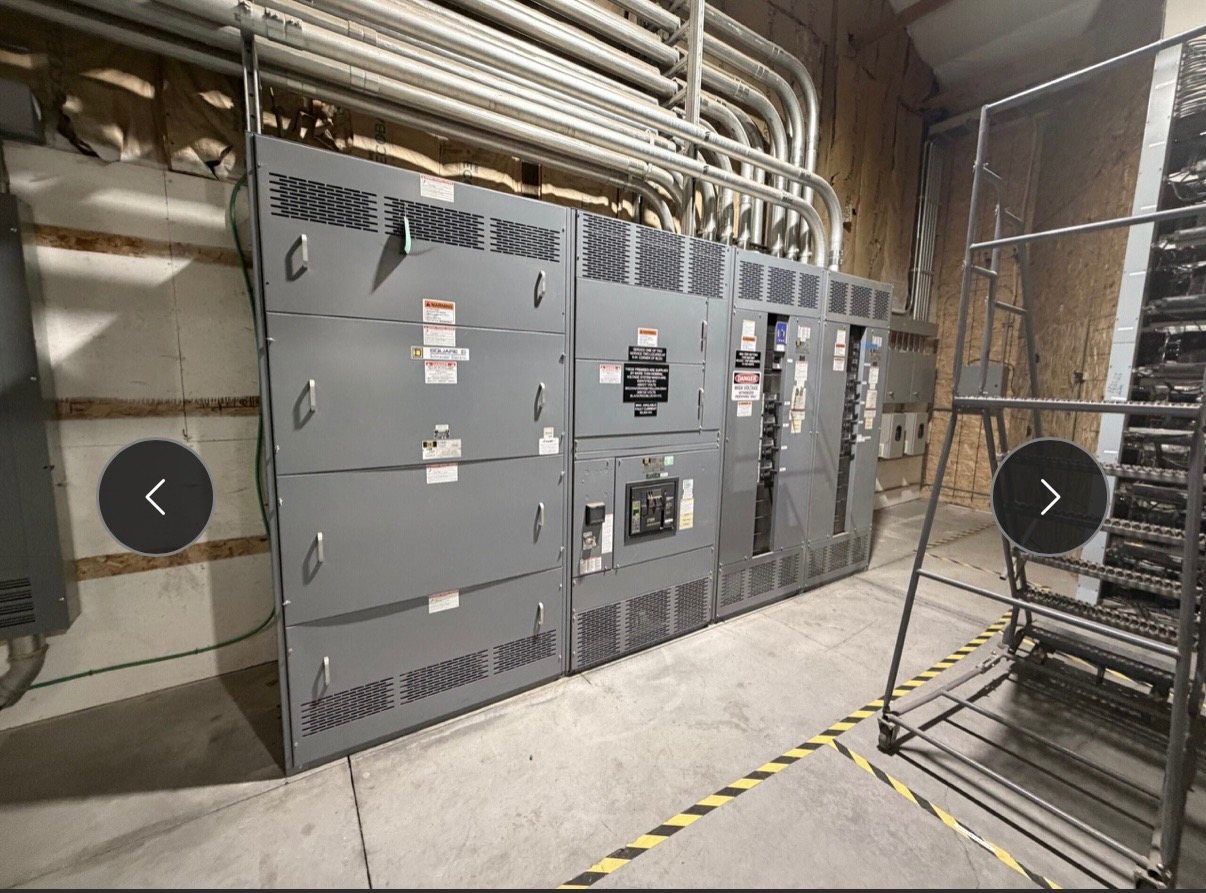
Reconcile the names on the asset list
When an inventory says “Schneider switchboard,” compare that wording with the labels visible on each section’s exterior. Record the seller-reported marking as it appears, along with any separate asset tag or location reference. A marking can help identify what is being offered, but by itself it does not establish a model, manufacturing history, configuration, or product lineage.
Keep uncertain entries distinct from confirmed observations. If a schedule lists a main section but the visible labels or existing photographs do not settle which enclosure it refers to, mark the relationship as unknown rather than assigning it by appearance. This lets a buyer review the proposed assets against the records without treating an incomplete list as proof of what is present.
Define the sections included in the sale
A switchboard may be recorded as one asset while the proposed sale covers only selected sections. State whether the offer for review includes every section identified in the inventory or only named main and outgoing sections. If one section is excluded, identify it clearly in the list and, where existing records allow, distinguish it by its label or assigned location.
This boundary matters when sections appear together in a room or are grouped under one asset number. Physical proximity does not show that every section belongs in the transaction. If the records conflict about the count or ownership, describe the discrepancy and leave the affected section’s inclusion unresolved until the seller can confirm it from existing documentation.
Share ratings and drawings already available
Provide ratings exactly as shown in accessible schedules, nameplates documented in existing photographs, or other records. Identify the source and avoid filling gaps with assumptions based on a neighboring section. Ratings may be missing, difficult to read, or recorded differently across documents; label those entries unknown or conflicting rather than presenting an inferred value as verified.
Section drawings, one-lines, equipment schedules, and prior asset lists can help explain how the listed sections relate, if those records are already available. Share copies without trying to create new measurements or obtain information from inside equipment. Drawings may describe an intended arrangement rather than the current exterior or contents, so note their date or status when known and preserve uncertainty when it is not.
Describe exterior condition without handling equipment
A seller can report exterior observations visible from an ordinary, safe vantage point, such as a label that is readable, a door that appears visibly damaged, or corrosion already apparent in an existing photograph. Distinguish direct observation from a note copied from an older record. Do not open enclosures, energize or test equipment, or approach it to obtain a better view for a sale inquiry.
Condition descriptions should be specific but modest. “Exterior condition not assessed” is more useful than an unsupported claim that a section is complete or operational. If a photograph shows only one face, say so; it cannot establish the condition of unseen sides or internal components. Seller testing is not required for a review, and only qualified professionals should handle electrical equipment.
Disclose additions and alterations as known
List known additions, replacements, or alterations separately from the original inventory description. Examples might include a later label, an externally visible attachment, or a documented change to a section, but include only what records or safe observations support. If the work, date, or affected section is unknown, say that directly instead of attributing the change to a manufacturer or assigning it a technical effect.
Where available, an existing work order, drawing revision, or maintenance note may clarify why the asset list differs from present exterior information. It may not resolve the discrepancy, and a record should not be treated as confirmation beyond what it states. Florida Switchgear Buyers reviews used, surplus, and decommissioned switchgear and related equipment across voltage classes; any offer and exact assets purchased depend on review.
Prepare the review and transaction boundary
A concise package can bring together the section-by-section list, seller-reported markings, available ratings and drawings, exterior photographs already on hand, and a short record of known changes. Identify missing documents plainly. This helps distinguish what the seller proposes from what remains uncertain, without requiring testing or electrical handling before the buyer reviews the information.
Florida Switchgear Buyers makes cash offers and pays upfront for equipment it purchases. For purchased equipment, it handles crane, rigging, disconnects, loading, freight, and hauling; this is equipment purchase and removal, not a commitment to demolish a facility or provide general electrical services. To discuss a review, contact (614) 715-3047 or saleselectricalbuyers@gmail.com.