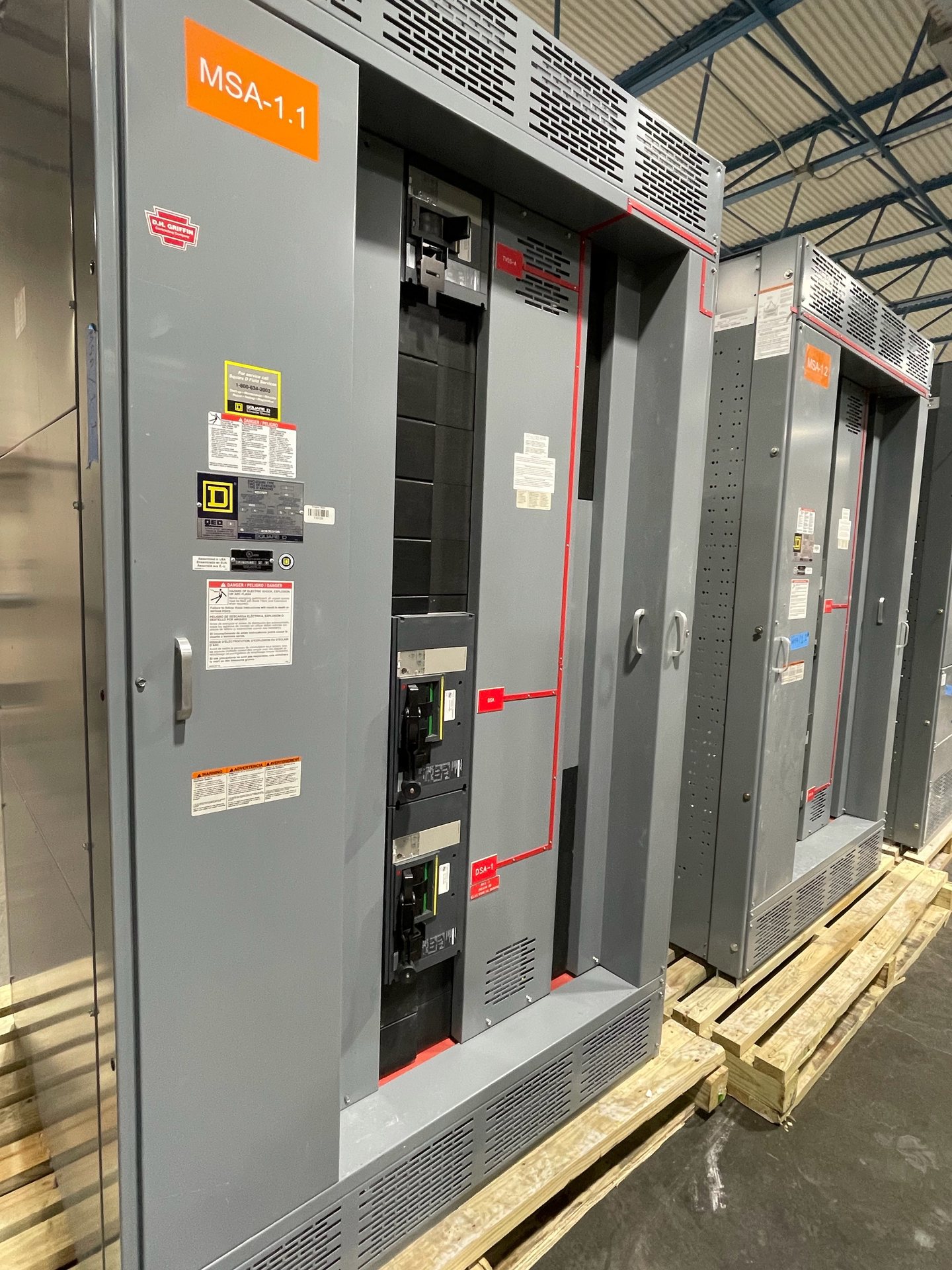
Define the lot before discussing a sale
Start by describing which assets you mean by “Cutler-Hammer MCC buckets,” using that wording as the seller-reported marking rather than proof of a specific model, origin, or product history. Establish whether the proposed lot consists of units still positioned in an MCC, separately stored buckets, or both. That distinction helps frame the review; it does not establish that any unit is compatible with another lineup.
Create a count from records or observations already available, and identify where each group is located without moving equipment to improve access. If a count is approximate, say so and explain whether some units are obscured or outside the accessible view. Keep separately stored items distinct from units remaining in an MCC, even when labels appear similar; the buyer can review the groups without assuming they belong together.
Record labels and visible completeness
For each visible unit, note the wording and identifiers that can be read safely from an existing image or accessible exterior view. A transcription should preserve uncertain characters as uncertain rather than silently completing them. Record apparent differences in markings as differences, not as evidence of a particular rating, application, or interchangeability. Existing photographs can help communicate what is visible, but sellers do not need to create new views by approaching or handling equipment.
Describe visible completeness in restrained terms: for example, whether an exterior appears to show a faceplate or handle, or whether a cover seems absent in an existing photo. These are observations, not confirmation of internal condition or readiness for reuse. If a feature cannot be seen, mark it unknown. Do not open, test, energize, isolate, disconnect, or move a bucket to answer a question; qualified professionals must handle electrical equipment.
Share records that already exist
Useful records may include an inventory, purchase or maintenance documents, facility drawings, prior photographs, or notes that identify the equipment. Share only material already available and relevant to the proposed assets. A record can help connect a label to a location, but it may not describe the present condition or establish that a stored unit matches equipment still in an MCC. Keep the source and date clear when known.
When records conflict, preserve the discrepancy rather than choosing the version that seems most likely. A drawing may use a different description from a visible label, or an inventory may list more units than can now be accounted for. State what is documented, what is observed, and what remains unknown. No seller testing is necessary for a review, and an incomplete file is more useful when its gaps are identified plainly.
Keep identity and compatibility open
The Cutler-Hammer name should be treated as an identification reported by the seller, not as proof of manufacturer affiliation, authorization, endorsement, or a verified model. Markings that differ may reflect different products, revisions, or other distinctions, but their meaning should not be guessed from appearance alone. Do not combine differently marked units into a single compatible set unless reliable existing documentation supports that description.
Likewise, a bucket’s apparent fit, condition, or value cannot be established from a name or exterior photograph alone. If a seller knows that a unit was stored separately, report that fact without inferring why it was removed or whether it can return to service. Florida Switchgear Buyers reviews used, surplus, and decommissioned switchgear and related equipment across voltage classes; the precise assets considered remain contingent on review.
Coordinate the proposed equipment scope
Clarify whether the proposed sale includes only the identified buckets or also other related equipment being offered. Keep items outside the intended lot out of the count, and identify any uncertainty about ownership or inclusion for resolution before a purchase scope is set. This is especially useful when equipment remains in an MCC while another group is stored elsewhere. A description should separate locations and groups, not imply a complete facility inventory.
For equipment purchased, Florida Switchgear Buyers handles crane, rigging, disconnects, loading, freight, and hauling. That coordination concerns purchased assets; it is not a promise to accept every item, demolish a facility, or provide general electrical services. Sellers should not prepare equipment by disconnecting or moving it. Any electrical work or handling must be left to qualified professionals, with arrangements considered as the purchase scope is reviewed.
Have a focused buyer conversation
A productive conversation can begin with the seller-reported marking, the count or count range, whether units remain in an MCC or form a stored lot, visible completeness, and records or photographs already on hand. Flag unknowns rather than filling them with assumptions. Florida Switchgear Buyers makes cash offers for equipment it purchases and pays upfront for purchased equipment. An offer and the precise assets purchased are contingent on review; no seller testing is required.
To discuss a potential lot or share existing information, contact Florida Switchgear Buyers at (614) 715-3047 or saleselectricalbuyers@gmail.com. The initial description need not resolve every model or condition question. Keeping the proposed groups distinct and the evidence clear gives the buyer a sound basis to review what is being offered, while leaving technical assessment and any required handling to qualified professionals.