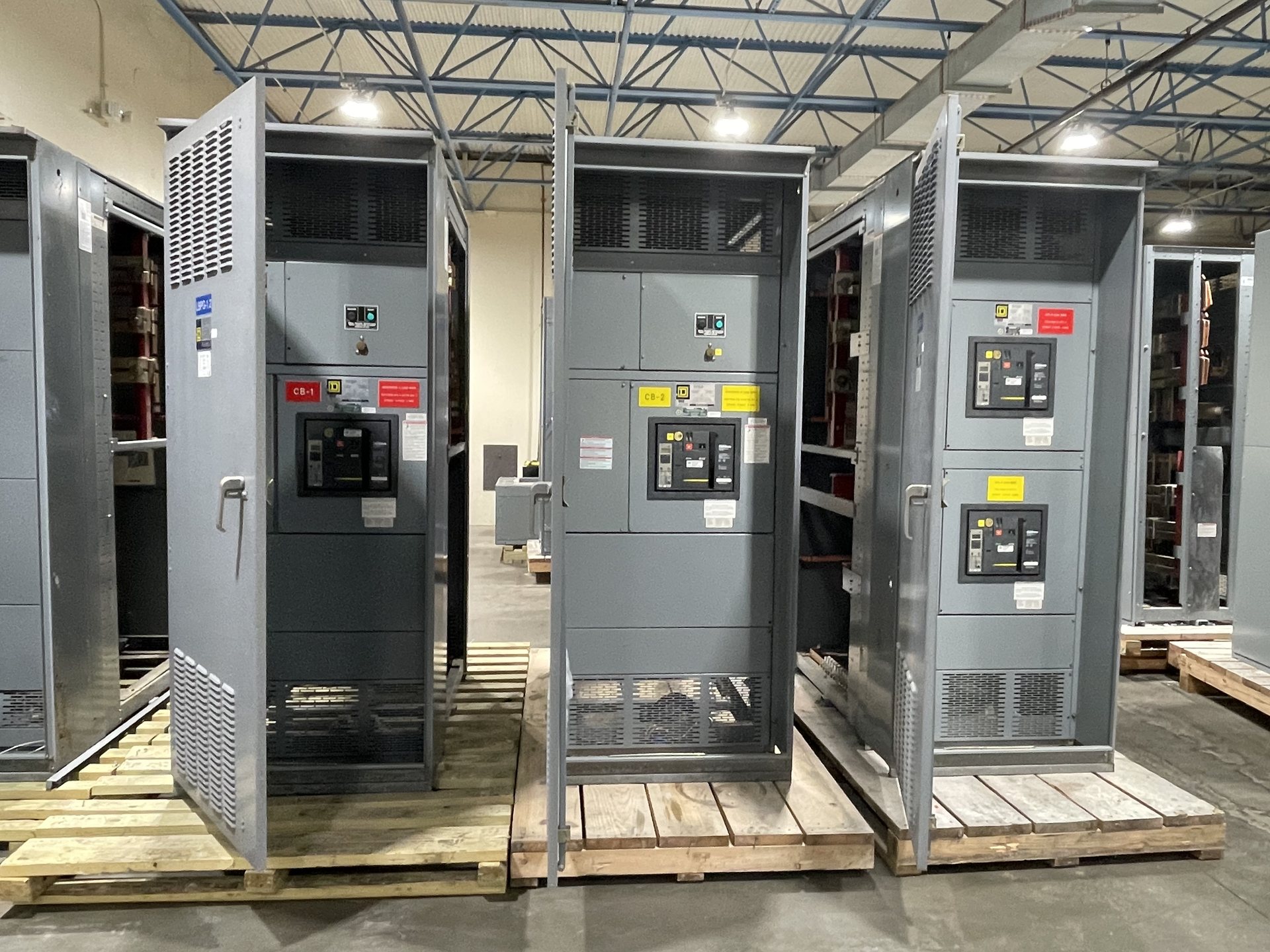
Start with the equipment as marked
If equipment is identified on its exterior as GE metal-clad switchgear, record that wording as a seller-reported marking. It can help distinguish the inventory from other assemblies, but by itself it does not establish a model, configuration, date, product history, or manufacturer relationship. Keep the description tied to what is visibly documented rather than filling gaps with assumptions about the equipment.
A site inventory may contain a complete lineup, individual cubicles, or equipment separated from its original location. Describe which of these arrangements appears to apply, and note whether the original lineup sequence is known. If sequence is uncertain, say so. Florida Switchgear Buyers reviews used, surplus, and decommissioned switchgear and related equipment across voltage classes; any offer and exact assets considered remain subject to review.
Connect cubicles to breaker records
For each cubicle, note any existing record that identifies its position or designation, then compare that information with records for removable breakers believed to correspond to it. The useful detail is the documented relationship, not an assumption that a breaker belongs in a cubicle because it is nearby or has a similar label. If matching records are absent, identify the relationship as unknown.
Where paperwork lists breaker identifiers, preserve those identifiers as written and indicate which cubicle, if any, the record explicitly associates with each breaker. A record may cover only part of a lineup, or may be too incomplete to resolve the match. In that case, distinguish documented pairings from unverified possibilities. No seller testing is necessary to provide this inventory information.
Account for empty positions and loose units
An empty cubicle position matters as much as one with a breaker recorded against it. Note the position designation if it is available and state whether an associated breaker appears in existing inventory records, is listed elsewhere, or is simply unaccounted for. Do not describe a position as ready for a particular breaker or service based only on its appearance; compatibility has not been established by that observation.
Removable breakers may be recorded separately from the lineup, stored apart, or included in a broader surplus list. Identify them as separate inventory items when their relationship to specific cubicles is unclear. If the records do not show whether a breaker is included, say that the inclusion status is unknown. This helps reviewers distinguish equipment offered together from equipment whose scope still needs clarification.
Share safe exterior identifiers
Existing, safely accessible exterior information can help clarify what is being reviewed. Depending on what is already visible, this may include nameplate wording, serial markings, cubicle designations, or other labels recorded in photographs or documents. Share only information available without opening, energizing, testing, disconnecting, moving, or otherwise handling the equipment. Electrical equipment should be handled only by qualified professionals.
A serial marking can assist with inventory identification, but it does not alone verify a model, condition, history, or value. If a marking is obscured, unavailable, or uncertain, record that limitation instead of inferring characters. Existing photographs can show the overall lineup and exterior labels, provided they were obtained safely. There is no need to create new images by approaching or manipulating equipment.
Separate documented facts from unknowns
Useful records may include existing equipment schedules, breaker lists, prior inventory sheets, or drawings that the seller already has. Their value for review depends on what they actually identify: a document might name a lineup without listing breakers, or list serial numbers without locating each unit. Send relevant material as available, and flag missing pages, conflicting descriptions, or unknown dates rather than reconciling them by guesswork.
Keep condition notes similarly bounded. A visual description already available to the seller is not a substitute for testing, and a lack of reported defects does not establish operating condition. Florida Switchgear Buyers does not require sellers to test equipment. Whether any listed cubicle, breaker, or related item is purchased depends on review, so an inventory should not treat a requested scope as an accepted one.
Clarify purchase scope and removal
When the inventory is ready, identify which cubicles and separately listed breakers are being offered, and mark any items whose inclusion is uncertain. Florida Switchgear Buyers makes cash offers and pays upfront for equipment purchased. For purchased assets, it handles crane, rigging, disconnects, loading, freight, and hauling. This equipment purchase and removal scope is not a promise to buy every item listed or a proposal for wholesale facility demolition or general electrical services.
To discuss GE-marked metal-clad switchgear, contact Florida Switchgear Buyers at (614) 715-3047 or saleselectricalbuyers@gmail.com. Existing records and safe exterior information can help explain the inventory, including gaps between cubicles and breaker documents. A response should not be taken as proof of manufacturer affiliation, authorization, endorsement, compatibility, or acceptance; the specific equipment and offer remain contingent on review.