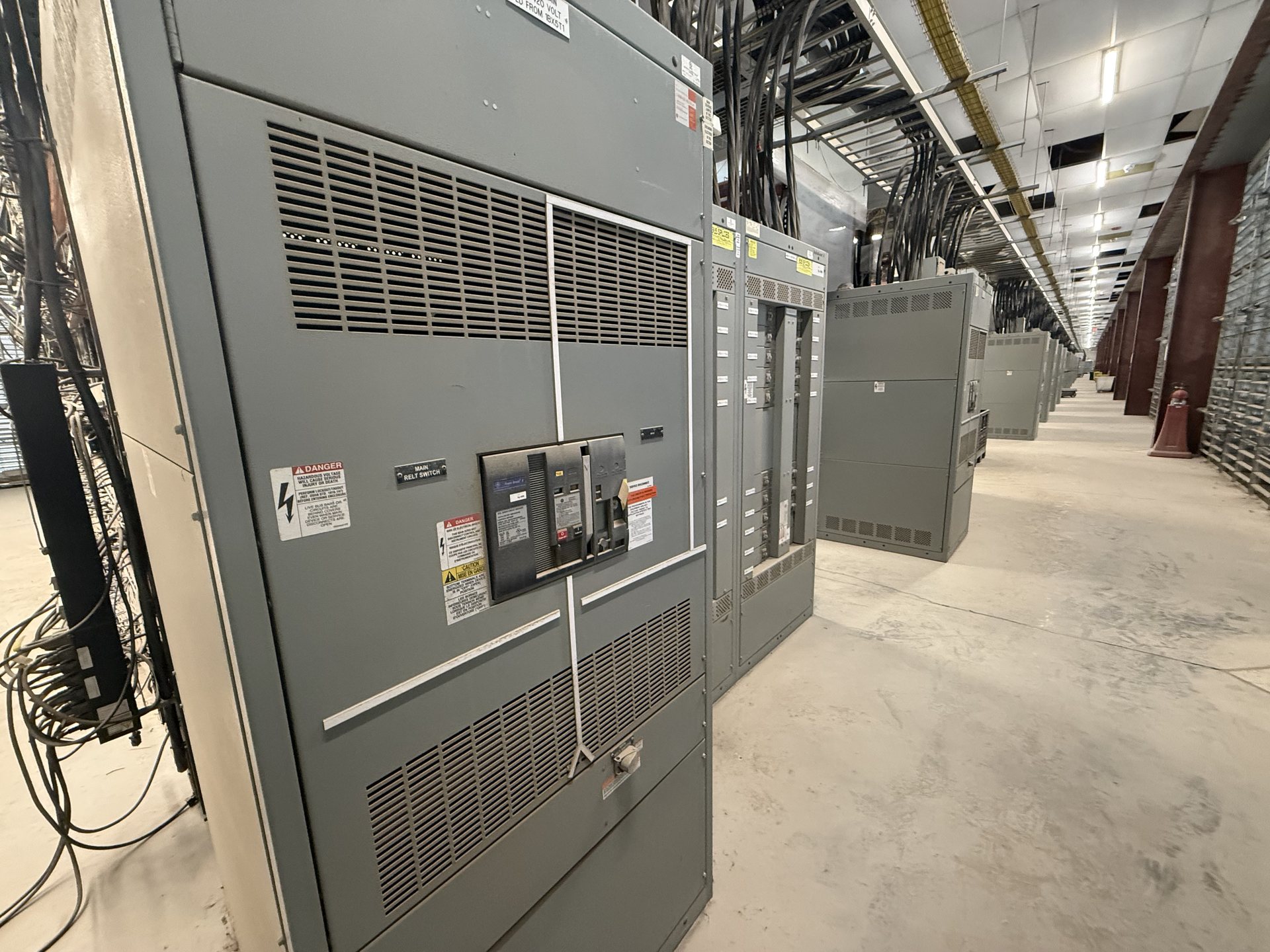
Match the asset list to visible markings
Start with the identification that can be observed from a safe location: the wording on the lineup nameplate or exterior labels, and any manufacturer names visible on breaker fronts. Record each marking as it appears rather than standardizing names across the asset list. A Schneider label on one part does not establish that every section or breaker carries the same marking, or establish a model or product history.
If existing photographs are available, use them to distinguish the lineup identification from labels on individual breakers or sections. Note which photo corresponds to which equipment position when that information is already known. If a marking is obscured, absent, or unreadable in accessible records, identify it as unknown; do not infer it from adjacent equipment or from a prior inventory description.
Define exactly what is being offered
Describe the proposed sale by lineup and section, not only by a general entry such as “Schneider switchgear.” Indicate whether the offer is intended to include the main section, feeder sections, and any separately identified breakers or related equipment. A site asset list may group several items together even when the proposed sale covers only part of that group, so state inclusions and exclusions in plain terms.
For example, if a seller intends to offer the lineup but retain a separately listed breaker, name that exception. If the main section is listed but the feeder-section count is uncertain, report the known scope and leave the count unresolved. The precise assets purchased depend on review; an inventory heading alone does not establish that every item associated with it is included.
Report ratings without filling gaps
Share ratings only when they are available in existing accessible records or visible exterior information. Keep each reported value tied to the section or device it describes, rather than applying one lineup-level entry to every breaker. If a rating is not recorded, the label cannot be read, or documents disagree, say so directly. Do not calculate, test, or derive missing values for the purpose of making an offer.
Separate confirmed information from seller estimates. A value copied from an older asset schedule can be identified as “reported” if it has not been checked against current accessible records. Where the lineup and breaker labels use different descriptions, preserve both and explain which item each label appears to identify. This helps review without treating differing labels as proof of compatibility, condition, or common origin.
Use drawings as reference, not proof
Existing one-line drawings, schedules, or other equipment records can help clarify how the seller has grouped the lineup and its main and feeder sections. Share available documents as they are, and identify whether a drawing appears to cover the entire lineup or only a portion. A drawing may not reflect later changes, so avoid presenting an unverified document as a current account of every installed component.
If drawings are missing, incomplete, or inconsistent with the asset list, mark that limitation rather than recreating the missing information. A simple note that the lineup description is based on accessible records can be more useful than a precise-looking but unsupported section count. No seller testing is necessary, and sellers should not open, energize, isolate, disconnect, or otherwise handle equipment to fill documentation gaps.
Keep condition and identity claims bounded
A manufacturer marking identifies what is written on the equipment; by itself, it does not establish a model, age, operating status, service history, or present condition. Avoid describing the equipment as complete, tested, compatible, or ready for reuse unless that status is supported by records you already have. If the history is unknown, retain that distinction instead of converting an inventory label into a technical conclusion.
Florida Switchgear Buyers reviews used, surplus, and decommissioned switchgear and related equipment in all voltage classes, including equipment from decommissioned data centers and closed power plants. It makes cash offers and pays upfront for equipment purchased. An offer and the exact assets in scope are contingent on review; the marking alone does not establish acceptance, value, or purchase.
Prepare a reviewable sale record
A concise submission can bring together the seller-reported Schneider identification, visible lineup and breaker markings, intended main and feeder section scope, any available ratings, and the drawings or schedules already on hand. Add a short unknowns note where details are missing. Florida Switchgear Buyers does not require sellers to test equipment; only qualified professionals should handle electrical equipment, and no handling is needed to assemble existing records or exterior information.
For a review, contact Florida Switchgear Buyers at (614) 715-3047 or saleselectricalbuyers@gmail.com. For equipment it purchases, the company handles crane, rigging, disconnects, loading, freight, and hauling. This concerns purchased equipment and its removal, not wholesale facility demolition or general electrical services. Keep the proposed scope clear so the review can address the assets actually offered.