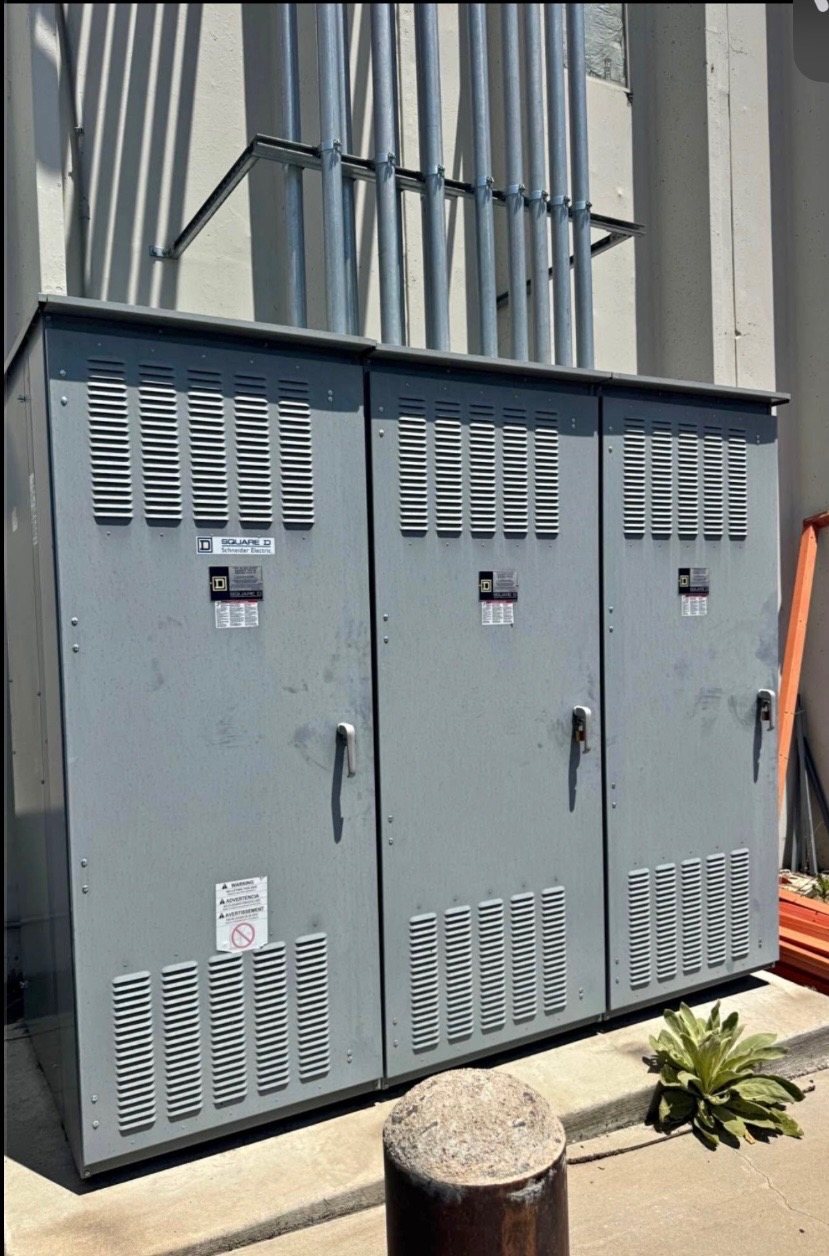
When ABB identification is only a starting point
An inventory entry such as “ABB low-voltage switchgear” is useful, but it does not establish an exact model, configuration, age, or product history. The marking may appear on a lineup label, breaker face, drawing, or earlier asset list, and those references may describe different parts of an assembly. Treat each identification as seller-reported information and note where it came from rather than assuming every section shares one identity.
If the equipment is already accessible for ordinary viewing, existing exterior photographs and records can help clarify what is present. Do not open compartments, energize or test equipment, or ask staff to handle it for a sale inquiry. A qualified professional should handle electrical equipment. If a label or assembly boundary cannot be seen safely, record that as unknown; a missing observation is more useful than a guessed designation.
A lineup may represent several inventory items
A surplus inventory may contain a complete lineup, a few retained sections from a larger lineup, or sections separated in earlier work. Describe the visible arrangement in practical terms: how many sections appear to be present, whether they are together, and whether available documents identify their roles. If a lineup once served as a main or feeder arrangement, report that only when supported by a record or reliable seller knowledge.
Section roles can matter even when the equipment carries a recognizable name. Existing schedules or drawings might call out distribution, incoming service, metering, or another function, but those labels should not be extended to adjacent sections without evidence. If records conflict with visible markings, preserve both descriptions and identify the discrepancy. Florida Switchgear Buyers reviews the assets offered; the exact purchase scope depends on that review.
Record visible labels without inferring a model
Exterior nameplates and breaker labels may show fields such as manufacturer marking, catalog or type designation, voltage, current, interrupting rating, serial number, or date information. Those are examples of fields that may appear, not guaranteed specifications for a particular assembly. Share legible wording as written, including punctuation or suffixes, and distinguish a lineup label from a label attached to an individual breaker or component.
A visible ABB marking does not by itself establish that every breaker in a lineup is ABB, that parts are original, or that components are compatible. When a label is obscured, incomplete, or absent, identify the field as unreadable or unknown. Existing photographs can help reviewers see label placement and assembly context, but no seller testing is necessary. Do not remove covers or manipulate equipment to obtain a clearer view.
Separate complete sections from missing components
For a section that appears complete, describe only what is apparent from safe exterior observation and what existing records confirm. For example, a seller might report that breaker doors are present while noting that the inventory does not establish whether internal components are included. Avoid using “complete” as a technical conclusion unless documentation supports the claim; explain the basis, such as an asset list, rather than treating appearance as proof.
If components are known to be missing, list them separately from items whose presence is uncertain. A breaker recorded as removed is different from a breaker that cannot be confirmed from available photos. Likewise, loose breakers or other associated equipment may be separate assets rather than part of a lineup section. This distinction helps reviewers assess the offered scope without assuming that incomplete sections are automatically accepted or rejected.
Add known history and preserve unknowns
Useful history can include where the equipment was installed, whether it was removed from service, and whether the seller knows of later changes to the lineup. Keep recollection, records, and assumptions distinct. If an old drawing appears to show a configuration that differs from the current exterior, say that the drawing is old and describe the discrepancy rather than presenting either version as definitive.
Some equipment offered may come from a decommissioned data center or a closed power plant; those origins are within the kinds of equipment Florida Switchgear Buyers considers. The site name or former use does not establish condition, age, configuration, or value. If the operating history is unavailable, say so plainly. Existing accessible records and photos may be shared, while missing history should remain unknown rather than being filled in by inference.
Request a review for the assets you can identify
When contacting Florida Switchgear Buyers, identify the sections or related equipment being offered and summarize what is documented, visible, missing, or unknown. The company buys used, surplus, and decommissioned switchgear and related equipment across voltage classes, and makes cash offers. An offer and the precise assets purchased are contingent on review; a brand marking or inventory description is not a promise of purchase or acceptance.
For equipment purchased, payment is upfront, and the seller does not need to test it. Florida Switchgear Buyers handles crane, rigging, disconnects, loading, freight, and hauling for purchased equipment; this is equipment purchasing and removal, not a promise of wholesale facility demolition or general electrical services. To discuss an inventory, call (614) 715-3047 or email saleselectricalbuyers@gmail.com. Only qualified professionals should handle the equipment.