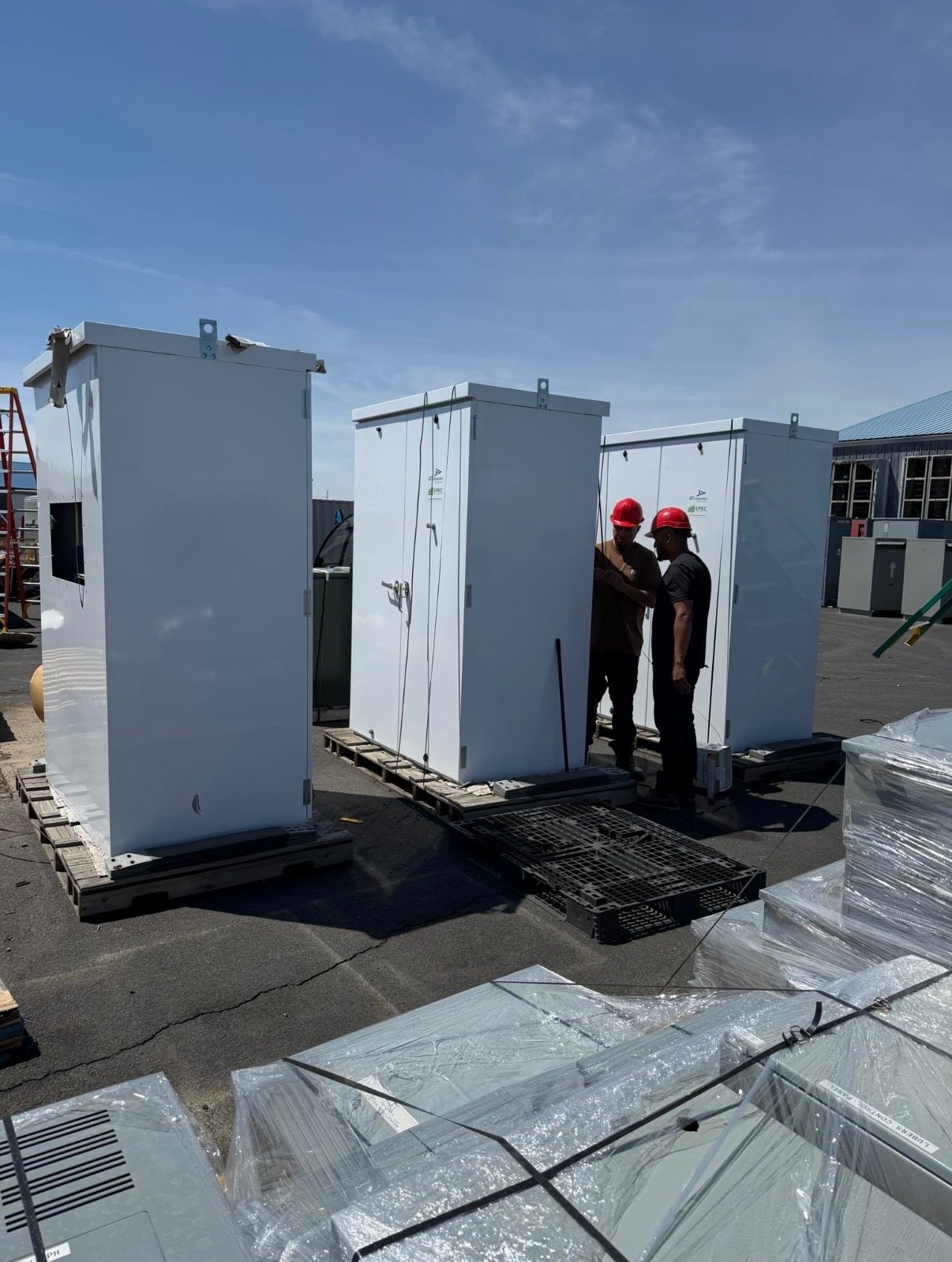
Separate the switchgear from related equipment
A seller may use “Westinghouse medium-voltage switchgear” as a working description, but that phrase alone does not identify every asset in a lineup. Start with the equipment’s visible exterior markings and the seller’s inventory, then distinguish the switchgear sections from separately listed breakers, control equipment, or other electrical assets. Record what is actually identified; do not treat a shared room, lineup, or label as proof that every item belongs to the same assembly.
If a site inventory names individual sections or breakers, preserve those identifiers as written and note which items they appear to describe. Where a record groups several cabinets under one description, the grouping may not establish the contents of each section. Existing photographs of accessible exterior markings can help explain the seller’s terminology, but no one should open equipment or approach it to obtain additional information.
Use identifiers as clues, not conclusions
The Westinghouse name should be treated as the seller-reported marking or identification, not proof of a particular model, production date, product history, or relationship to an original manufacturer. If a breaker has a separate visible identifier in existing records or photographs, keep it distinct from the switchgear identification. Similar names or numbering across documents do not, by themselves, establish that components belong together or are compatible.
When an identifier is incomplete, obscured in an existing image, or absent from the inventory, mark it unknown rather than reconstructing it. A seller can share the wording already recorded without interpreting a code or making a technical determination. This distinction matters when an offer is reviewed: Florida Switchgear Buyers considers the assets described and reviewed, and neither a familiar name nor a partial identifier establishes that an item will be purchased.
Report voltage class and unknowns carefully
Include the voltage class only when it is stated in an existing record or otherwise reliably documented by the seller. Keep the wording and units used in the source, and distinguish a reported class from an unverified assumption based on appearance, location, or a nearby label. If documents conflict, identify the discrepancy and provide both descriptions rather than choosing one without support.
A missing voltage entry is useful information too: label it unknown. No seller testing is necessary, and owners should not energize, isolate, test, or handle equipment to resolve a documentation gap. A qualified professional must handle electrical equipment. The purpose of sharing a reported class is to help describe the proposed assets for review, not to establish performance, application suitability, or compatibility with another system.
Share existing records and exterior information
Existing schematics, equipment schedules, inventories, and photographs may help distinguish the items being offered. Share only records already available and identify their source or date when known; do not imply that an old drawing reflects the present arrangement unless that is established. If a schematic covers a larger installation, note which portion appears relevant, while leaving uncertain boundaries clearly unresolved.
Safe exterior information can include descriptions or photographs already obtained without approaching, opening, disconnecting, or moving equipment. Missing views or unreadable markings need not be corrected by the seller. Do not remove covers, expose internal parts, or ask anyone to test the gear for a sale inquiry. Clear documentation of what is known—and what remains unknown—supports a more accurate review without turning the inquiry into an inspection instruction.
Describe physical completeness without assumptions
An inventory can state whether listed sections and separately identified breakers are present according to existing records or the seller’s accessible observations. Note apparent omissions, separately stored items, or components whose relationship to the lineup is uncertain. “Complete” should not be used as a blanket conclusion if the records do not define what the original or current arrangement included.
Likewise, an exterior photograph cannot establish internal condition, serviceability, or whether a component is ready for reuse. Avoid converting a visual impression into a condition guarantee. Florida Switchgear Buyers purchases used, surplus, and decommissioned switchgear and related equipment across voltage classes, but the precise assets purchased depend on review. The seller does not need to test equipment, and no purchase or acceptance should be assumed before that review.
Understand the transaction boundary
Florida Switchgear Buyers makes cash offers and pays upfront for equipment it purchases. For purchased equipment, it handles crane, rigging, disconnects, loading, freight, and hauling. These arrangements concern the assets included in a purchase; they should not be read as a commitment to buy every item described or as an offer to demolish a facility or provide general electrical services.
To discuss a seller-reported Westinghouse medium-voltage inventory, contact Florida Switchgear Buyers at (614) 715-3047 or saleselectricalbuyers@gmail.com. Existing identifiers, reported voltage class, available schematics, and a candid account of known gaps can help define what is being presented. The company’s review determines whether an offer is made and which specific assets may be purchased; no schedule, acceptance, or price is established by the equipment name alone.