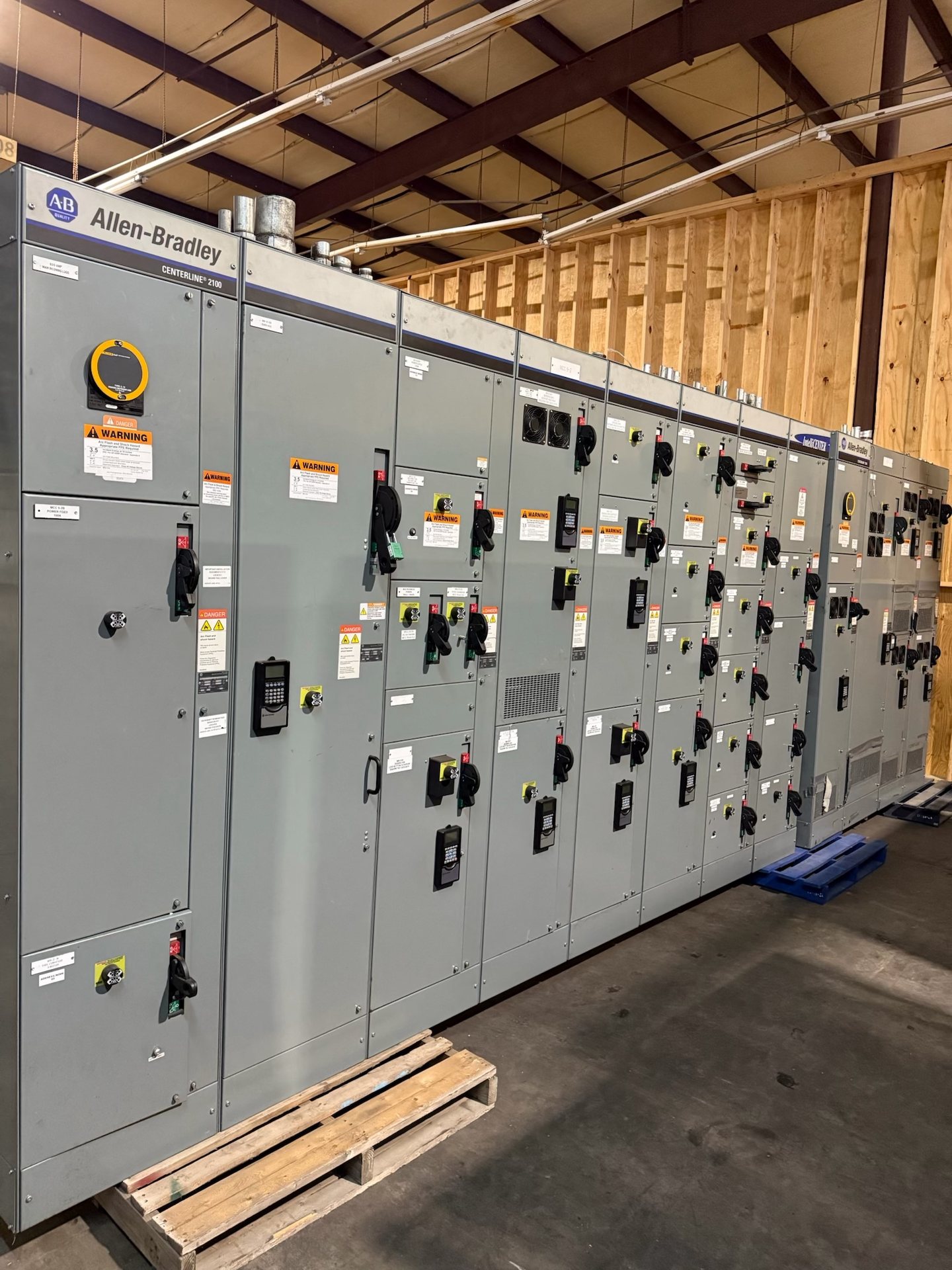
Reconcile the list against the marked equipment
An asset list may identify a quantity of Schneider MCC buckets, while the equipment offered is described only by location, lineup, or a handwritten label. Start by comparing the records you already have with the visible, accessible exterior markings and the count recorded for each group. Treat “Schneider” as the seller-reported marking, not as confirmation of a model, product history, or manufacturer relationship.
If a record lists six buckets but the available count is uncertain, report the count as unknown rather than making the paperwork fit. A note such as “six shown on asset list; physical count not yet confirmed” is more useful than an unsupported total. Do not approach, open, move, or handle electrical equipment to verify it; qualified professionals must manage any equipment access or work.
Capture labels without turning them into assumptions
Share existing photographs of legible exterior labels when available, along with any inventory entry that appears to correspond to them. A clear label can help distinguish one identified item from another during review, but a partial, damaged, or unreadable marking should remain qualified as such. Do not infer a model number from a fragment or use a nearby lineup label as proof of each bucket’s identity.
For an asset record with a manufacturer field, preserve what the source actually says: for example, “Schneider marking visible” is different from “manufacturer confirmed.” If the record gives a model or catalog reference, include it as a transcribed record value and identify its source. These distinctions let Florida Switchgear Buyers review the proposed assets without presenting an unverified identification as established fact.
Separate bucket details from starter details
Where existing documentation distinguishes a bucket from its starter, keep those descriptions separate. A listing might name a bucket assembly while another record refers to a starter component; combining the entries can obscure what is physically included or counted. Share the original descriptions and note whether the relationship is documented, merely assumed, or unknown. No one needs to test a unit to prepare this information.
If a schedule gives a starter type or other detail but does not clearly connect it to a particular bucket, retain that uncertainty instead of assigning the detail by position or memory. Likewise, a bucket count does not establish how many starters are included. A careful reconciliation makes clear which facts come from accessible markings, which come from records, and which remain unresolved for review.
Account for separately stored accessories
Accessories stored apart from the buckets should appear as a separate group in the offer information, with their recorded description and count if known. For example, existing paperwork may list loose components in a different location from the lineup; report that separation rather than silently adding them to a bucket total. If the accessory identity is uncertain, use the label or description already available and mark the identification as unconfirmed.
Do not assume a separately stored part belongs with a particular bucket because it looks similar, shares a label, or was found in the same facility. Nor should interchangeability be inferred from appearance, a brand marking, or a partial reference. If documentation explicitly links an accessory to an item, provide that record; otherwise state that the relationship is unknown. The review can then consider the proposed assets as described, without an unsupported compatibility claim.
Describe condition and location safely
For condition, use information already recorded or safely visible from an existing exterior photo. A seller may report that a label is unreadable or that the asset’s condition is undocumented, but should not open a compartment, energize equipment, perform tests, or arrange hands-on inspection for this sale information. Missing condition details are not a reason to invent a status; Florida Switchgear Buyers does not require sellers to test equipment.
A location note can help distinguish groups in an inventory, but it should not be treated as evidence that every listed bucket remains present or belongs in the proposed sale. Share only information already available, and leave uncertain counts, identifiers, and accessory relationships marked unknown. Only qualified professionals should handle electrical equipment. Any disconnects, rigging, loading, crane work, freight, or hauling for equipment purchased are handled by the buyer, not by seller-directed equipment handling.
Submit the proposed equipment scope for review
Florida Switchgear Buyers buys used, surplus, and decommissioned electrical switchgear and related equipment across all voltage classes, including equipment from decommissioned data centers and closed power plants. It makes cash offers and pays upfront for equipment purchased. Whether particular Schneider-marked MCC buckets are included, and the precise assets purchased, depends on review; a brand marking alone does not establish acceptance, compatibility, or value.
Send the inventory description, available exterior label photos, relevant existing records, and separate notes for accessories or unresolved counts to (614) 715-3047 or saleselectricalbuyers@gmail.com. Identify each figure as confirmed from a record, visually noted in an existing photo, or unknown. This gives the review a practical scope to assess without seller testing or electrical handling. The purchase and removal arrangement applies to equipment purchased, not general facility demolition or electrical services.