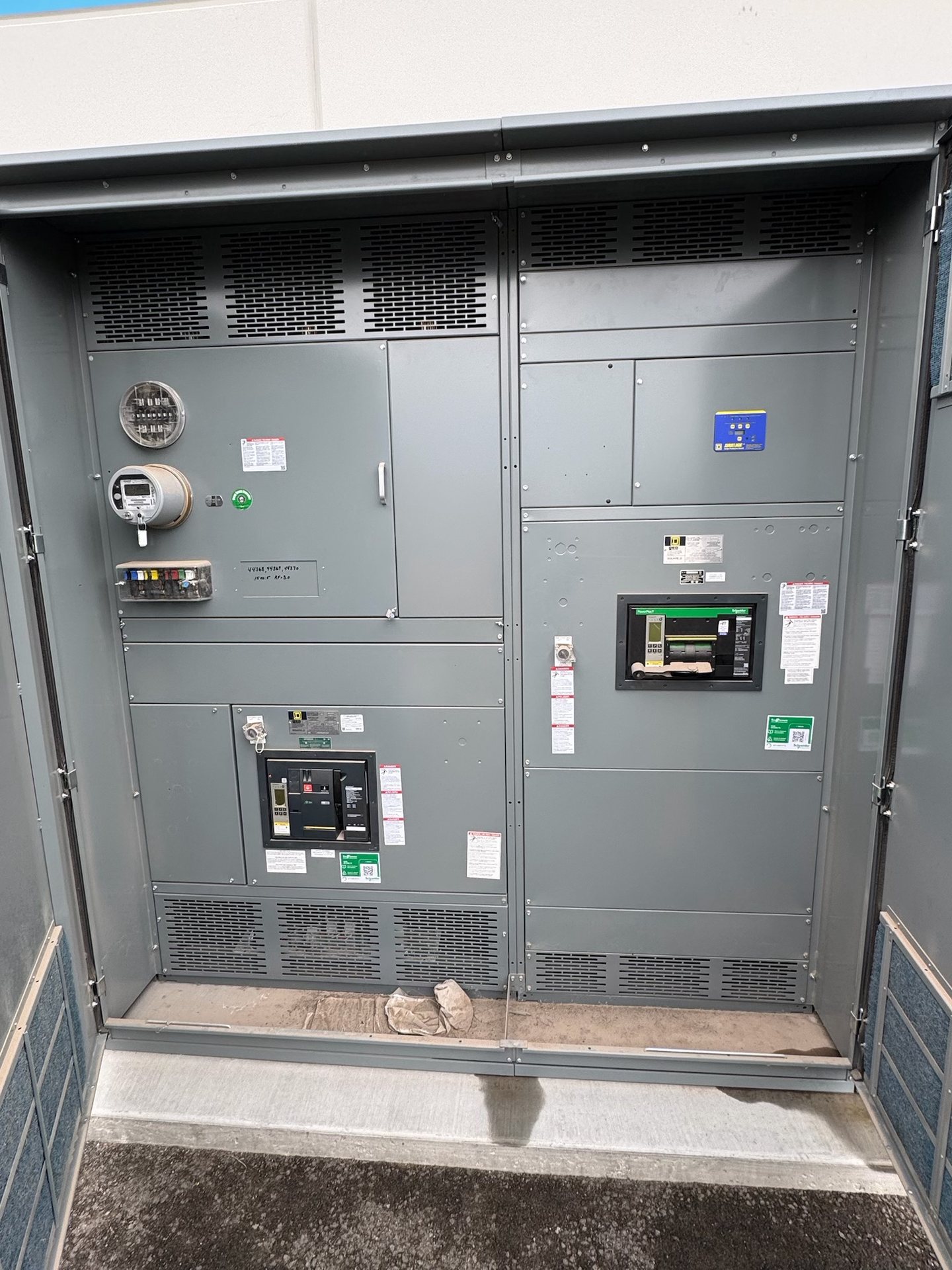
Scope the lineup by what is present
A potential sale can be scoped around the equipment you identify as Cutler-Hammer low-voltage switchgear, without assuming that the name establishes a particular model or history. Start with the lineup as it stands: note how many sections appear to be present, whether there are separate enclosures or loose associated items, and which assets you believe belong in the proposed sale. These are seller observations for review, not a technical determination.
Keep the proposed scope distinct from the rest of a facility. If a room contains switchgear alongside unrelated electrical equipment, identify what you are asking the buyer to consider and what should remain outside that request. A lineup may be only part of a larger installation, and an offer may cover only assets accepted after review. Florida Switchgear Buyers purchases used, surplus, and decommissioned switchgear and related equipment across voltage classes; acceptance and precise purchase scope are contingent on review.
Record visible identification carefully
For each section, share only markings already accessible from the exterior, such as the wording that appears on labels, nameplates, or breaker identification. A clear photograph can help preserve exact spelling and punctuation when a label is hard to transcribe. Do not infer a model from a partial marking, and do not treat “Cutler-Hammer” by itself as proof of a specific product, manufacturer relationship, or equipment history.
If nameplate ratings are legible in existing photographs or records, provide the wording as shown rather than translating it into a broader specification. Identify which section or component each image depicts when you can do so from a safe, existing view. If a rating is obscured, a label is missing, or the connection between a breaker and a section is uncertain, state that plainly; an unknown is more useful than a guessed value.
Describe section and breaker configuration
A lineup’s apparent arrangement can affect how a proposed lot is understood. From existing exterior views, you might describe the number of sections, their left-to-right order if known, visible gaps or separate enclosures, and whether identifiable breakers appear to be included. Avoid assigning a function to a section unless that function is documented. If the lineup was altered or assembled over time, its present visible arrangement may not explain how it was originally configured.
List breaker markings separately where practical, especially when identification differs from the wording on the lineup. A visible label may help distinguish one breaker from another, but it does not establish condition, operation, interchangeability, or compatibility. If loose breakers or parts are included in the proposed sale, distinguish them from items installed in the lineup and note any uncertainty about their association. Do not remove covers or handle equipment to obtain better views.
Share records and identify gaps
Existing equipment schedules, purchase or maintenance records, drawings, and prior inventory documents may add context if they are available. Share copies or relevant excerpts that you already have, and indicate which sections or assets each record appears to cover. Records may describe an earlier arrangement rather than the current one, so flag any known mismatch instead of treating paperwork as a definitive description of what remains on site.
No seller testing is necessary. Do not energize, open, isolate, disconnect, move, or otherwise handle equipment to answer questions or create new documentation. Only qualified professionals should handle electrical equipment. If a record does not state a rating, date, configuration, or breaker association, leave that detail unknown. Existing accessible photographs and documents can support review without turning the seller’s description into a condition assessment.
Coordinate scope and removal expectations
The buyer’s review determines which identified assets, if any, are purchased; equipment merely visible in the same room should not be assumed included. Before a sale is arranged, make clear which sections and associated items are proposed, which are excluded, and whether any records or loose components belong with the proposed lot. If access or ownership boundaries are unclear, identify the issue for discussion rather than making assumptions about what can be sold.
For equipment purchased, Florida Switchgear Buyers handles crane, rigging, disconnects, loading, freight, and hauling. That removal coordination applies to purchased equipment, not automatically to every asset at a facility, and it is distinct from wholesale facility demolition or general electrical services. Sellers do not need to test equipment. Discuss the proposed assets and site coordination with the buyer; do not undertake electrical or physical handling yourself.
Make the buyer conversation specific
A useful initial conversation can state that the equipment is seller-identified as Cutler-Hammer low-voltage switchgear, summarize the visible lineup sections, and separate confirmed markings from unknowns. Mention whether existing nameplate photos, breaker identifiers, or records are available, without estimating age, condition, compatibility, or value. Florida Switchgear Buyers makes cash offers and pays upfront for equipment it purchases; an offer and the precise assets purchased depend on review.
To begin that review, contact Florida Switchgear Buyers at (614) 715-3047 or saleselectricalbuyers@gmail.com. Share the equipment description and any existing accessible documentation or photographs, and point out gaps rather than filling them with guesses. The buyer can consider the information and clarify the proposed scope. A seller’s label, record, or photograph helps identify what is being discussed, but does not itself establish purchase, acceptance, or a particular offer.