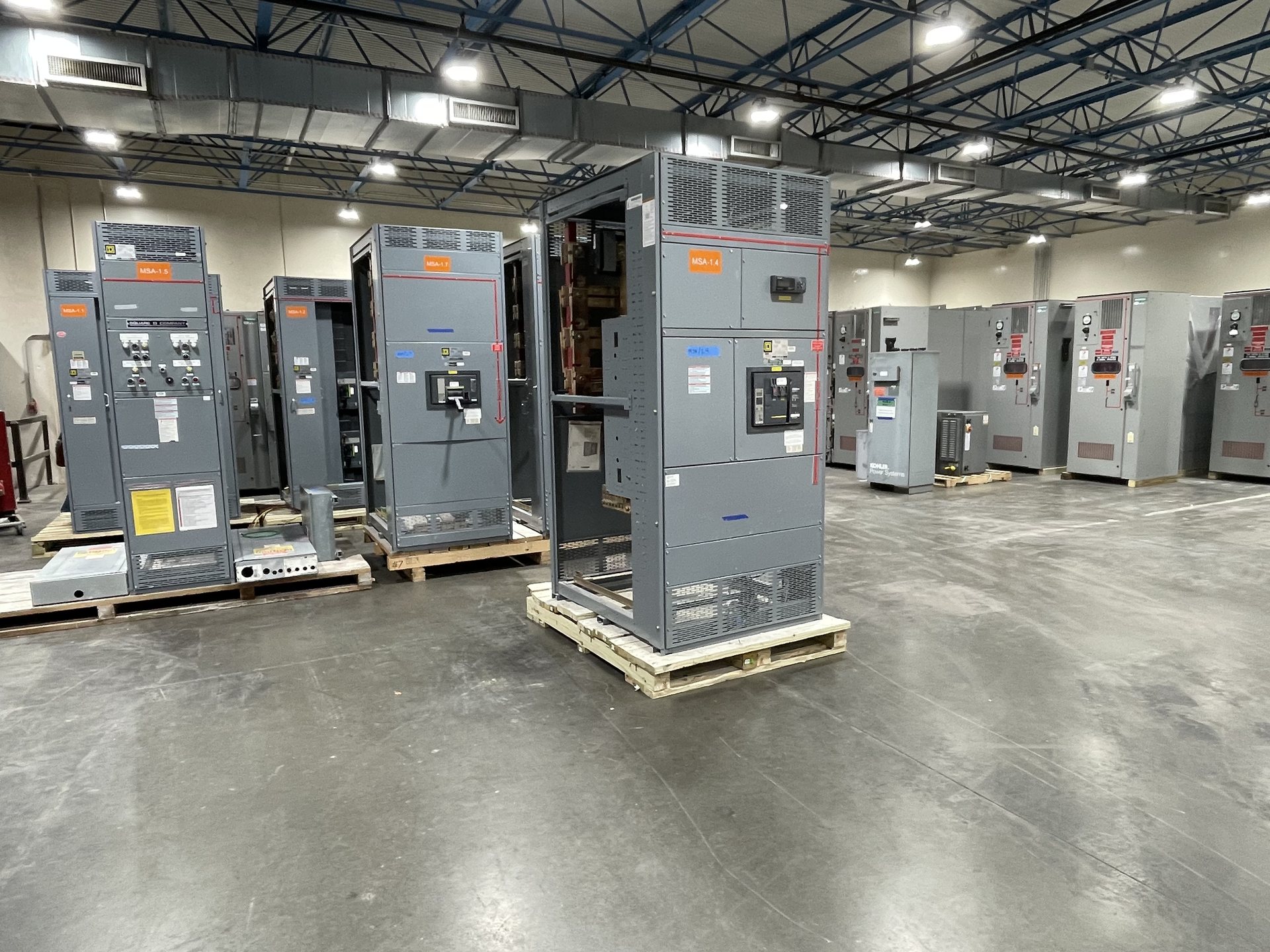
Start With the Marking, Not an Assumption
When an asset list says “Cutler-Hammer switchboard sections,” treat that wording as a reported identification to reconcile, not as proof of a particular model, date, product history, or manufacturer relationship. Record what the existing label or inventory entry actually says, including differences in spelling or wording, and keep uncertain descriptions visibly provisional. That distinction helps prevent a broad brand entry from silently becoming a precise equipment claim.
Compare each listed section with accessible exterior identification and existing photographs or records. A mark on one section does not establish that adjacent sections share the same identification, ratings, or configuration. If a marking is absent, obscured in an existing image, or inconsistent with the asset list, note the discrepancy as unknown or unresolved; do not open equipment or seek additional information by handling it.
Separate Sections Before Reconciling the Lot
A single inventory line may represent several independently labeled sections, while a group that appears visually consistent may contain different markings. Build the reconciliation around section-level entries where the records support that distinction. Use an existing identifier, location reference, or photo label to connect each entry to the offered equipment, but avoid inventing identifiers when no reliable reference exists.
For example, if an asset list names three sections but available records clearly describe only two, preserve the third as an unverified item rather than assigning it the description of its neighbors. Conversely, a list entry may describe one lineup while the proposed sale includes only selected sections. State which sections are included in the proposed lot and which remain outside it, subject to review of the actual assets.
Capture Ratings and Main or Feeder Descriptions Carefully
Record ratings only when they appear in existing documentation or can be read from accessible exterior information without touching or manipulating equipment. Keep the source attached to the entry, such as an inventory record or an available photograph, and distinguish a documented value from an unreadable or missing one. Do not infer a section’s rating from another section, a general facility schedule, or a visual resemblance.
Main and feeder descriptions can help distinguish sections that a broad brand label cannot. Preserve the wording and units used by the available record, and note whether it describes a main, feeder, or another arrangement only when the source actually says so. If the description is absent, conflicting, or unclear, mark it unknown for review rather than supplying a customary configuration or suggesting compatibility with other equipment.
Identify Accessories as Included, Separate, or Unclear
List accessories and related components only when the seller can identify them from existing records or safe exterior information. Separate items documented as part of a particular section from items merely stored nearby or grouped under the same asset number. A shared inventory entry does not by itself establish that every accessory belongs to every section, or that a component is included in the proposed sale.
When mixed markings or incomplete records make ownership or association uncertain, describe the item and its status plainly: included as listed, offered separately, or not yet reconciled. Photographs already available may help show the distinction. Do not remove covers, disconnect components, or reposition equipment to clarify a listing. The buyer reviews the assets and determines the precise equipment, if any, included in an offer.
Use Records and Photos to Explain Gaps
Useful material may include existing asset schedules, exterior photographs, prior descriptions, and records that identify section labels, ratings, mains, feeders, or accessories. Share what is available, even if it is incomplete, and identify entries that do not match the visible information. Missing documentation is a gap to disclose, not a reason to guess at a model, condition, operating status, or equipment history.
No seller testing is necessary. Do not energize, open, isolate, disconnect, move, or otherwise handle switchgear to complete the reconciliation; only qualified professionals should handle electrical equipment. If an existing image does not make a label legible, report that limitation rather than creating a new view through physical access. This keeps the asset description useful while avoiding unsupported claims about condition or technical details.
Present the Proposed Lot for Review
A concise reconciliation lets Florida Switchgear Buyers review used, surplus, or decommissioned switchgear and related equipment in all voltage classes, including equipment from decommissioned data centers and closed power plants. The company makes cash offers and pays upfront for equipment purchased. Any offer and the precise assets purchased depend on review; identifying a section in a seller’s records does not guarantee acceptance or establish its value.
For purchased equipment, the company handles crane, rigging, disconnects, loading, freight, and hauling. This applies to equipment purchased, not a promise of wholesale facility demolition or general electrical services. To discuss a reconciled list or available records, contact (614) 715-3047 or saleselectricalbuyers@gmail.com. A clear distinction between confirmed entries, mixed markings, and unknown details gives the review a sound basis without requiring seller testing.