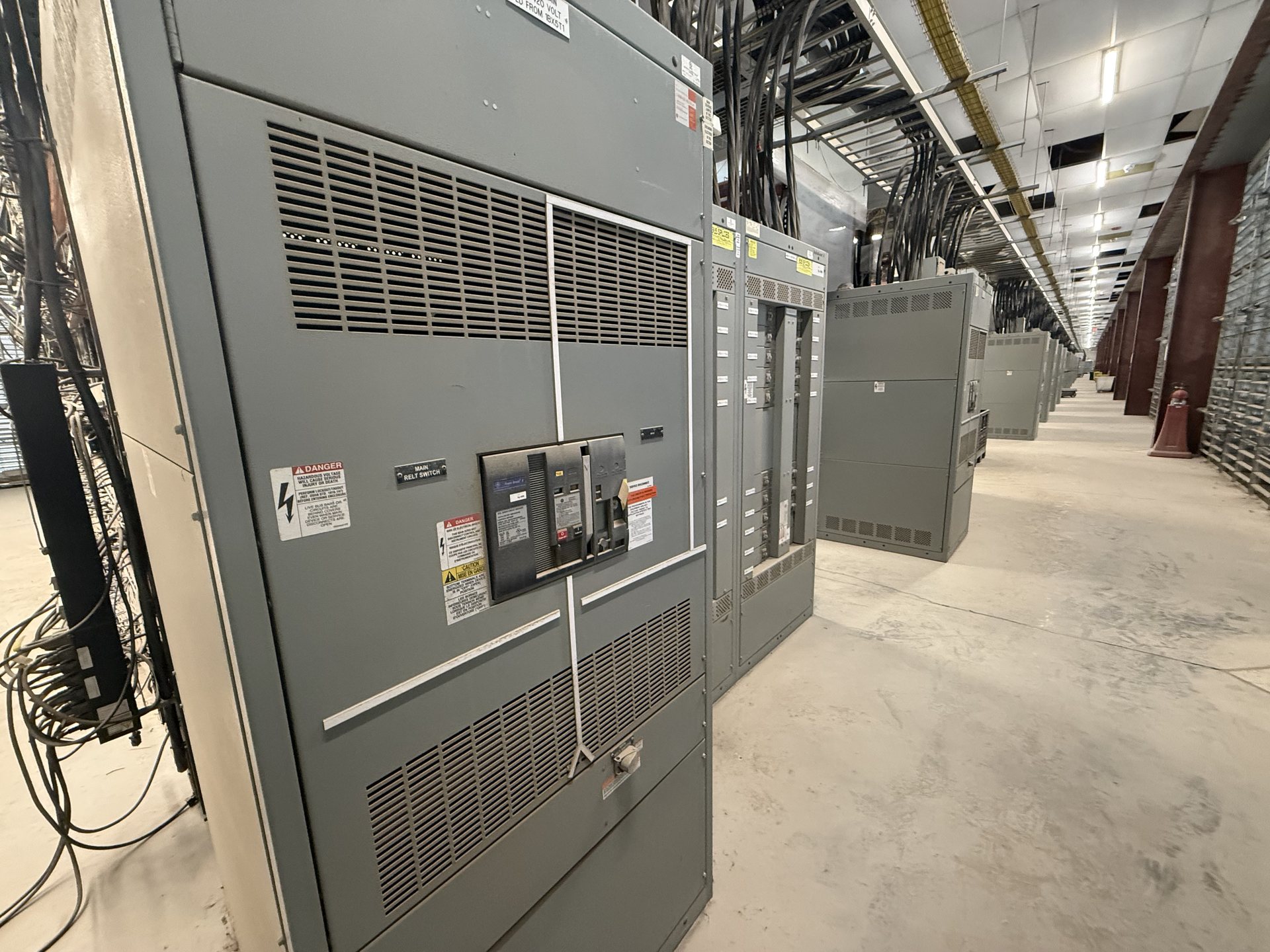
Separate readable fields from missing data
A partially legible nameplate can still provide useful identification, but only if its readable content is separated from what is uncertain. A hypothetical Miami Beach seller might transcribe a visible manufacturer name and catalog number while marking the voltage field “not legible.” Copy the characters as seen, preserve punctuation where possible, and do not complete a faded number from memory or assume a familiar-looking model has standard ratings.
Keep the transcription tied to a specific section or enclosure, not merely to a room or lineup. Use a consistent temporary identifier such as “Lineup A, section 1,” and show that same identifier in the transcription and any photograph captions. If the physical arrangement is unclear, describe the location in plain terms without claiming a confirmed equipment boundary. This helps a buyer distinguish observed information from interpretation.
Use exterior views to resolve identity
Existing, safely accessible exterior photographs can help clarify whether a readable plate belongs to a particular section, door, or larger assembly. Share views that show the equipment’s overall arrangement and, where already available, a closer view of the nameplate. Do not enter a restricted area, open an enclosure, approach exposed components, or reposition equipment to improve a picture; only qualified professionals should handle electrical equipment.
A broad view and a detail view answer different questions. The broad view may show that several sections appear grouped together, while a close view may preserve a few legible characters. Neither view alone establishes internal configuration, operating condition, or electrical ratings. If a plate cannot be photographed safely or clearly, say so and provide only the information already visible in existing records or images.
Distinguish lineup identity from section identity
A buyer may need to know whether a seller is describing one section, several connected sections, or a complete lineup. Use a stable identifier for each item being discussed, then state cautiously how sections appear to relate: for example, “sections 1–3 appear together in the existing exterior photo; connection is unconfirmed.” Avoid treating adjacent enclosures as a single assembly when the available evidence does not establish that relationship.
If separate labels appear on different sections, transcribe each under its own identifier rather than combining the fields into one composite description. A partial plate on one section does not automatically identify neighboring sections. Likewise, if the seller cannot tell whether a label applies to a door, compartment, or full section, record that uncertainty directly. Clear boundaries make an offer review more useful without implying acceptance or value.
Supplement transcription with existing records
Existing drawings, equipment schedules, prior inventories, or purchase records may provide context when a nameplate is incomplete. Share a document only as it exists, and identify its date or source if known. If a drawing appears to show an arrangement matching the exterior view, describe that as a possible match unless identifiers establish it. A document’s age or apparent similarity does not prove that the installed equipment remains unchanged.
Keep documentary details distinct from direct observations. A schedule might list a rating, while the surviving plate does not show that field; report the schedule entry as “listed in existing schedule,” not as a rating independently confirmed from the nameplate. If no records are available, say “not available” rather than implying a search established they never existed. Unknown information is still useful when labeled accurately.
Flag ratings instead of inferring them
Do not fill gaps in voltage, current, interrupting capacity, frequency, or other ratings by copying values from a neighboring section or a similar-looking model. A value may be relevant only if the exact equipment identity and applicable document are clear. When a field is obscured, write “unknown” or “not legible”; when two sources differ, preserve both entries and explain their sources instead of choosing one.
This distinction changes the description a buyer can responsibly review: “rating shown on existing schedule, plate unreadable” is not the same as “rating confirmed on nameplate.” The seller need not test the equipment or seek access to live interiors to improve the record. Do not energize, open, isolate, disconnect, or move equipment for identification; leave any inspection or handling to qualified professionals.
Prepare a review-ready sale record
A concise record can bring together each section identifier, exact legible plate text, exterior image references, documents consulted, and unresolved fields. Note whether a photograph shows one enclosure or the apparent lineup, and avoid describing condition beyond what is plainly visible. If the seller is unsure whether related components belong with the switchgear, list them separately as possible associated equipment rather than representing them as a confirmed package.
Florida Switchgear Buyers purchases used, surplus, and decommissioned switchgear and related equipment across voltage classes, including equipment from decommissioned data centers and closed power plants. It makes cash offers, pays upfront for equipment purchased, does not require seller testing, and handles crane, rigging, disconnects, loading, freight, and hauling for purchased equipment. The precise assets and any offer depend on review. For a potential sale, contact (614) 715-3047 or saleselectricalbuyers@gmail.com. Purchasing and removal of purchased assets are distinct from facility demolition or general electrical contracting.