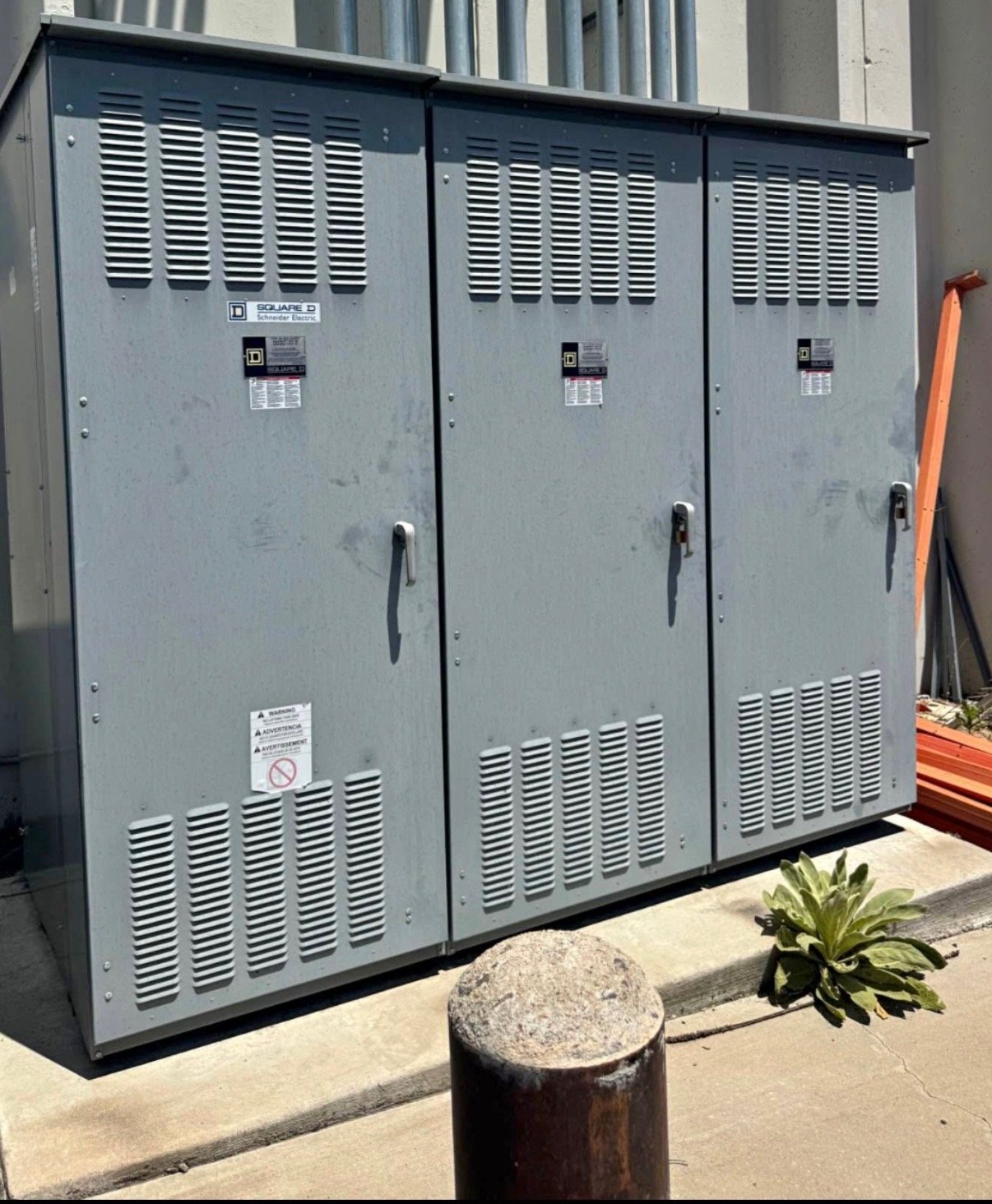
Separate a section from the board around it
An owner in Lake Worth Beach considering a switchboard sale can begin by comparing the visible equipment labels with any existing drawings, schedules, or asset records. Those sources may help distinguish a separately identified section from a complete board, but they may not agree or provide a full description. Share only records and photographs already accessible without approaching or handling the equipment; label any uncertainty rather than filling gaps by assumption.
A section may appear as one part of a larger lineup, while records may describe the entire assembly under a single identifier. That difference matters when defining what is offered: the potential sale could concern one section, several sections, or a broader group of equipment, subject to review. Do not treat a shared enclosure, lineup name, or drawing reference as proof that every connected or adjacent item is included.
Use visible identifiers without inferring function
If a nameplate or exterior label is legible in an existing photograph, its wording can help identify the equipment for review. Record the exact text when possible, along with the label’s apparent location, rather than interpreting abbreviations as confirmed specifications. A manufacturer name is useful identification, not evidence of affiliation or endorsement, and a faded, missing, or obscured label should be reported as such.
The distinction between a main section and a distribution section should rest on accessible documentation or clearly visible labeling, not a seller’s guess based on size or position. If the records identify a main function but the section’s role in the wider assembly is unclear, say both things. If function is unknown, that is still useful information: it prevents a preliminary description from presenting an unverified role as fact.
Describe what is included and what is unknown
Completeness is a separate question from function. Existing records may show whether doors, covers, or other components were associated with a section, but a photograph alone may not establish that every part is present. Describe only what can be seen in material already available, and distinguish visible items from components merely listed in a document. Avoid removing covers or inspecting interior parts to resolve a discrepancy.
A section may also be offered with related items that are separately identified in records, or without them. Make the proposed boundary explicit: state whether the offer concerns the labeled section alone or includes other identified equipment, and mark unclear boundaries as unknown. This gives a buyer a more meaningful basis to review the potential transaction than a broad description such as “switchboard,” which can blur a single section and an entire board.
Report condition cautiously
Condition descriptions should separate visible observations from conclusions about operation. An existing photograph might show exterior wear, missing labels, or apparent impact damage, but it cannot establish internal condition or suitability for reuse. Where a seller has no reliable condition record, saying that condition is unknown is more accurate than calling a section working, tested, or complete. Florida Switchgear Buyers does not require sellers to test equipment.
Do not energize, open, isolate, disconnect, move, or otherwise handle switchgear to improve a listing or answer questions. Electrical equipment should be handled only by qualified professionals. If a qualified professional has already produced records, those existing documents may be shared for review; a seller need not commission new testing merely to present a possible sale. Any unresolved condition questions remain subject to review rather than becoming seller assurances.
Define a potential sale, not a facility project
For a hypothetical Lake Worth Beach owner with one labeled section left from a larger installation, the practical question is whether that section can be identified and its transaction boundary explained—not whether the whole installation should be removed. Florida Switchgear Buyers purchases used, surplus, and decommissioned switchgear and related equipment in all voltage classes. The specific assets considered for purchase depend on review, so describing a section does not guarantee acceptance.
The business handles crane, rigging, disconnects, loading, freight, and hauling for equipment it purchases. That removal arrangement concerns purchased assets; it is not a promise to demolish a facility, remove every item on site, or perform general electrical work. A seller should not arrange or attempt disconnection or movement independently for the purpose of a sale. The scope and handling of any purchased equipment must be considered with the proposed assets.
Send a clear record for review
A concise submission can identify the city, the number of sections being offered, visible labels, any documented main or distribution function, what records exist, and which details remain unknown. Existing photographs can help show exterior labels and context if they are already accessible. Avoid presenting a single section as a complete board unless the records support that description, and do not add unverified voltage, condition, or history claims to make the listing sound more specific.
Florida Switchgear Buyers makes cash offers and pays upfront for equipment purchased; an offer and the precise assets purchased are contingent on review. For a discussion, contact (614) 715-3047 or saleselectricalbuyers@gmail.com. An owner can share available identification and documentation without testing the section. A clear distinction between the proposed section and the surrounding board helps establish what is being considered, while leaving unknown facts open for review.