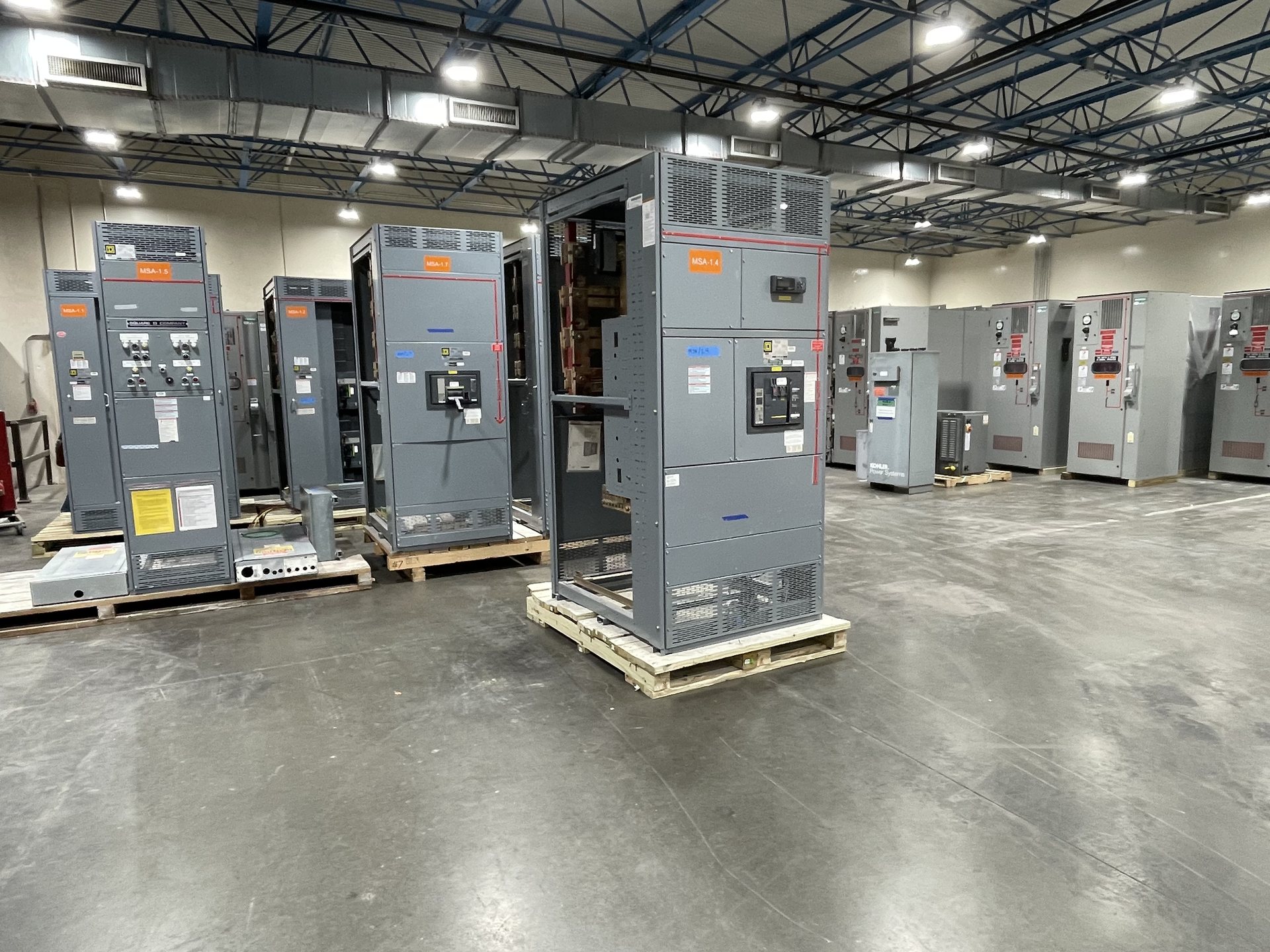
Separate switchboard equipment from job materials
A contractor considering a surplus sale should first distinguish the switchboard itself and related electrical equipment from materials that remain part of a job. A lineup, sections, or associated components may be candidates for review, while spare parts, customer-owned items, temporary gear, and materials reserved for another project may require separate treatment. These are possibilities, not assumptions about any particular contractor’s inventory.
Make an item-level record using information already available, such as purchase documents, asset tags, schedules, or existing photographs. Note what each record appears to describe and flag uncertainties rather than resolving them by inspection. If a drawing references several sections but the available photos show only some, identify the mismatch. A preliminary list helps prevent a discussion about one asset from unintentionally including retained job materials.
Confirm the right to sell each asset
Possession does not always establish authority to transfer ownership. A contractor may have purchased equipment outright, received it under a project arrangement, or be storing property belonging to a customer, subcontractor, lender, or other party. Before requesting an offer, check the applicable ownership and closeout records and confirm who is authorized to approve a sale. If ownership is shared or unclear, identify that status openly.
The person coordinating the inquiry should also have authority to speak for the owner and arrange access to the equipment. A project manager, company owner, or storage contact may have different responsibilities; do not assume one person can approve both the sale and site arrangements. If approval is pending, describe it as pending. The potential transaction depends on review, and no asset should be represented as available for sale until the seller can substantiate that authority.
Describe installed, unused, and unknown status
For each switchboard or related item, summarize whether it is described in existing records as unused, previously installed, removed, or still associated with an active project. Those categories affect what a buyer needs to understand, but they do not establish condition or suitability. A unit described as unused may have been stored for an extended period; an installed unit may have been removed or retained with incomplete history. State the source of each description when known.
Share accessible photographs and records if they are available, and label gaps plainly. Useful context may include readable nameplate information already captured, invoices, equipment schedules, or removal and storage notes. Do not create a missing specification from memory or treat an old drawing as confirmation of the current configuration. The seller does not need to test equipment; only qualified professionals should handle it, and no one should open, energize, disconnect, or move it for the inquiry.
Coordinate access without disturbing equipment
A contractor’s leftover equipment may be at a job site, in company storage, or under another party’s control; the actual arrangement must be confirmed rather than presumed. Identify an authorized site or storage contact who can explain access procedures and any restrictions. If the equipment is not at the contractor’s own premises, establish who can approve a visit and whether the owner’s representative must be present before discussing removal.
Keep access planning distinct from permission to sell. A site contact may control entry without owning the switchboard, while the equipment owner may not control the building. Provide the buyer with the appropriate contact and known constraints after confirming permission to share them. Do not ask site staff to prepare equipment or alter its position. Any handling, disconnects, loading, or removal should be coordinated only for assets ultimately purchased and handled by qualified professionals.
Define the potential purchase boundary
Florida Switchgear Buyers buys used, surplus, and decommissioned electrical switchgear and related equipment in all voltage classes, including switchboards when offered for review. It makes cash offers and pays upfront for equipment purchased. Whether a particular lineup, section, or associated item is included, and the offer itself, depend on review of the information and assets. A submission is not confirmation of acceptance, condition, compatibility, value, or a final purchase scope.
The transaction concerns selected equipment and removal of purchased assets, not wholesale demolition of a facility or general electrical contracting. If a contractor’s inventory includes both a switchboard and unrelated job materials, identify the proposed sale items separately and ask that each be considered on its own information. Florida Switchgear Buyers handles crane, rigging, disconnects, loading, freight, and hauling for equipment it purchases; that does not mean every item presented will be bought or removed.
Prepare a clear inquiry and next step
A concise inquiry can state the seller’s role, the basis for authority to sell, the equipment’s known location, and which items are being offered rather than retained. Add available records or photographs and mark unresolved details as unknown. If the switchboard is installed or access is restricted, say so; do not arrange unauthorized entry or ask anyone to conduct a test or physical preparation. This gives the buyer context without implying facts that have not been verified.
For a purchase review, contact Florida Switchgear Buyers at (614) 715-3047 or saleselectricalbuyers@gmail.com. Before sharing documents, remove information that is not needed for identifying the assets, and confirm that the sender is permitted to provide the material. The buyer can review what is presented and determine whether to make an offer and which assets it would cover. Timing, acceptance, and the final scope are not established until that review is complete.