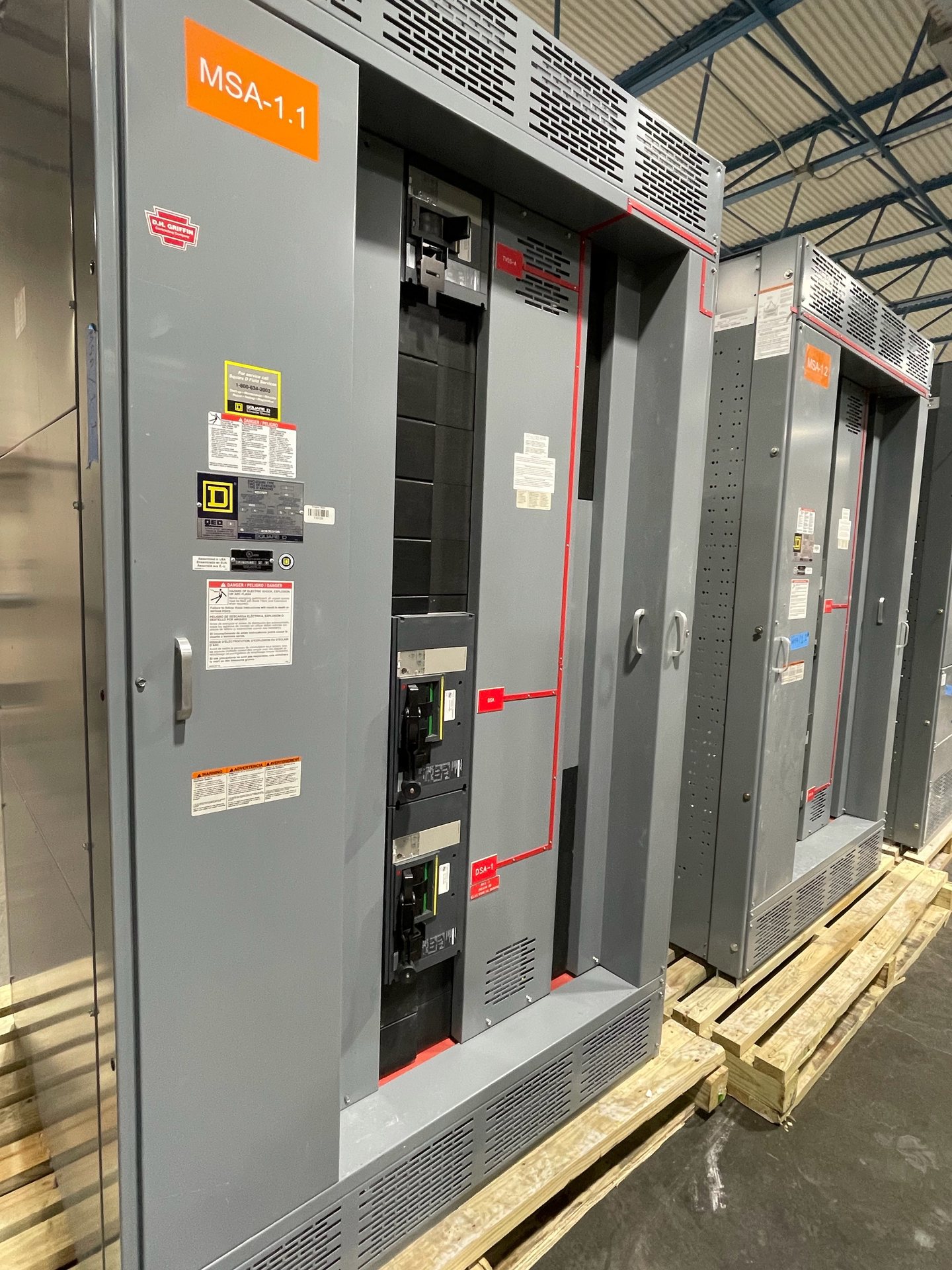
Start by separating stored stock from installed equipment
A hypothetical seller in Estero may have spare breakers stored in a room, warehouse, or other designated area alongside breakers still installed in switchgear. Describe those groups separately. A stored spare is not automatically part of a sale of a lineup, and an installed breaker should not be counted as loose inventory simply because it may eventually be replaced. This distinction gives a buyer a clearer asset list without implying that any item is available or accepted.
If the seller is unsure whether a breaker is stored stock or remains assigned to equipment, record that status as unknown rather than resolving it by inspection or movement. Existing inventory records, labels, or photographs may help clarify the distinction. Do not ask staff to open equipment, disconnect a breaker, or move it to confirm its status; only qualified professionals should handle electrical equipment. No seller testing is necessary for a purchase review.
Make identification useful without treating it as proof of fit
Where identification is already safely visible, share the maker name, model or catalog information, and nameplate details in the form shown. A photograph can preserve characters that are easy to misread, while a typed transcription can make a longer inventory easier to search. If a label is obscured, missing, or illegible, say so. Do not supply a guessed model number or treat a partial match as a confirmed identification.
A breaker’s visible model information does not establish that it fits a particular switchgear lineup. Even when a seller believes a model is associated with equipment on site, describe the association as known, reported, or uncertain according to the records available. Compatibility and operating condition are separate questions. A buyer can review the supplied information, but the seller should not infer either conclusion from appearance, prior storage, or a model name alone.
Clarify counts and what the count includes
Give a count for each identifiable group rather than one total for all spare breakers. For example, if records distinguish two model descriptions or storage locations, report separate quantities and note whether the count comes from an existing inventory record or another accessible source. If the count has not been confirmed, label it an estimate or unknown. This prevents a preliminary tally from being mistaken for a verified quantity offered for sale.
State whether a count refers to breakers only or also includes separately stored components. If the seller cannot tell whether an item is a breaker, accessory, or part of another assembly, describe it as unidentified rather than assigning it to a category. Counts should reflect what the seller is offering for review, not equipment that remains installed or is excluded. The precise assets purchased are contingent on review, so a submitted inventory is not an acceptance.
Describe cradles and associated components separately
If cradles are included in the proposed inventory, list their number separately from the breaker count and note any visible identification available without handling. Avoid describing a cradle as included merely because it appears in a nearby storage area. If ownership, association, or inclusion is uncertain, state that uncertainty. A buyer then has a more accurate description of the proposed lot and can distinguish breakers from accompanying items during review.
When a seller knows a spare breaker was kept for a particular lineup, record the basis for that association if readily available, such as an existing inventory notation or a label. If no association is documented, leave it unspecified. Do not claim a cradle or breaker will fit a lineup based on resemblance. The distinction changes the description from “associated” to “unconfirmed,” not into a technical compatibility finding.
Record condition as reported, not tested
For each group, distinguish what is known from what has not been assessed. A seller might report that an item has been stored indoors according to existing records, or that storage history is unknown; neither statement proves operating condition. Note visible damage only when it is apparent in an existing, safely obtained photograph or record. Avoid terms such as tested, serviceable, or ready for installation unless supported by qualified assessment already available.
Florida Switchgear Buyers does not require sellers to test equipment. Do not energize, open, operate, isolate, disconnect, or move a breaker to answer inventory questions. If there are existing reports or accessible photographs, they may be shared for review; otherwise, mark the relevant detail unknown. This keeps the record useful without creating an unsafe task or overstating what a visual description can establish.
Set expectations for review, purchase, and removal
A concise inventory can include separate counts, safely visible identification, cradle quantities, known lineup associations, and explicit unknowns. Florida Switchgear Buyers buys used, surplus, and decommissioned switchgear and related equipment in all voltage classes, including equipment from decommissioned data centers and closed power plants. That scope does not mean every spare breaker will be purchased; the offer and exact assets included depend on review of the information and equipment.
For a potential sale, contact Florida Switchgear Buyers at (614) 715-3047 or saleselectricalbuyers@gmail.com. The company makes cash offers and pays upfront for equipment purchased. For purchased equipment, it handles crane, rigging, disconnects, loading, freight, and hauling; this is not a promise to buy every listed item or a claim of general electrical contracting or facility demolition. Only qualified professionals should handle equipment.