Define the Saleable Group Before Describing Its Status
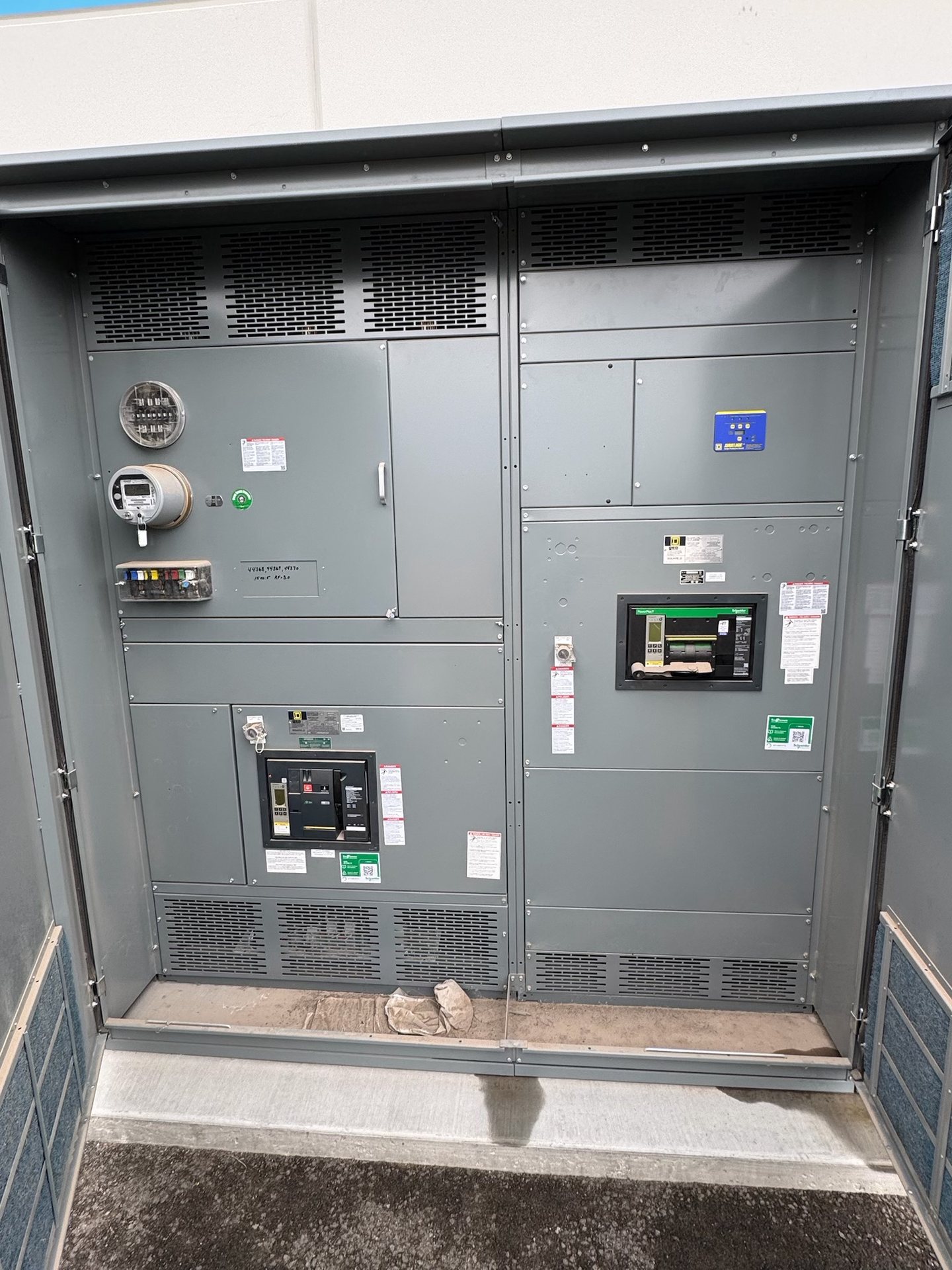
A hypothetical Punta Gorda owner might begin by identifying the equipment being considered as a possible sale, rather than treating every item in a former electrical room as one asset. The proposed group could include a low-voltage switchgear lineup and associated breakers, but the owner should distinguish those items from adjacent panels, transformers, wiring, or building infrastructure unless their inclusion is also under review.
A seller-reported retirement describes an operational or business decision; it does not establish that the equipment is electrically safe, disconnected, or ready for removal. Those are separate matters for qualified professionals. Florida Switchgear Buyers considers used, surplus, and decommissioned switchgear and related equipment in all voltage classes, but any offer and the precise assets purchased depend on review of the equipment information provided.
Use Lineup Identifiers and Counts to Bound the Lot
Existing accessible nameplate photographs, lineup labels, drawings, or asset records may help distinguish one section from another. A seller can report identifiers exactly as they appear and mark unreadable or absent details as unknown. Avoid inferring voltage, manufacturer, model, or configuration from appearance alone; where a record conflicts with a label, preserve that distinction instead of silently choosing one version.
Counts can make a proposed lot easier to understand: the number of lineup sections, and the number of breakers if an existing inventory supports that count. Clarify whether a figure covers the entire lineup or only a described portion, and whether spare or separately stored breakers are included. If a count is uncertain, say so. No seller testing is necessary, and no one should open equipment to produce an inventory.
Separate Known Records from Unknown Conditions
A useful record packet may consist of documents and photographs already accessible to the owner, such as equipment schedules, purchase records, prior service paperwork, or visible exterior labels. Their presence can support identification, but does not by itself verify current condition, electrical safety, or completeness. If no drawing or maintenance history can be located, state that it is unavailable rather than assuming the equipment has none.
The same care applies to descriptions of condition. A seller may relay a known history or report that a unit was retired, but should separate firsthand records from recollection and leave undocumented facts unknown. Do not energize, test, isolate, or otherwise handle equipment to answer a buyer’s questions. Qualified professionals alone should address electrical safety; a purchase review is not a substitute for that determination.
Clarify Authority to Discuss and Release Equipment
Before a buyer conversation advances, establish who is authorized to represent the owner and who can approve a sale or release of the proposed assets. In some organizations, the person who knows the equipment is not the person empowered to commit it. The seller can identify the appropriate contact or approval process without making assumptions about ownership, lien status, or permission to remove items.
Release authority matters to scope as well as timing. If the lineup is only part of a larger property or another party has an interest in it, describe that constraint and identify what remains unresolved. A buyer can review the proposed equipment, but should not be told that access, ownership, or removal consent is settled unless the seller can support that statement. Do not arrange for anyone to disconnect or move equipment on the buyer’s behalf.
Coordinate Review Without Turning It into a Field Task
When sharing information, label each image or document with the section or breaker it depicts if that identification is already known. Existing exterior views may show the general arrangement, while records can add identifiers or counts; neither should be presented as proof of internal condition. If photographs are unavailable or incomplete, note that plainly. The seller does not need to create new images by approaching, opening, or handling equipment.
For assets purchased, Florida Switchgear Buyers handles crane, rigging, disconnects, loading, freight, and hauling. That scope concerns purchased equipment and its removal, not wholesale facility demolition or general electrical contracting. The parties still need to establish which assets are included and coordinate the relevant access and release arrangements. Sellers should leave electrical work and equipment handling to qualified professionals rather than attempting preparation themselves.
Make the Buyer Conversation Decision-Ready
A concise inquiry can identify the Punta Gorda location, the proposed low-voltage lineup, available section and breaker counts, visible identifiers, known records, and any unknowns or approval conditions. This gives the buyer a basis to ask focused follow-up questions without turning a seller’s retirement description into a safety claim. Florida Switchgear Buyers makes cash offers and pays upfront for equipment purchased; purchase scope and any offer remain contingent on review.
A seller can contact Florida Switchgear Buyers at (614) 715-3047 or saleselectricalbuyers@gmail.com and share accessible documentation or photographs. A conversation does not guarantee acceptance, a particular price, or a schedule. Keep the distinction clear: the seller supplies what is already known and authorized for sharing; qualified professionals address electrical safety, and the buyer reviews whether the identified equipment is suitable for a purchase.