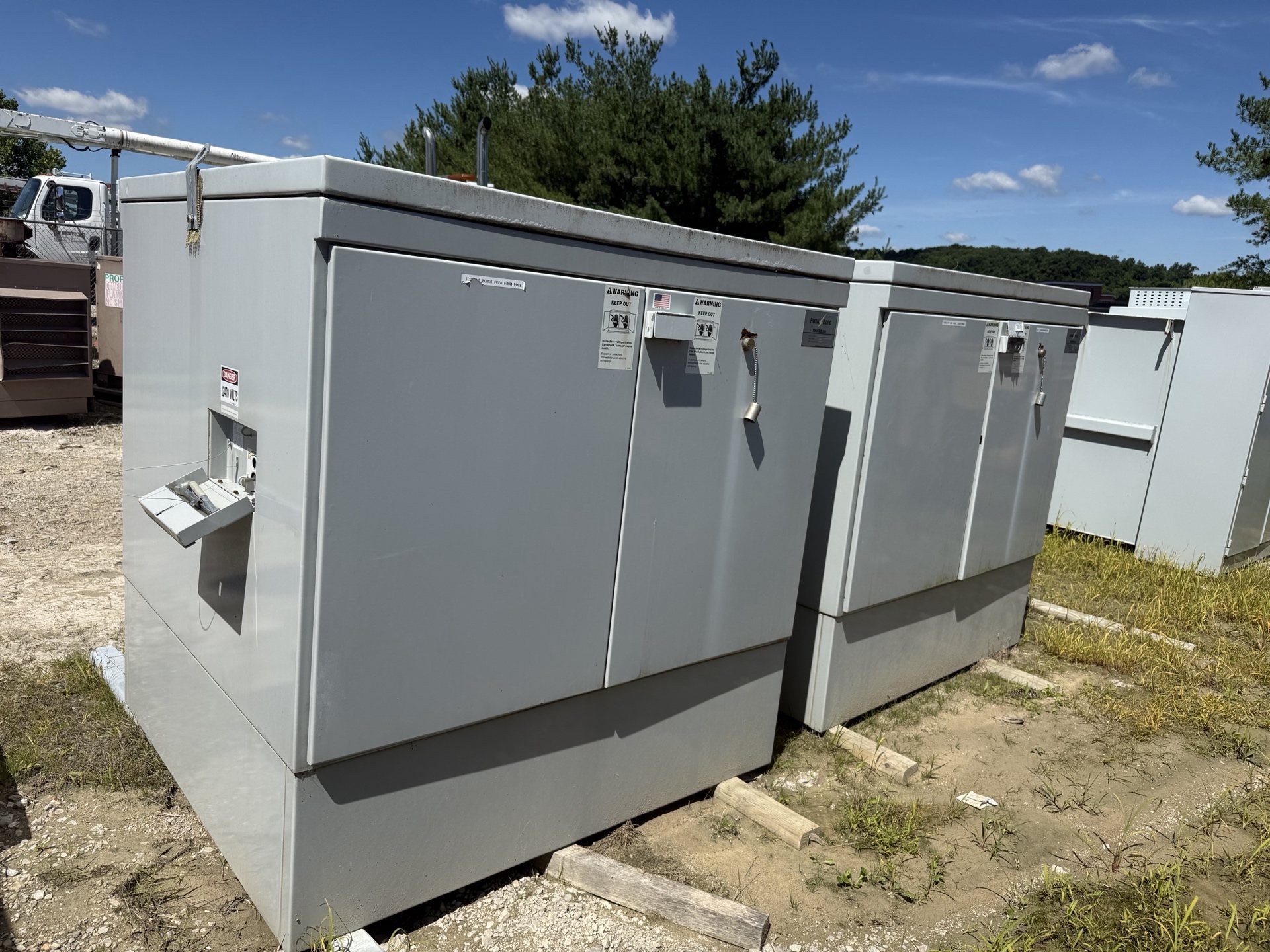
Start with the lineup as documented
A hypothetical seller in Cape Canaveral might have an inventory record describing a medium-voltage switchgear lineup by voltage class, section count, and manufacturer. Treat those entries as the seller’s current description, not as a verified account of the lineup’s electrical status or completeness. Existing schedules, nameplates visible in prior photographs, and other accessible records can help explain what is being considered without requiring new inspection or testing.
Section count can clarify the scale of an inventory, but it does not by itself establish which sections remain together, what each contains, or whether all recorded components are present. If the record counts a lineup as one assembly while photographs show separate sections, describe that difference plainly. The buyer can review the information and determine which assets, if any, may be included in an offer.
Separate recorded specifications from unknowns
A voltage-class entry is useful for initial identification, especially when the seller has a schedule or equipment record that supports it. It should not be presented as a current test result, proof of operating condition, or confirmation that every section shares the same configuration. If the source of the entry is unclear, label it as an inventory description and identify the source as unknown rather than filling the gap with an assumption.
Manufacturer information can also help distinguish one lineup from another, but a name in a record does not establish model, date, configuration, or affiliation with any buyer. If only some sections are identified, note which ones the documentation covers and leave the rest unidentified. This gives reviewers a more reliable picture than applying one manufacturer name across the entire lineup without supporting records.
Protective-device records need careful framing
Protective-device records may list relay types, breaker designations, or other identifiers, depending on what the seller already has. These records are useful as documentation, but they do not prove that devices are installed as listed, complete, functional, or coordinated with other equipment. A seller can distinguish a record entry from a confirmed equipment condition and can note whether the information is current, historical, or of unknown date.
If a lineup’s records are incomplete, preserve that uncertainty rather than estimating missing protective-device details. For example, a schedule might identify devices for several sections while leaving another section blank; the blank is an information gap, not evidence that the section lacks a device. No seller testing is necessary. Only qualified professionals should handle electrical equipment, and a seller should not open, energize, isolate, disconnect, move, or otherwise handle it to answer questions.
Describe the inventory boundary
The potential sale may involve a complete lineup, selected sections, or related equipment considered separately. A seller’s inventory should make clear which possibility is being described, while avoiding a claim that every listed item will necessarily be purchased. If the section count is approximate, or if associated equipment appears in a separate record, say so. Review can then focus on the assets offered rather than an assumed package assembled from incomplete paperwork.
A facility’s former use should not be inferred from the presence of medium-voltage gear. If the seller knows the equipment came from a particular setting, that history may be shared as seller-provided context; if it is unknown, leave it unknown. The inventory can still be considered on its documented equipment details. This keeps a potential equipment transaction distinct from a claim about facility type, facility history, or a broader demolition project.
Share accessible evidence without creating new risk
Useful materials may include existing equipment schedules, prior photographs, purchase or asset records, and documents that identify section count or protective devices. Share only materials already accessible to the seller; do not create a new inspection, open an enclosure, or conduct a test for the purpose of seeking an offer. If photographs show only exterior views, describe them as exterior views. Do not use them to assert internal condition or electrical status.
When information conflicts, preserve both descriptions and identify their sources where possible. A drawing may show one section count while a later inventory lists another; that difference is worth disclosing, not silently resolving. Mark model, device, condition, and completeness details unknown when the available records do not establish them. This helps prevent a preliminary review from being mistaken for a technical determination or a commitment to purchase every item.
Understand the purchase and removal scope
Florida Switchgear Buyers buys used, surplus, and decommissioned electrical switchgear and related equipment in all voltage classes, including equipment from decommissioned data centers and closed power plants. It makes cash offers and pays upfront for equipment purchased; the precise assets purchased and any offer depend on review. Sellers are not required to test equipment. An offer should not be treated as acceptance of every lineup section or related item in an inventory.
For equipment purchased, the company handles crane, rigging, disconnects, loading, freight, and hauling. That scope concerns purchased equipment; it is not a promise of wholesale facility demolition or general electrical services. A Cape Canaveral seller may share existing documentation and photographs with Florida Switchgear Buyers at (614) 715-3047 or saleselectricalbuyers@gmail.com. Keep electrical handling with qualified professionals and leave undocumented status unresolved until appropriately established.