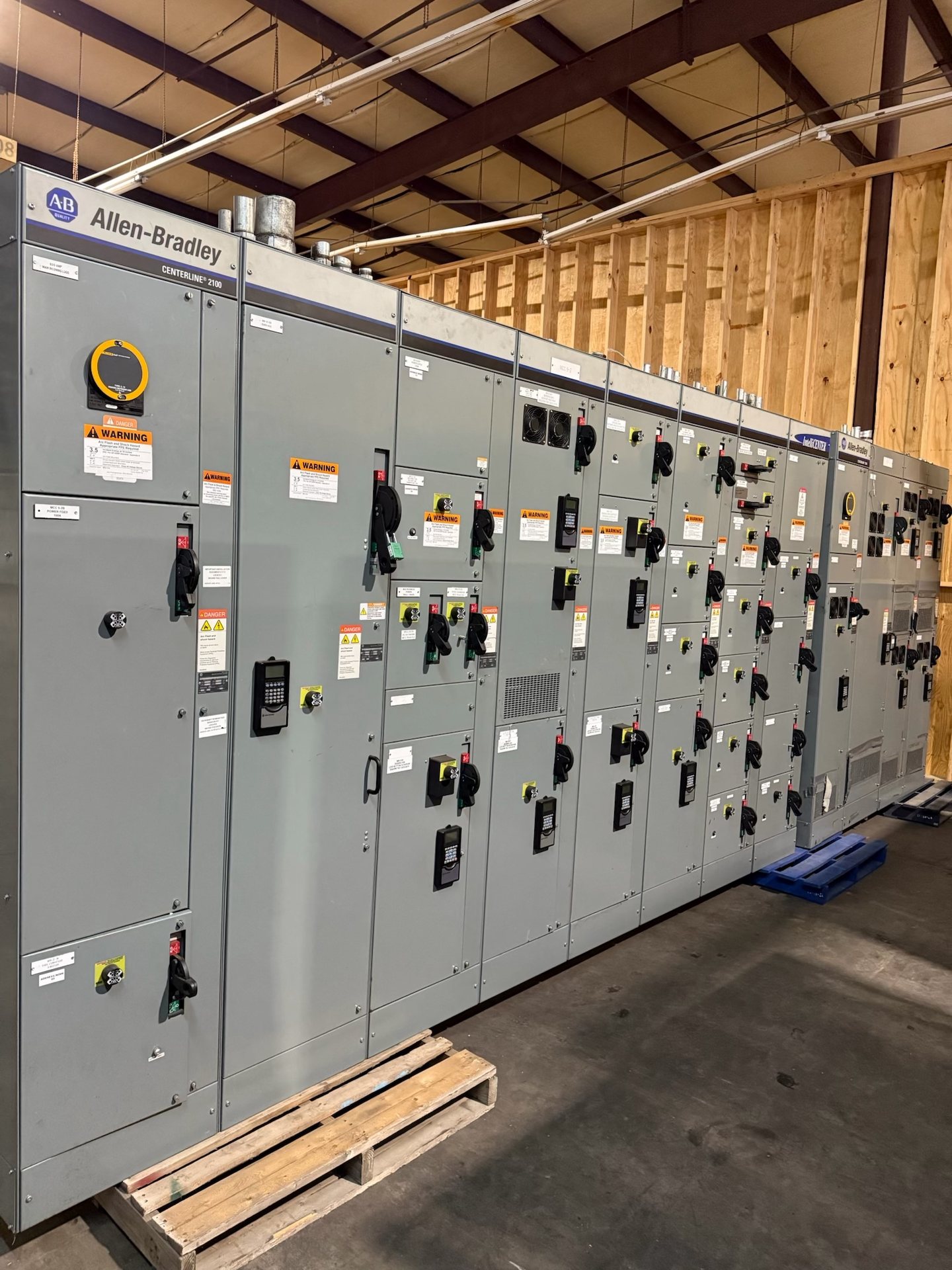
Start with the lineup boundary
For a hypothetical seller in Okeechobee, the first useful map is not a floor plan of the entire electrical room. It is a clear boundary around the switchgear being considered for sale. Existing drawings may show the lineup outline, section numbers, and neighboring equipment; use those records to identify the asset under review without assuming every cabinet shown belongs in the transaction.
If drawings are incomplete, safe exterior photos already available can help show where the proposed lineup begins and ends. A broad view can establish sequence, while closer views may reveal exterior labels. Do not approach energized equipment to take new photographs or open doors. If a view cannot be obtained safely, mark that information unavailable and leave it for qualified personnel to address if needed.
Give each section a stable identity
Assign a simple map reference to each visible or documented section, such as A, B, and C, then record the corresponding manufacturer or lineup label exactly as it appears in existing material. The map reference is a navigation aid, not a substitute for the equipment’s own identification. If a label is obscured, inconsistent between records, or absent, write “unknown” rather than infer a match from neighboring sections.
Section order matters when drawings and photographs are compared. A lineup shown left to right in a drawing may appear reversed in a photograph taken from the opposite viewpoint. Note the view direction if it is known; otherwise, avoid claiming orientation. A sequence such as “A–B–unknown–D” is more useful than silently renumbering the unknown position, because it preserves the gap for later review.
Connect labels to breaker inventory
An inventory should relate breaker information to a specific section, not present a lineup-wide count with no location. Existing schedules or accessible records might identify a breaker by section, cubicle, or designation; copy those references as written and keep uncertain associations separate. A map can then show which inventory entries appear tied to each section, while making clear that the relationship comes from documentation rather than a new inspection or test.
If a schedule lists breakers that cannot be matched confidently to the section labels, retain them in an “unassigned” note instead of distributing them by guesswork. For example, a record naming several breaker positions without a clear section reference may be relevant, but it does not establish where each item sits. This distinction helps a buyer review the proposed package without treating an incomplete schedule as a verified physical count.
Mark gaps, changes, and unknowns
A useful map records absence as carefully as presence. If existing drawings show a section that is not visible in the available exterior photos, mark it “not confirmed in photos,” not “removed.” If a photo shows a cabinet missing from an older drawing, note the discrepancy and leave the history unknown. Neither source alone proves whether the lineup changed, whether the view is incomplete, or whether the records describe the same configuration.
Use concise status terms consistently: documented, visible in supplied photo, label unreadable, not shown, or unknown. These are evidence descriptions, not condition ratings. They avoid implying that equipment is complete, operational, compatible, or ready for reuse. No seller testing is necessary for an initial purchase review, and sellers should not open, energize, isolate, disconnect, move, or otherwise handle equipment to resolve a map discrepancy.
Separate the sale asset from adjacent equipment
The edge of a proposed sale can be easy to misread where switchgear sits beside transformers, distribution equipment, control cabinets, or other electrical assets. A photo may show them together, but proximity does not establish that all are included. Label the map boundary and list adjacent items separately as “outside proposed lineup” or “scope unclear,” according to what the seller actually knows. Avoid assigning ownership or inclusion based only on visual connection.
This distinction is especially important when one drawing covers a larger electrical room than the equipment being offered. A hypothetical owner may intend to sell a lineup but retain neighboring equipment; another may be uncertain about a shared-looking assembly. In either case, identify the question rather than broaden the offer. Florida Switchgear Buyers reviews used, surplus, and decommissioned switchgear and related equipment across voltage classes; the precise assets purchased depend on review.
Share a review-ready package
A practical submission can pair the section map with the existing drawings, safe exterior photos, and any breaker schedules already available. Add a short note identifying the Okeechobee seller’s proposed boundary, the records used, and each unresolved mismatch. Mark absent material plainly; do not create a specification from memory when the fact is unknown. This lets the buyer assess the described equipment while keeping the seller’s evidence distinct from assumptions.
Florida Switchgear Buyers makes cash offers and pays upfront for equipment it purchases; sellers are not required to test it. For purchased equipment, the company handles crane, rigging, disconnects, loading, freight, and hauling. Those arrangements concern purchased assets, not wholesale facility demolition or general electrical work. For an inquiry, contact (614) 715-3047 or saleselectricalbuyers@gmail.com and share only documentation or photos that are already accessible and safe to provide.