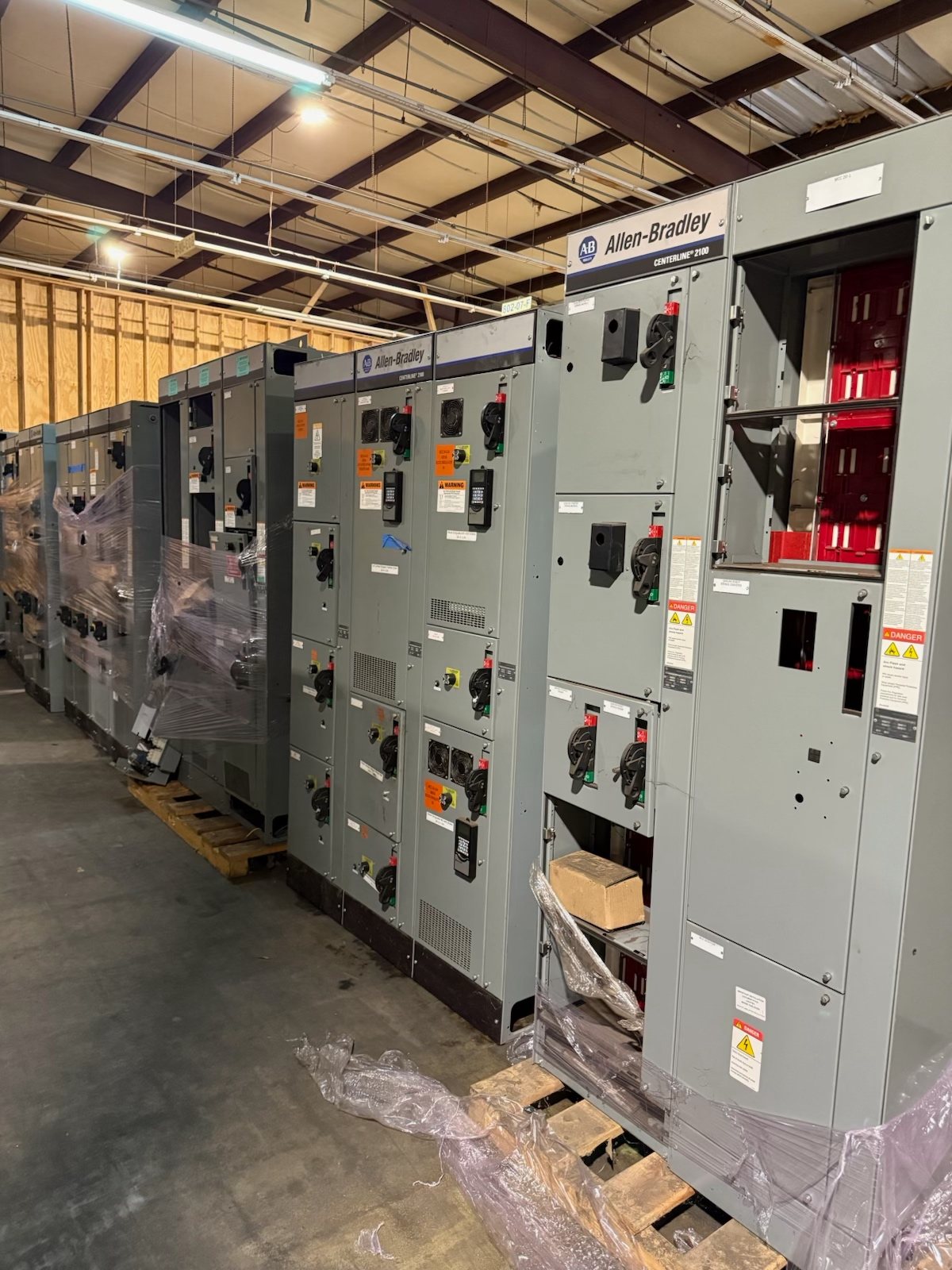
Decide whether a duplicate is truly surplus
Imagine an authorized owner in Aventura reviewing a storeroom after a project changes direction. Several spare breakers and switchboard parts appear to duplicate items already retained for future needs. The first decision is not whether they will fit a particular installation, but whether the owner can release them without weakening a documented maintenance or replacement plan. A potential sale begins with that inventory decision, not an assumption that every extra-looking part is expendable.
A spare kept for a specific future repair may have a different purpose from an unassigned duplicate, even if both look alike. The owner can compare existing records, labels, and quantities without handling equipment or conducting tests. If the records do not establish that an item is redundant, mark its status as uncertain and leave it out of the proposed group until the authorized decision-maker resolves that uncertainty.
Separate unopened stock from previously used items
Describe unopened stock and previously used spares as separate groups. For items that remain in original packaging, record what the packaging visibly identifies and whether it appears opened or incomplete; do not infer that sealed packaging proves suitability or performance. For previously used pieces, state that history plainly when known. If the history is unavailable, say so rather than guessing when or where an item was installed.
Condition notes should describe accessible observations, not certify internal condition. For example, an owner might record that a carton is present and its label is readable, while noting that no testing has been performed. A used breaker may have identifying marks or visible wear, but a photograph cannot establish whether it is serviceable. Florida Switchgear Buyers does not require sellers to test equipment; only qualified professionals should handle electrical equipment.
Record markings and quantities carefully
For each distinct item or group, capture the manufacturer name, catalog or model marking, and any other legible identification already accessible. Include voltage markings when shown, but do not infer a voltage class from appearance or from another component in the same room. If a label is obscured, damaged, or absent, report that fact as unknown. Do not open packaging or equipment to search for additional markings.
Count quantities by identifiable item and keep unlike parts separate. A group of several apparently identical breakers is easier to review when its count is explicit, while a mixed box should not be described as one uniform lot. If packaging and contents do not clearly correspond, flag the mismatch for review instead of assigning the package label to every piece. These details support an informed assessment; they do not establish compatibility, acceptance, or market value.
Treat compatibility as unverified
Matching model markings can help identify what a spare is, but they do not alone prove that it suits a particular switchboard or application. Compatibility may depend on information beyond the item’s visible label, including the equipment it is intended for and relevant configuration details. An owner should share existing accessible records if available, while treating absent documentation as unknown rather than filling gaps with assumptions.
This distinction matters especially when a spare was purchased for a past project, inherited with a facility, or separated from its original equipment. Its history may help explain why it was retained, but it is not proof of present fit or demand. Avoid advertising a part as interchangeable or suitable for a named installation unless that claim is supported by appropriate documentation and professional review. A purchase review is not a substitute for an engineering determination.
Prepare a reviewable inventory without handling items
A concise inventory can list item descriptions, visible markings, quantities, packaging status, known use history, and unresolved questions. Existing accessible photographs may help show labels and external condition, provided obtaining them does not require opening, moving, disconnecting, or otherwise handling equipment. Do not energize, isolate, test, or dismantle anything to improve the record; sellers are not asked to perform those tasks.
Keep ownership authority clear when spares belong to an organization or are subject to another party’s approval. The person coordinating a potential sale should be able to identify which items are being offered and which remain reserved. Florida Switchgear Buyers buys used, surplus, and decommissioned electrical switchgear and related equipment across all voltage classes, including suitable spare items subject to review. No particular item or quantity is guaranteed to be purchased.
Understand the purchase and removal boundary
For equipment it purchases, Florida Switchgear Buyers makes cash offers, pays upfront, and handles crane, rigging, disconnects, loading, freight, and hauling. Those arrangements concern purchased equipment; they are not a promise to buy every listed spare or to perform general electrical contracting, facility demolition, or removal of assets outside the purchase. The proposed asset list and offer remain contingent on review, so keep unapproved items distinct from any confirmed purchase scope.
An authorized owner considering a sale can send the inventory and existing accessible documentation or photos to (614) 715-3047 or saleselectricalbuyers@gmail.com. Explain which items are unopened, which were previously used, and what remains unknown; avoid asserting compatibility or value without support. Do not move or prepare electrical equipment for collection. Any handling, disconnects, or removal associated with purchased assets should be left to qualified professionals as arranged for the transaction.