Start with an information handoff, not an equipment assessment
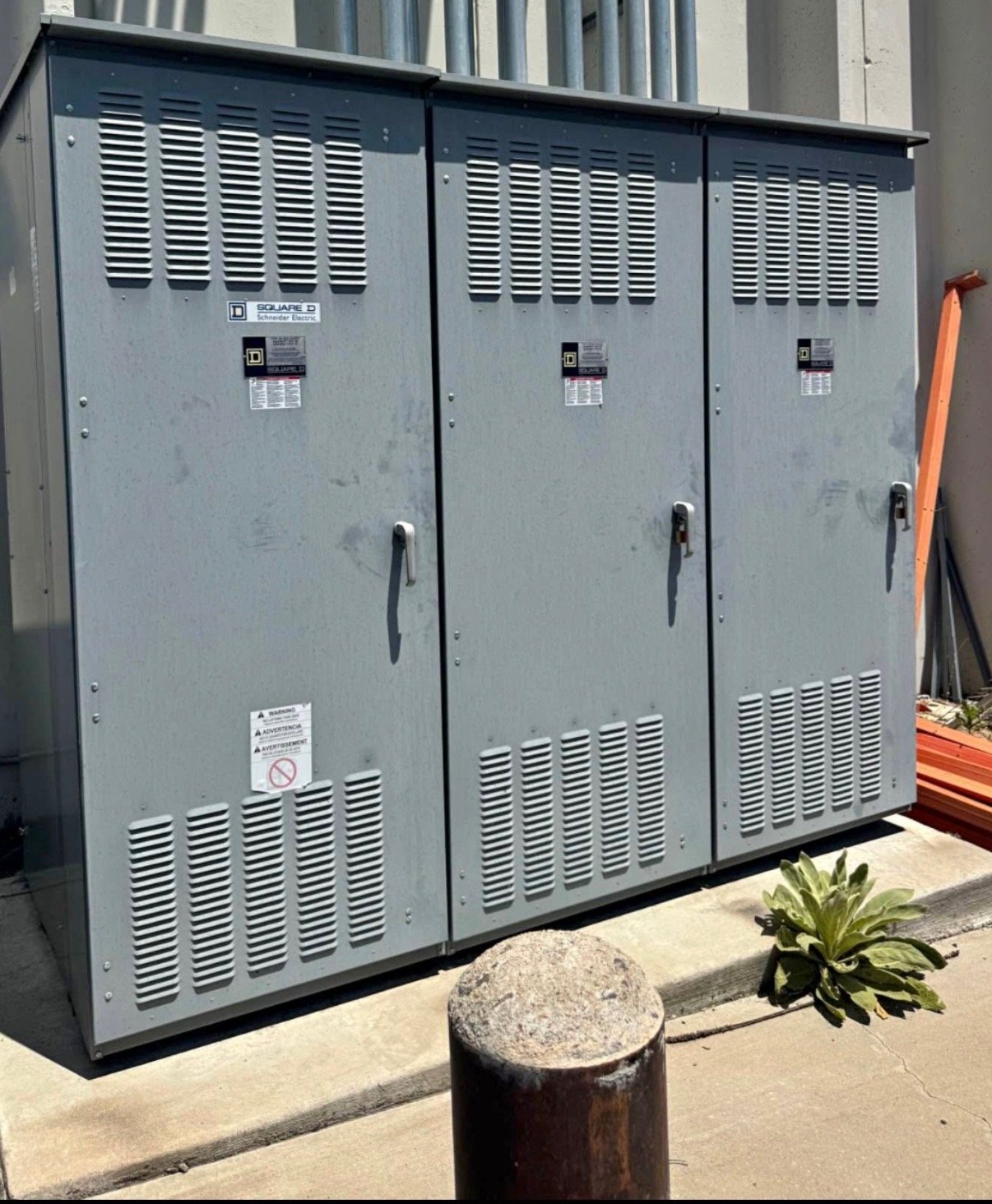
Consider a hypothetical authorized seller in Seminole County preparing information about a switchboard that may be offered for sale. The first task is to establish who can provide records and who can approve a transaction, then pass the available information to the person evaluating the equipment. That handoff should distinguish what someone can read on an existing, accessible nameplate from what remains unconfirmed about the switchboard as a whole.
A nameplate is identification evidence, not a report of operating condition. A clearly printed voltage field does not establish that the equipment is functional, complete, suitable for a particular application, or ready for reuse. The seller should avoid drawing those conclusions from a photograph or transcription. Florida Switchgear Buyers reviews used, surplus, and decommissioned switchgear and related equipment; any offer and the precise assets considered depend on review.
Capture legible fields without filling in gaps
For each accessible nameplate, record the manufacturer and model exactly as shown, preserving letters, numbers, punctuation, and suffixes. Transcribe the voltage and current fields as printed, including units or qualifiers when visible. If a character is blurred, obscured, or too small to distinguish, mark that portion as unreadable or uncertain rather than selecting the most likely value. This keeps the seller’s record useful without presenting a guess as a specification.
A photograph can support a transcription when it is already available and can be shared safely, but it should not replace a clear note about legibility. Keep the image associated with the particular board or section it depicts; a close-up without context may be hard for a reviewer to match to an inventory entry. No seller testing is necessary. Do not open, energize, isolate, disconnect, move, or otherwise handle equipment to obtain a better record; only qualified professionals should handle electrical equipment.
Account for multiple sections as separate identifiers
A switchboard may have more than one section or nameplate, so a single equipment-line entry can conceal useful distinctions. Where identifiers are visible, record each section separately and note its position using a neutral description, such as the label already present in accessible documentation. If a section number, manufacturer, model, voltage, or current field differs, preserve that difference instead of combining values into one assumed system-wide specification.
When the relationship between sections is unclear, report the visible identifiers and label the relationship unknown. Do not infer that adjacent sections share a rating, belong to the same assembly, or are all included in a potential sale merely because they appear together. A buyer’s review can consider the described assets, but the seller should identify what is being offered as precisely as available records allow. Questions about ownership or sale authority belong with the decision maker, not in a guessed equipment description.
Make unknowns visible to the decision maker
A useful inventory separates three things: information legible on a nameplate, information found in existing records, and information that is not available. For example, a seller might transcribe a visible manufacturer and voltage, cite a model from an existing document if the plate is unreadable, and label current as unknown if neither source supplies it. Identify the source for each entry so a reviewer can tell direct observation from document-based information.
Missing values are not evidence of a defect, and legible values are not proof of condition. Avoid replacing blanks with common ratings, assumed manufacturer details, or a claim that the board is operational. If records conflict with a plate, preserve both versions and describe the discrepancy without deciding which is correct. This approach lets the authorized seller and internal decision maker communicate uncertainty accurately before a buyer evaluates whether the described equipment is of interest.
Describe sale scope separately from condition
An inventory should clarify which identified sections or related items the seller is asking a buyer to review, while keeping condition statements within the evidence available. If the proposed scope is uncertain, say that inclusion remains subject to the decision maker’s confirmation. Do not imply that every visible section, attached component, or nearby item is included. A nameplate record supports identification; it does not establish completeness, removability, compatibility, or resale value.
Florida Switchgear Buyers makes cash offers for used, surplus, and decommissioned electrical switchgear and related equipment in all voltage classes, including equipment from decommissioned data centers and closed power plants. For equipment it purchases, it pays upfront and handles crane, rigging, disconnects, loading, freight, and hauling. Those arrangements concern purchased assets, not wholesale facility demolition or general electrical contracting. The offer and exact items purchased remain contingent on review, so the inventory should not promise acceptance or a particular transaction outcome.
Keep the review record clear through the handoff
Before sharing an inventory, the seller can label each entry consistently and attach existing accessible photos or documentation, if available. A compact record might identify the overall switchboard, list the visible section identifiers, transcribe readable fields, and mark each missing or uncertain detail plainly. The decision maker can then confirm the proposed sale scope and convey the same distinctions to the buyer, reducing the chance that an unreadable field becomes an unsupported assertion during review.
For a potential equipment-sale discussion, contact Florida Switchgear Buyers at (614) 715-3047 or saleselectricalbuyers@gmail.com. Share only information and images already accessible to the authorized seller; there is no need to test equipment or arrange access that requires handling it. A clear handoff gives the buyer material to review while preserving the essential distinction: nameplate data identifies what is shown, whereas operating condition and purchase scope require separate evaluation.