Separate Distribution Sections from the Main
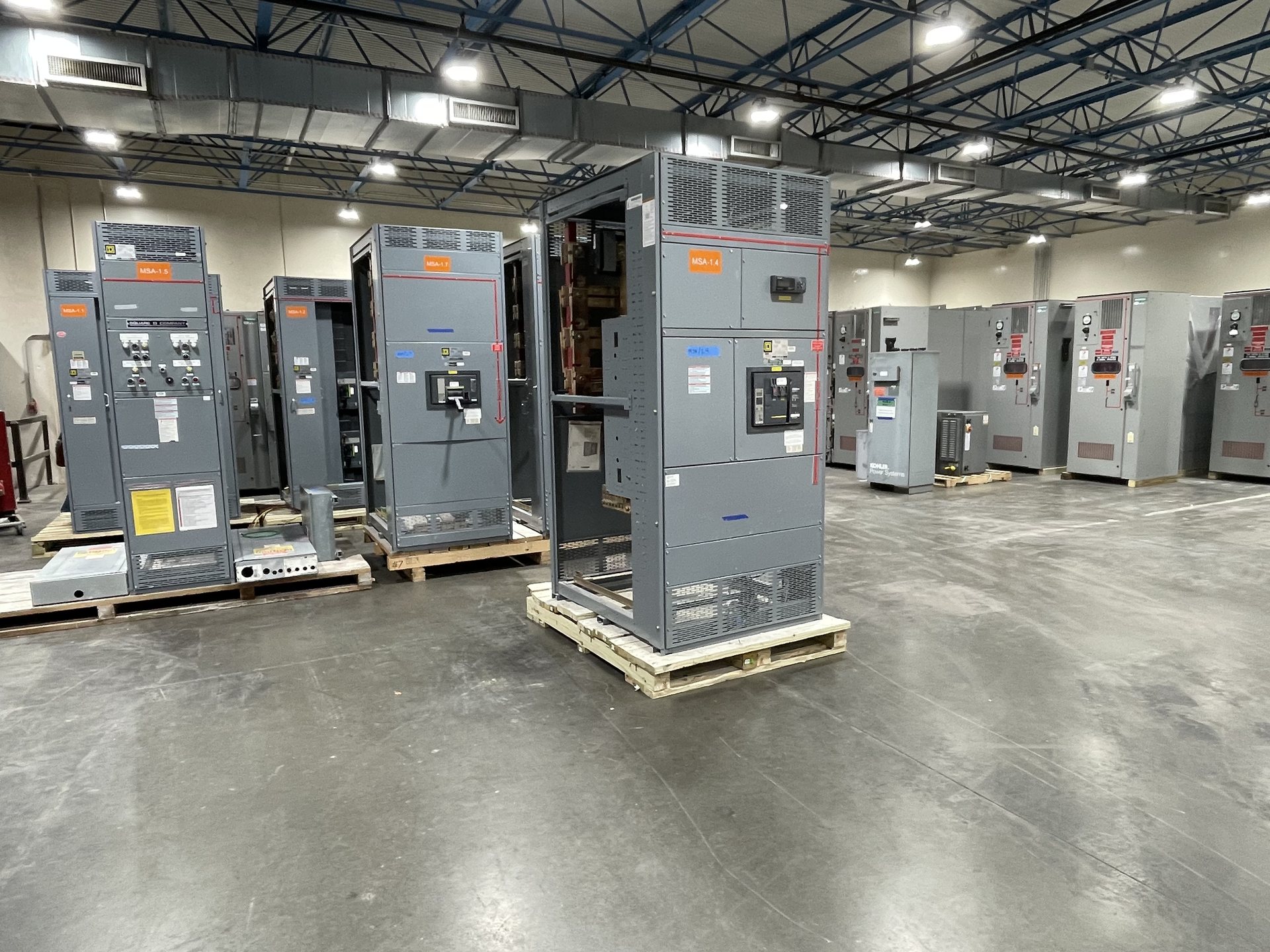
A surplus switchboard may be offered as a group of distribution sections, as selected sections, or with a main section included. For a hypothetical authorized seller in Broward County, the first useful inventory distinction is what the proposed sale actually covers. A lineup’s visible arrangement does not establish that every section is available, so describe the intended assets by section label or position where that information is already accessible.
If a main section is not part of the proposed sale, say so rather than letting the surrounding lineup imply otherwise. If its inclusion is uncertain, mark that point as unknown. A main section can affect how a buyer understands the group being reviewed, but neither its presence nor its absence determines acceptance on its own; the specific assets and available information remain subject to review.
Record Labels and Feeder Information as Seen
Visible section labels can help distinguish distribution sections that otherwise look similar in a larger lineup. An authorized seller may share existing photographs or transcribe labels that are already accessible, noting which section each image or label refers to. Avoid inferring a section’s role from position alone. If a label is obscured, incomplete, or unavailable, identify that limitation instead of supplying a guessed designation.
Known feeder counts and ratings add useful detail, provided they come from existing records or safely accessible information. Keep each count and rating tied to the section it describes; a figure for one section should not be generalized to neighboring sections. If records conflict, report the discrepancy and leave it unresolved. The seller does not need to test equipment or open it to fill gaps.
Describe Condition Without Testing
Condition information is most useful when it distinguishes documented facts from impressions. A seller might report that existing records describe a section as surplus, or note visible exterior damage in an already available photograph. Such observations do not establish internal condition, operational status, or suitability for reuse. Use qualified wording, and do not present an unverified assessment as a technical inspection or guarantee.
Unknown operating history, incomplete maintenance records, or an uncertain status should be stated plainly. There is no need to energize, test, open, or otherwise handle equipment to make a sale inquiry. Only qualified professionals should handle electrical equipment. If a professional has already prepared documentation, it may be shared; otherwise, the absence of that information is simply a review consideration, not a reason to invent a finding.
Explain How the Sections Are Offered
An inventory can identify sections as a complete offered group, as selected sections, or as a grouping whose boundaries still need confirmation. For example, if a seller intends to offer two labeled distribution sections but retain adjacent equipment, make that distinction explicit. This helps prevent an offer discussion from assuming that the entire lineup is available when only part of it is under consideration.
If section boundaries or included components cannot be confirmed from accessible information, mark them unknown and share what is known about the proposed scope. Do not remove covers, disconnect conductors, or shift equipment to clarify the inventory. Florida Switchgear Buyers reviews used, surplus, and decommissioned switchgear and related equipment across all voltage classes; whether particular sections are purchased depends on that review.
Plan Removal Only for Purchased Equipment
A potential equipment sale is different from a request for wholesale facility demolition or general electrical contracting. The relevant question is which identified assets may be purchased, not whether an entire building or electrical system will be taken apart. Sellers should keep any separate facility work outside the equipment inventory unless it directly clarifies which switchboard sections are being offered.
For equipment purchased, Florida Switchgear Buyers handles crane, rigging, disconnects, loading, freight, and hauling. Sellers should not disconnect, move, or prepare sections for removal themselves. The company does not require seller testing. These arrangements apply to purchased assets; they should not be read as a promise to remove every item at a site or to undertake unrelated demolition or electrical work.
Submit a Clear, Qualified Inventory
A concise inquiry can pair each section’s visible label with its known feeder count and ratings, reported condition, and whether a main section is included. Existing accessible photos and records may help distinguish sections, while a short list of unknowns keeps assumptions visible. An authorized seller can contact Florida Switchgear Buyers at (614) 715-3047 or saleselectricalbuyers@gmail.com to discuss the inventory.
The company makes cash offers and pays upfront for equipment it purchases. An offer, the precise assets purchased, and the offer price are contingent on review; an inquiry does not guarantee acceptance, a particular price, or a schedule. Keep records of what was submitted and clarify any uncertain section boundaries during review. No seller testing is necessary, and only qualified professionals should handle the equipment.