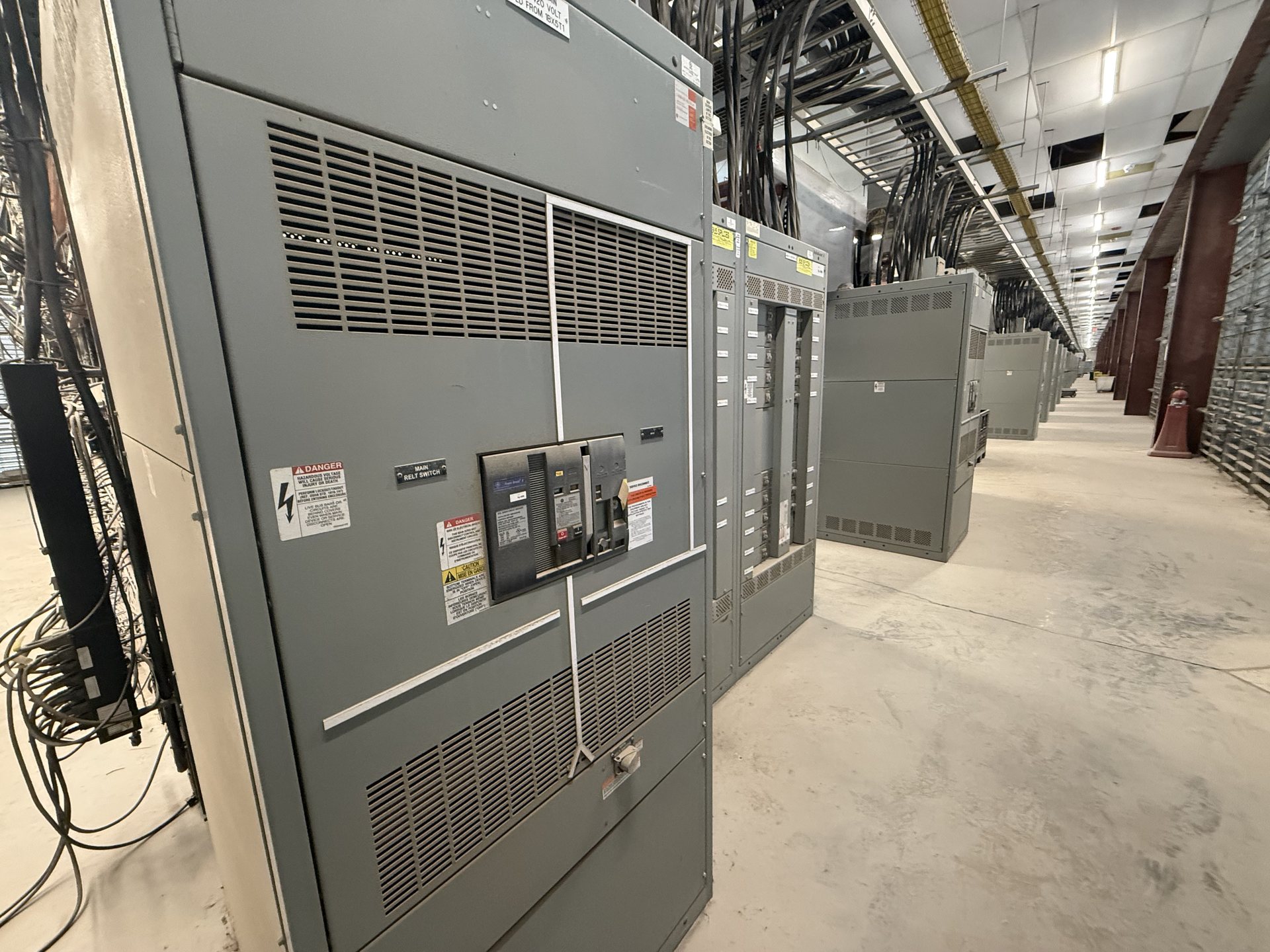
Start with the Lot’s Storage Pattern
A stored-breaker lot may consist of individually shelved units, breakers kept with accessories, or mixed equipment accumulated from different projects or facilities. An authorized seller in Brevard County can make the inventory easier to review by recording each breaker separately rather than treating a pallet, cabinet, or room as one uniform lot. The storage arrangement describes how items are grouped; it does not establish their condition or suitability.
If records identify separate ownership, work orders, or acquisition sources, preserve those distinctions in the catalog. Where no reliable source information exists, label it unknown instead of inferring a common history from nearby storage or similar appearance. A hypothetical seller with several labeled groups can report those labels as observed, while avoiding claims that all units came from the same installation or share the same service history.
Build an Item-Level Catalog
For each identifiable breaker, record the quantity, manufacturer mark, model or catalog marking, visible rating information, and any other legible identifiers. Keep the transcription tied to the particular item or group; if a marking cannot be read from existing accessible information, note that it is unclear rather than filling the gap from a similar unit. Photos already available may help show labels and distinguish similar-looking entries.
Separate exact counts from estimates. If a shelf contains a known number of individually listed breakers, record that count; if a container has not been counted, mark the quantity as approximate or unknown. Record known accessories as separate entries or linked notes, indicating whether the seller can document that an accessory belongs with a particular breaker. Visual proximity alone may not demonstrate a matched set, and a buyer’s review may treat uncertain pairings accordingly.
Record Ratings Without Predicting Fit
Ratings and identifiers help a buyer assess what is being offered, but they do not establish that a breaker will fit a particular panel, lineup, or application. A seller may transcribe available voltage, current, interrupting, or other rating marks when legible, while making clear that the catalog is a record of markings, not a compatibility determination. Different breakers that appear alike can carry distinctions that matter to a prospective purchaser.
If the intended equipment or application is known from existing documentation, share that context as documented history, not as a promise of interchangeability. If it is not known, say so. Avoid describing an item as a replacement for a specific installation unless qualified professionals and reliable records support that conclusion. Florida Switchgear Buyers considers used, surplus, and decommissioned switchgear and related equipment across voltage classes, but any offer and the precise assets purchased depend on review.
Separate Condition from Documented History
Condition notes should distinguish what records say from what is merely presumed. A maintenance document, storage record, or prior inspection report may be shared if already accessible; identify its date and the equipment it covers when those details are known. A document for one breaker does not automatically establish the condition of every unit in a similar group, and an old record should not be presented as a current assessment.
Where no inspection history is available, describe the condition as unverified rather than tested, serviceable, or ready for reuse. No seller testing is necessary for a purchase inquiry. Sellers should not open, energize, isolate, disconnect, move, or otherwise handle breakers to improve a catalog; only qualified professionals should handle electrical equipment. Existing photos and records can support an initial review without turning the seller into a tester or technician.
Present Mixed Lots and Exceptions Clearly
A surplus inventory can include individually identified breakers, duplicate units, incomplete entries, and accessories whose association is uncertain. Preserve those differences in the description rather than smoothing them into a claim that the lot is consistent. For example, a hypothetical seller might list a marked group separately from breakers with unreadable identifiers, and note that an accessory is present but its original pairing is unknown.
Disclose known gaps that could affect review: uncertain counts, missing labels, mixed documented histories, or records that cover only part of the inventory. These are not reasons to invent a conclusion about value or condition. They give a prospective buyer a more accurate basis for deciding what information is useful and which specific assets might be considered. The seller need not claim that every item will be accepted as part of a purchase.
Arrange a Purchase Review, Not a Service Call
An authorized seller can submit the catalog and available photos or documentation for review by Florida Switchgear Buyers. The company buys used, surplus, and decommissioned electrical switchgear and related equipment, including breakers, and makes cash offers for equipment it agrees to purchase. Payment for purchased equipment is made upfront. The offer, payment details beyond that fact, and the precise assets purchased remain subject to review; no acceptance or pickup date is assured.
For a purchase inquiry, contact Florida Switchgear Buyers at (614) 715-3047 or saleselectricalbuyers@gmail.com. For assets purchased, the company handles crane, rigging, disconnects, loading, freight, and hauling. That handling relates to purchased equipment; it is not a promise of whole-facility demolition or general electrical work. Sellers should not prepare equipment by disconnecting or moving it, and should leave handling to qualified professionals.