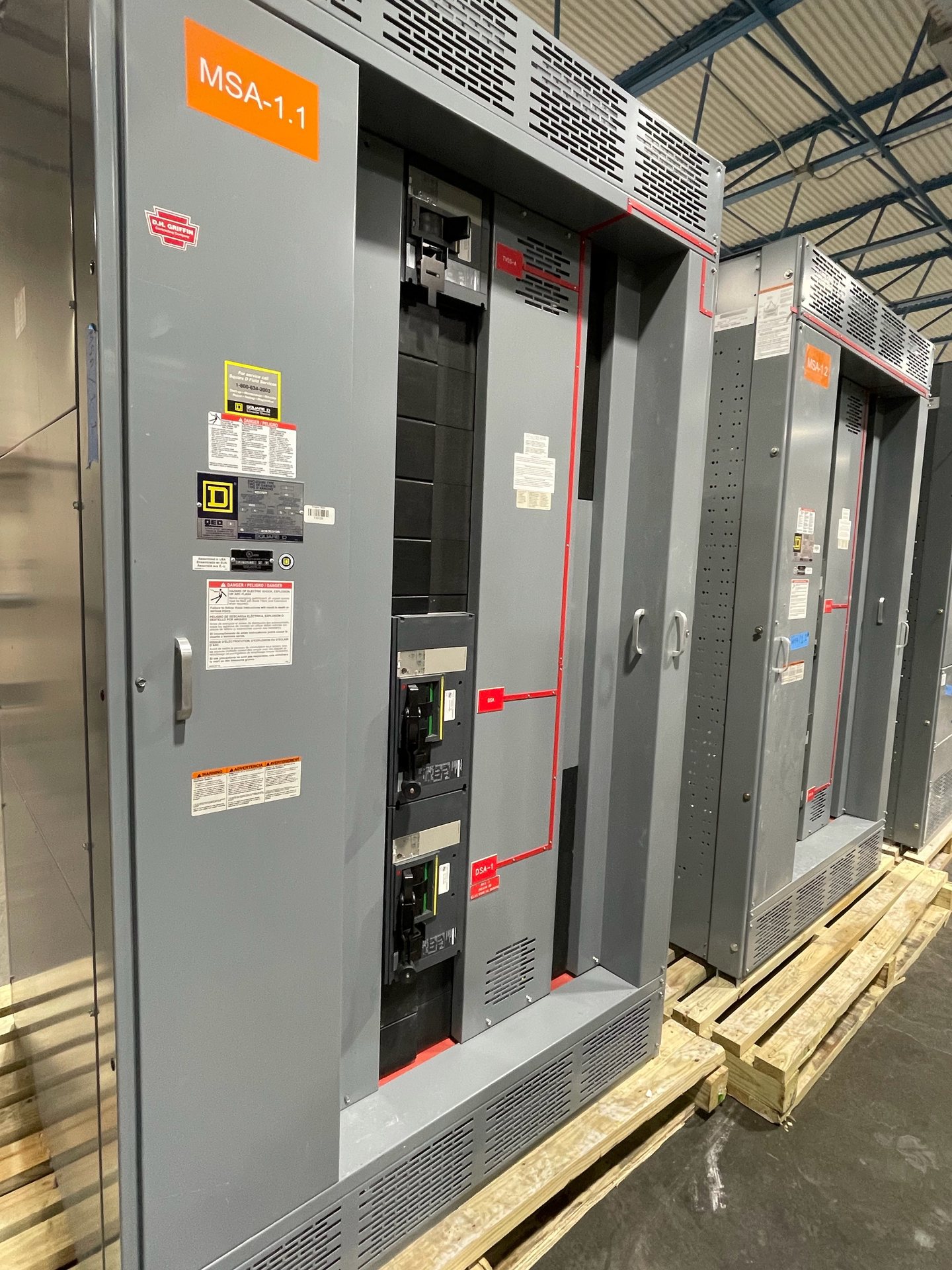
Start with the seller’s inventory decision
Imagine a hypothetical authorized seller in Palm Beach County reviewing several loose motor control center buckets left in storage. The seller must decide whether to describe them as individual assets, as components of a known lineup, or as items with an uncertain connection. That distinction matters: a bucket may be identifiable on its own even when its original section or parent lineup cannot be established from available records.
A careful inventory separates what is visible from what is inferred. Record the manufacturer and marked type or catalog designation when readable, along with any visible number and a concise description of exterior condition. If a bucket appears associated with a particular lineup, identify that relationship only when records or reliable asset documentation support it. Otherwise, mark the parent lineup as unknown rather than allowing an assumption to become a sales fact.
Build a useful bucket-by-bucket record
Give each loose bucket a unique inventory reference, such as a seller-assigned tag that does not imply a manufacturer model. Keep the reference consistent across photographs, spreadsheets, and existing records. If several units share a visible designation, list them as separate items and state the count; similar markings do not establish that their contents, completeness, or condition are identical.
Photographs already accessible to the seller can help clarify markings and visible condition. Use images of labels and exterior surfaces only where available without handling or opening equipment. Note whether a marking is clear, partly legible, or unreadable, and distinguish that from missing documentation. Do not fill gaps with guessed voltage, ratings, compatibility, internal components, or a presumed fit with a lineup.
Describe condition without implying a test
A visual note should be narrow and factual: for example, a recorded exterior observation may mention visible damage, missing external parts, or a label that cannot be read. Such observations do not establish operability, completeness, or suitability for reuse. Avoid translating “stored” into “good,” “working,” or “ready for installation”; storage history and functional condition are separate questions, and the latter may be unknown.
Sellers do not need to test equipment for a potential purchase. Do not energize, open, isolate, disconnect, move, or otherwise handle a bucket to improve the record. Electrical equipment should be handled only by qualified professionals. If an important detail is unavailable without intervention, identify it as unknown and let the review account for that limitation instead of creating a safety risk or unsupported assurance.
Keep lineup relationships evidence-based
Loose buckets can be presented individually even when the matching MCC lineup is absent, sold separately, or not documented. If records identify a parent lineup, preserve the record’s exact designation and explain whether the association is documented or merely reported. Where multiple lineups are mentioned in old paperwork, do not assign a bucket to one based only on similar manufacturer markings or a plausible appearance.
This separation helps a buyer evaluate the actual offered assets rather than an assumed package. A seller might have a verified set of buckets linked to one lineup, alongside other loose units with no traceable association. Those groups can be described separately, with counts and known identifiers, while unknown relationships remain explicit. The precise assets considered for purchase depend on review; an inventory description is not confirmation that every item will be accepted.
Prepare for a purchase review and removal
Florida Switchgear Buyers purchases used, surplus, and decommissioned switchgear and related equipment across all voltage classes, including equipment from decommissioned data centers and closed power plants. A seller may share existing accessible records and photographs for consideration; no testing is required. Review can determine which identified buckets, if any, are included in an offer, so keep the proposed inventory distinct from equipment not being offered.
For equipment purchased, the company makes a cash offer and pays upfront. It also handles crane, rigging, disconnects, loading, freight, and hauling for purchased assets. Those arrangements concern the equipment included in a purchase, not wholesale facility demolition or general electrical contracting. Do not treat the presence of loose buckets as a commitment to remove unrelated equipment or other facility contents.
Present unknowns clearly before discussing the sale
A concise submission can pair the item references with visible manufacturer and type markings, stated quantities, condition observations, and any supported lineup relationship. Add a separate unknowns field for illegible labels, absent records, or uncertain associations. This makes the limits of the available evidence easy to review and avoids implying that the seller has verified specifications or performance. Share only documentation and images already accessible without handling the equipment.
An authorized seller in Palm Beach County can discuss a potential equipment sale with Florida Switchgear Buyers at (614) 715-3047 or saleselectricalbuyers@gmail.com. Contact does not establish a price, acceptance, or schedule; the offer and exact assets purchased are contingent on review. Before outreach, reconcile duplicate inventory references and distinguish buckets offered for consideration from items retained or outside the proposed sale.