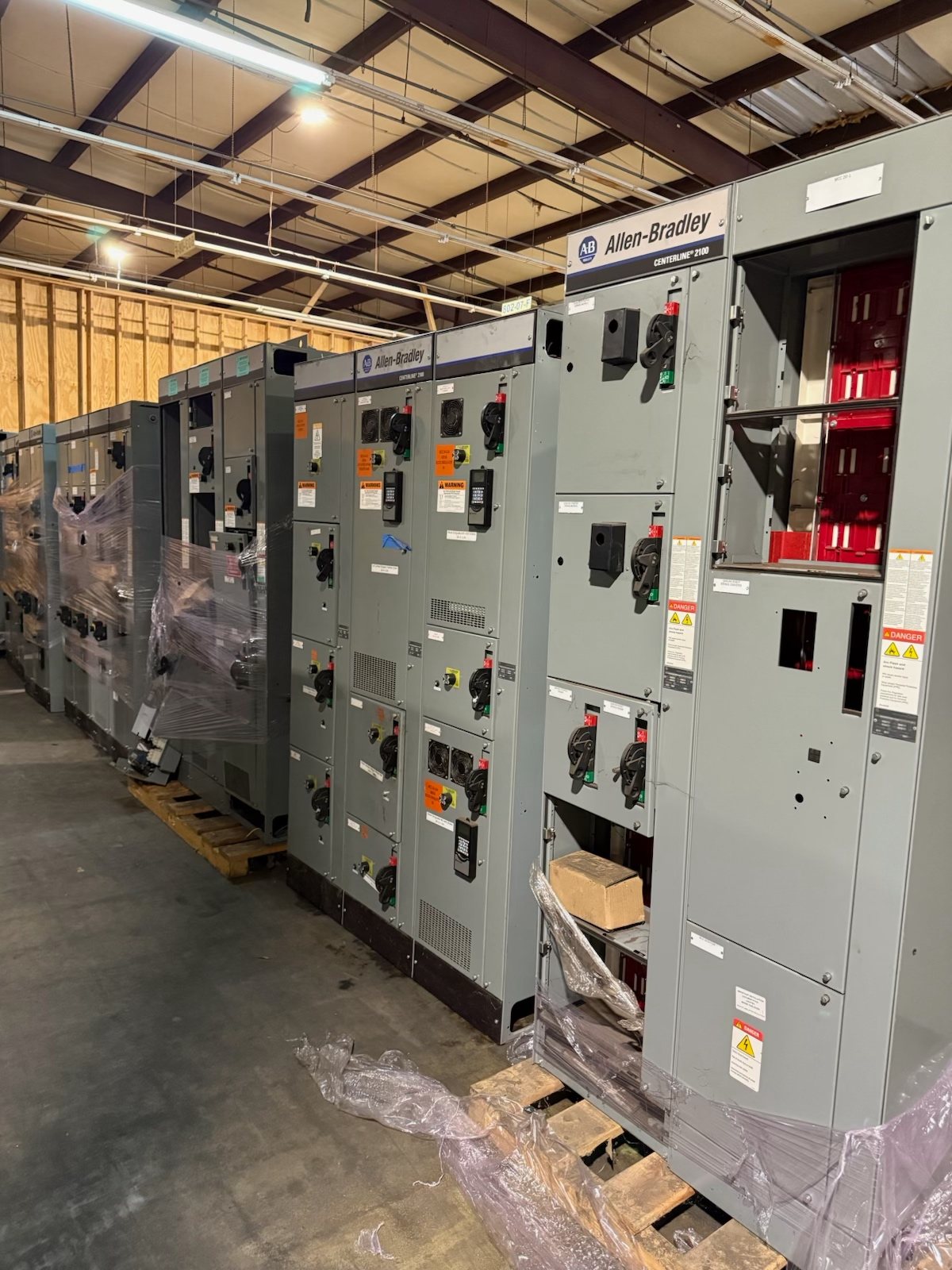
Reconcile the lineup before describing it
For an authorized seller in Manatee County, start with the asset list and the equipment that can already be identified from accessible labels or records. The goal is not to prove that every listed item remains present; it is to make clear which sections are being offered and which entries still need confirmation. A lineup name in a spreadsheet alone may not establish that the complete lineup is available.
Compare the list with existing section labels and any accessible photographs, drawings, or inventory records. Note which identifiers match, which differ, and which are absent from the available documentation. If a label cannot be read in an existing image, mark it unclear rather than inferring a section number. This creates a useful reconciliation without asking anyone to access or handle the equipment.
Separate a full lineup from partial sections
A full lineup means the seller is presenting the assembled set of sections as one offering, subject to review of what is actually included. Partial sections describe a different scope: perhaps only identified sections are available, while other listed sections are excluded, already allocated, or not confirmed. State the distinction plainly so that an equipment buyer does not interpret a partial offer as a complete lineup.
For example, a hypothetical seller may have an asset record naming six sections but be authorized to offer only four identified sections. The accurate description would identify the four offered sections and note that the remaining two are outside the offer or unconfirmed, as applicable. Do not describe the four as a complete lineup merely because they appear together in the records.
Record included units by section
Within each offered section, list the units that existing labels or records identify. Depending on the available information, these may include buckets or other installed units; use the terminology shown in the documentation rather than supplying a designation from memory. When a count is available but individual identities are not, report the count as recorded and clarify that unit-level identification is unavailable.
Keep section-level and unit-level information separate. A section may be identified while its installed-unit list is incomplete, or the records may name units without clearly tying them to a particular section. Preserve those distinctions in the reconciliation. If the relationship is uncertain, mark it unknown instead of assigning a unit to the nearest matching section number.
Make missing buckets visible
Missing buckets warrant a direct note because a section count does not necessarily establish that every expected unit is present. Compare the documented bucket list with information already available to the seller, then record any documented absence, discrepancy, or unresolved count. Do not convert an unexplained difference into a claim that a bucket was removed; the reason may simply be unknown from the records.
A concise reconciliation can distinguish “listed in records,” “identified in existing material,” “not accounted for,” and “unknown.” Use these descriptions only when supported by the information at hand. No seller testing is necessary, and nobody should be asked to open, inspect, disconnect, or move equipment to settle a documentation gap. Qualified professionals should handle electrical equipment.
Capture known ratings without filling gaps
Report nameplate ratings only when they are already legible in accessible materials or documented in records. Tie each known rating to the section or unit identifier shown, and preserve the recorded wording where practical. If a rating belongs to a unit but its section assignment is uncertain, say so; a rating without a reliable equipment match can mislead a buyer reviewing the offering.
Separate confirmed entries from blanks and unreadable or unavailable information. Do not infer a rating from a neighboring section, a lineup description, or a general product assumption. The same restraint applies to condition, completeness, and compatibility: report what is documented, label missing facts unknown, and allow review of the specific assets to determine what may be purchased.
Present a reviewable sale scope
A useful submission brings together the offered section identifiers, included units, missing-bucket notes, known nameplate ratings, and any unresolved discrepancies. Existing accessible photographs and documentation may be shared; do not create new evidence by handling equipment. Florida Switchgear Buyers considers used, surplus, and decommissioned switchgear and related equipment across voltage classes, including equipment from decommissioned data centers and closed power plants. An offer and the precise assets purchased depend on review.
For a potential sale, send the reconciliation and available materials to saleselectricalbuyers@gmail.com or call (614) 715-3047. The company makes cash offers and pays upfront for equipment purchased; it handles crane, rigging, disconnects, loading, freight, and hauling for purchased equipment. This is equipment purchasing and removal for accepted assets, not a commitment to buy every listed section or to perform facility demolition or general electrical work.