Start With the Seller’s Authority
A possible sale begins with a clear handoff: someone authorized to represent the equipment owner identifies the assets, while a decision maker confirms whether they may be offered. In Polk County, a hypothetical seller might be coordinating a site closure or surplus review; that circumstance alone does not establish ownership or authority. Before sharing information, clarify who can approve an offer and who can answer site-access questions.
Keep those roles distinct when several people are involved. The person who recognizes a cabinet may not control its sale, and the person who approves a transaction may not know the equipment boundaries. A short internal record naming the authorized contact, decision maker, and any required approval path can prevent conflicting descriptions without making assumptions about the facility or its operating status.
Identify the Exterior Without Opening It
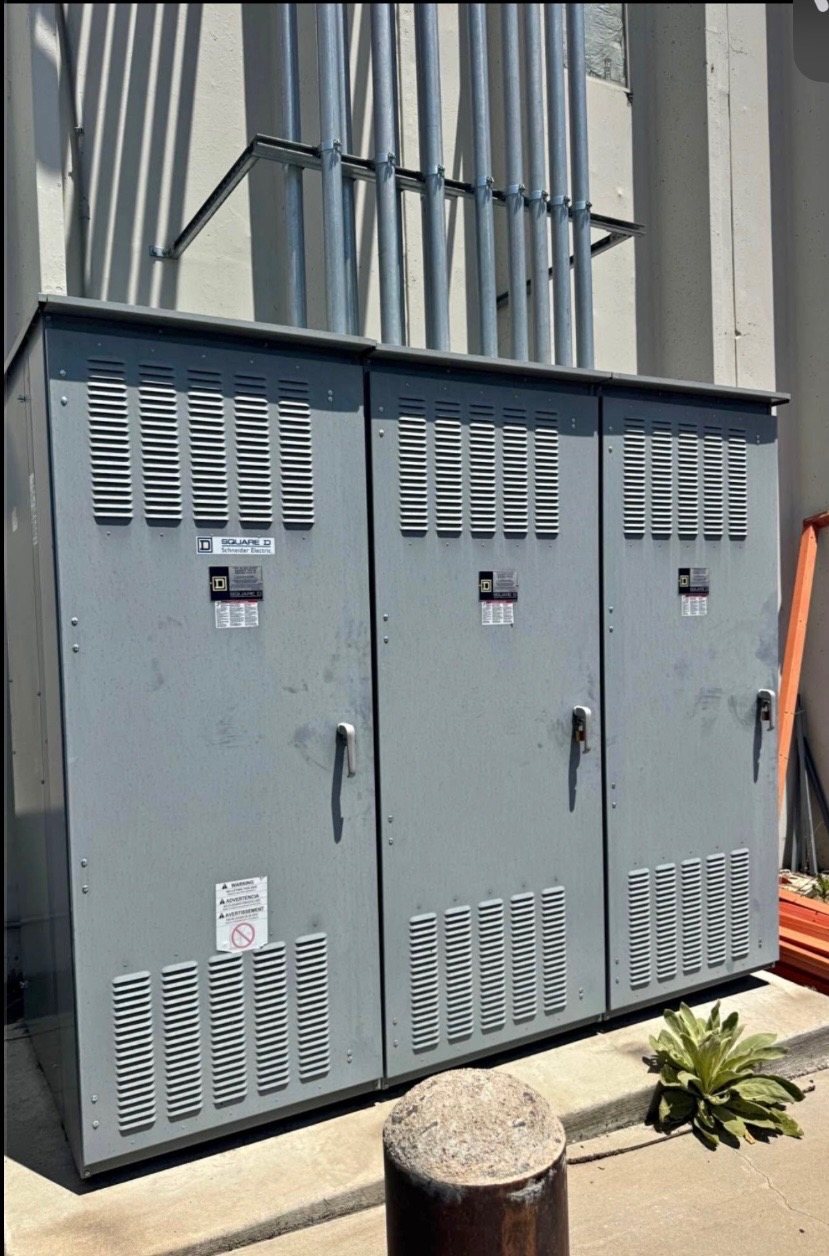
For a pad-mounted unit, exterior identification can start with photographs of accessible nameplates, cabinet labels, and overall views taken from a safe, authorized vantage point. Existing photos or records may be shared; the seller does not need to open an enclosure or create new technical evidence. If a label is obscured, damaged, or absent from available images, report that limitation rather than filling the gap with a guess.
Useful image context includes which visible cabinet or section a label belongs to and whether several enclosures appear to be part of one installation. Do not infer internal configuration from cabinet shape, paint, warning labels, or neighboring equipment. If the seller cannot confidently distinguish sections from existing information, mark the identification as uncertain and let the buyer review the material before defining any potential purchase.
Report Ratings as Visible, Not Verified
A legible exterior nameplate may show ratings or identification details that help a buyer assess the equipment. Transcribe only what can actually be read, preserving units and wording where possible; a photograph can help resolve handwriting or transcription errors. If a value is unreadable, cropped, or missing, label it unknown. Do not estimate voltage, interrupting capacity, or other specifications from appearance or from assumptions about the site.
Visible markings are evidence of what a label says, not proof of present condition, configuration, or operating state. In particular, a cabinet that looks closed, weathered, disconnected, or unused must not be described as deenergized on that basis. The seller should pass along any authoritative status information already available, identify its source if known, and leave electrical determinations to qualified professionals.
Define the Equipment Boundary
A clear proposed asset boundary is essential when the enclosure sits beside other electrical equipment. Describe which visible unit or units are being offered and note adjacent items that are not included, if that distinction is known. Where the boundary is unclear, say so and provide existing site drawings or photographs only if accessible. A buyer’s review can then address precisely which assets might be purchased rather than treating an entire installation as one lot.
Ask specifically whether an associated transformer is included. A transformer may be visually adjacent or appear connected, but proximity does not establish that it belongs to the switchgear sale or is owned by the same party. Record it as included, excluded, or unresolved only when the authorized seller can support that description. This distinction informs valuation and removal planning without implying that any particular transformer will be accepted.
Coordinate Site Access and Removal
The site contact should be someone able to explain access rules, scheduling requirements, and any known restrictions to the buyer’s review team. Share those details as coordination information, not as permission for unqualified handling. Sellers should not test, energize, isolate, disconnect, open, or move equipment. Only qualified professionals should handle electrical equipment, and no seller testing is required to request consideration for a purchase.
Florida Switchgear Buyers purchases used, surplus, and decommissioned switchgear and related equipment across voltage classes, including equipment from decommissioned data centers and closed power plants. For assets it purchases, it handles crane, rigging, disconnects, loading, freight, and hauling. Those arrangements concern purchased equipment; they are not a promise to demolish a facility or provide general electrical contracting. Scope remains subject to review of the specific assets.
Submit a Reviewable Sale Package
A compact handoff can combine the authorized seller’s contact, decision maker’s approval status, exterior photos, readable identification, known ratings, equipment boundary, transformer status, and site-access contact. Separate confirmed details from unknowns, and avoid presenting old records as current unless their date or status is known. Florida Switchgear Buyers reviews the proposed assets before making an offer, so the package should support evaluation rather than imply guaranteed acceptance or a particular value.
To discuss a potential sale, contact Florida Switchgear Buyers at (614) 715-3047 or saleselectricalbuyers@gmail.com. The company makes cash offers and pays upfront for equipment purchased; the offer and precise assets purchased depend on review. Providing existing documentation is useful, but missing facts can remain marked unknown. This keeps the seller’s account accurate while giving the buyer a practical basis to determine what, if anything, it may purchase and remove.