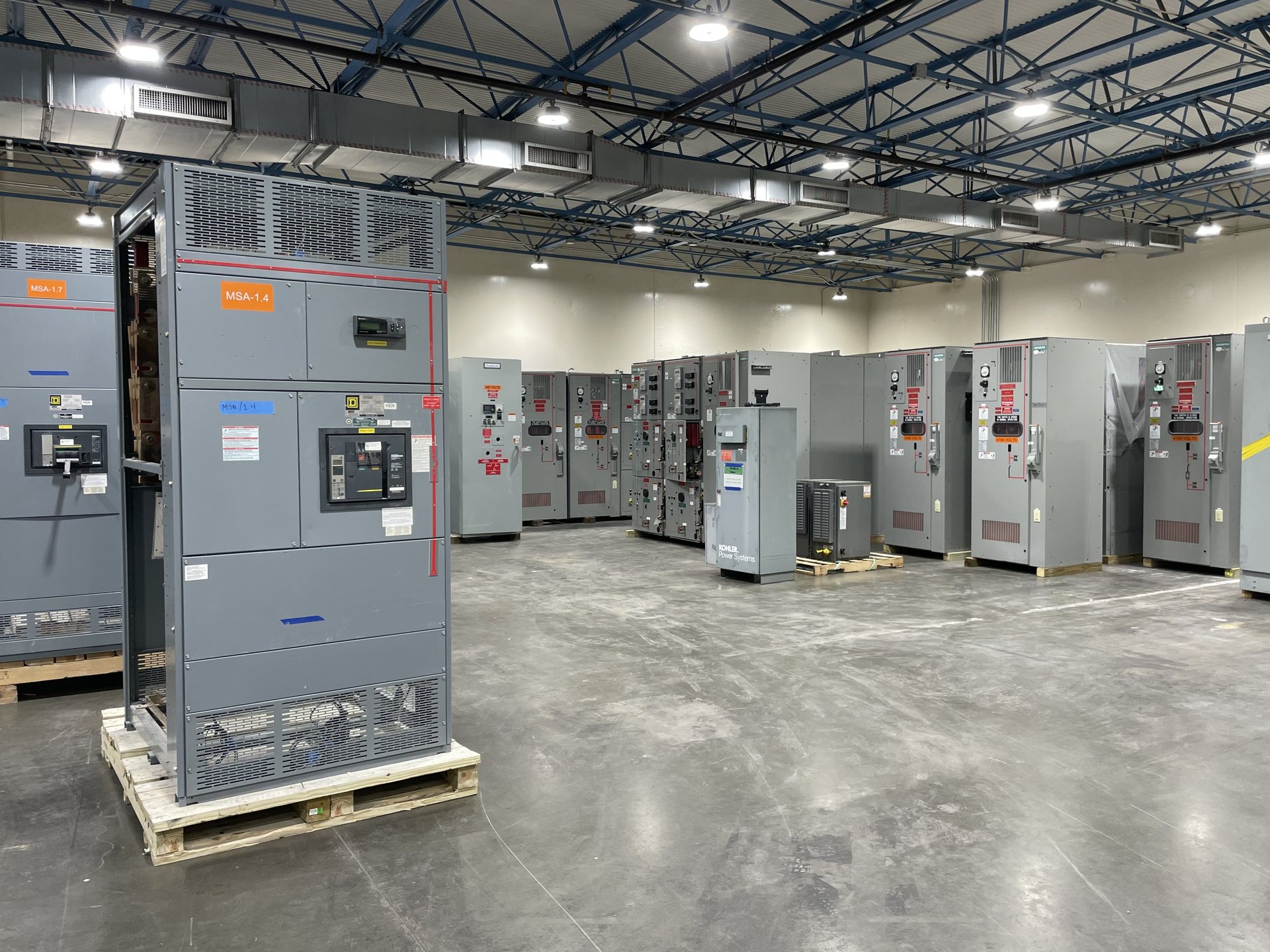
Separate the lot into recognizable equipment groups
A stored distribution lot is easier to assess when its contents are described as equipment groups rather than as one undifferentiated sale. An authorized seller might distinguish switchgear, switchboards, breakers, and busway where present, then note which pieces appear to belong together. This does not establish compatibility or completeness; it gives a buyer a clearer starting point for reviewing the potential purchase.
Some stored lots combine intact lineups with loose components, replacement parts, or equipment whose original assembly is unclear. Keep those categories distinct in the inventory instead of assigning every item to a lineup based on appearance. If a breaker’s intended position or a busway section’s relationship to other sections is unknown, record that uncertainty plainly. No seller testing is necessary for an initial review.
Make item counts useful without guessing
Counts help distinguish a single major assembly from a mixed collection of individual assets. Record the number of visible enclosures, breaker units, or busway sections only when they can be counted from existing records or safely accessible views. If pieces are obscured, packaged, or grouped in a way that prevents a reliable count, identify the count as partial or unknown rather than presenting an estimate as confirmed.
For example, an inventory could state that it includes two identified switchboard sections and a separate group of breakers, while noting that the breaker quantity has not been verified. That is more useful than a single lot total that conceals what is included. Photos already available may help clarify groupings, but a seller should not open covers, shift equipment, or approach a hazard to obtain them.
Clarify ownership and authority to sell
A storage location does not by itself establish who owns each asset or who may authorize its sale. Before requesting an offer, an authorized representative should identify the entity entitled to sell the equipment and flag any items whose ownership is uncertain, shared, or subject to another party’s approval. This distinction matters especially when a lot was assembled over time or includes assets recorded separately from the surrounding inventory.
If ownership records identify only some groups, describe that limitation rather than implying that the entire storage lot is available. A potential transaction can be reviewed against the assets the seller is authorized to offer; the precise equipment purchased remains contingent on review. Florida Switchgear Buyers considers used, surplus, and decommissioned switchgear and related equipment across all voltage classes, but that does not guarantee acceptance of every item in a mixed lot.
Describe condition as observed, not assumed
Condition notes should be factual and modest. An authorized seller may report that an enclosure appears dented in an existing photograph, that packaging is present, or that records list a unit as surplus. Such observations do not prove internal condition, operability, completeness, or suitability for another installation. Where there is no reliable information, say “unknown” instead of converting age, storage, or appearance into a technical conclusion.
Do not arrange seller testing or open equipment to improve the description. Florida Switchgear Buyers does not require sellers to test equipment. Existing accessible documentation and photographs can be shared for review, with their limits explained. Only qualified professionals should handle electrical equipment, and a potential sale inquiry is not a request for the seller to energize, isolate, disconnect, move, or otherwise handle it.
Keep removal planning distinct from the equipment review
A stored lot may contain items in different locations or in different states of preparation, so note the known storage arrangement without promising that every asset can be removed as one group. If some equipment is already staged and other pieces remain in place, describe that difference from records or safe, existing views. Do not reposition items to make a group look complete or to prepare for an inquiry.
For equipment purchased, Florida Switchgear Buyers handles crane, rigging, disconnects, loading, freight, and hauling. Those arrangements concern purchased assets and should not be confused with wholesale facility demolition or general electrical contracting. The seller need not perform removal work to submit information. Any proposed purchase and the specific assets included depend on review; an inventory is a basis for discussion, not a commitment to buy the entire lot.
Submit a reviewable inventory and understand the offer
A concise submission can pair each equipment group with its count, ownership status, condition notes, and any available identification from existing records. Add a clear “unknown” where voltage, model, completeness, or another detail has not been confirmed. This lets the buyer distinguish documented facts from open questions and assess a mixed Sarasota County storage lot without treating its contents as interchangeable.
Florida Switchgear Buyers makes cash offers and pays upfront for equipment it purchases; the offer and precise assets purchased are contingent on review. To share an inventory or ask about a potential sale, contact (614) 715-3047 or saleselectricalbuyers@gmail.com. A useful first inquiry identifies what is known, separates uncertain items, and leaves any inspection or handling to qualified professionals rather than asking the seller to test or move equipment.