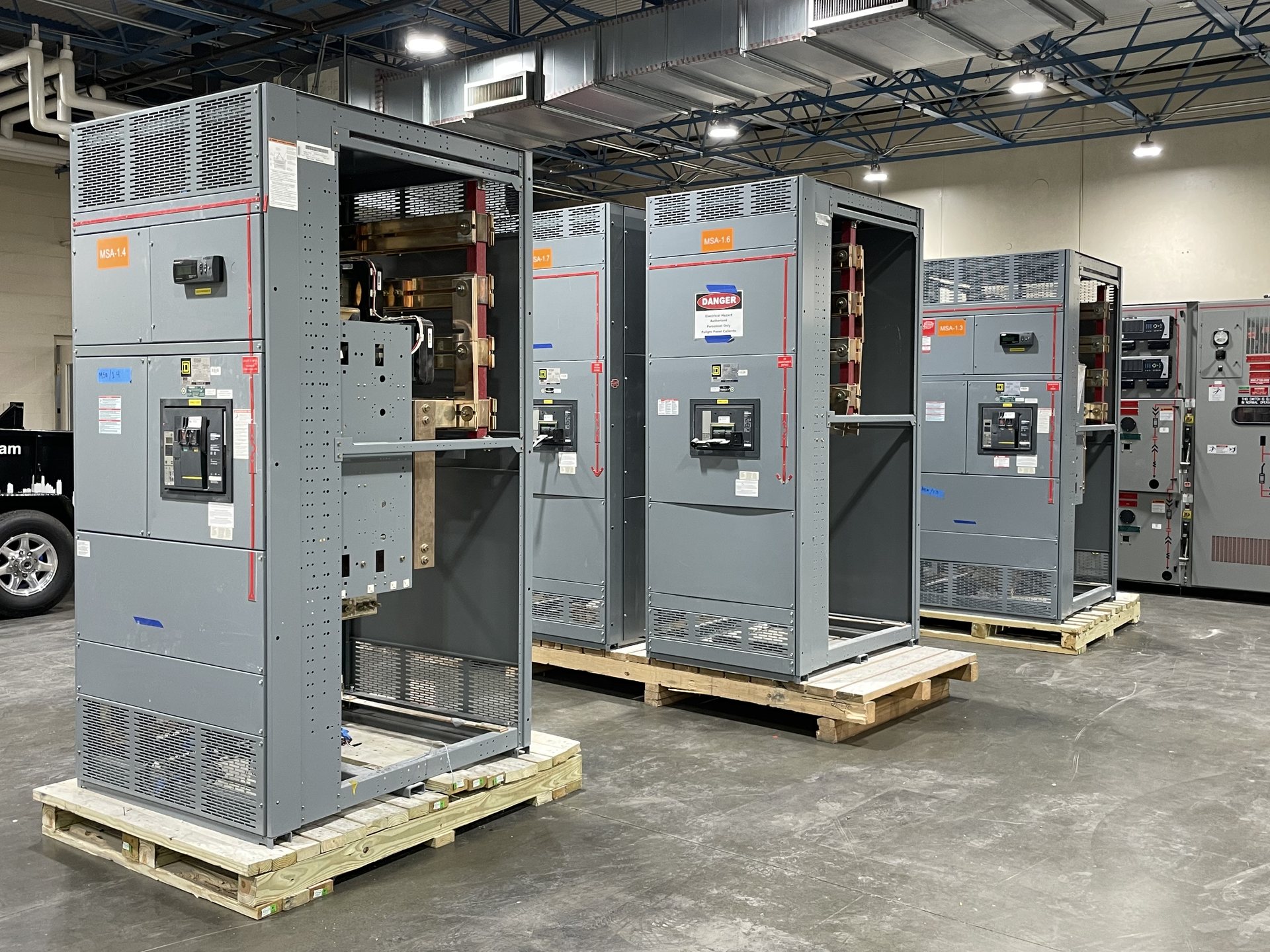
Reconcile the Asset List With the Sale Scope
For an authorized seller in Osceola County, a switchgear schedule is a starting point, not the sale scope by itself. It may identify lineup sections, breakers, transformers, controls, or related components, while the owner’s current decision covers only some of them. Compare each listed asset with the items actually released for sale, and mark any difference for review rather than assuming the whole room or facility is included.
A hypothetical seller might have records naming several assemblies but authority to sell only equipment from one area. In that case, distinguish included items from retained assets, items assigned to another buyer, and equipment whose ownership or disposition is unresolved. Florida Switchgear Buyers considers used, surplus, and decommissioned switchgear and related equipment across all voltage classes, but any offer and the precise assets purchased depend on review.
Use Labels and Records Without Treating Them as Proof
Available nameplate photographs, exterior labels, asset tags, schedules, and purchase or maintenance records can help describe what is being offered. Share existing material if accessible; a seller does not need to create new documentation by approaching equipment. If a label is unreadable, a record is missing, or two documents disagree about an identifier, state that plainly. A visible designation can support identification without settling every question about configuration or completeness.
Keep recorded information separate from assumptions. A spreadsheet entry may describe a breaker as belonging to a particular lineup, while the physical relationship has not been confirmed; note the source and leave the relationship uncertain. Records may also reflect an earlier inventory rather than the current sale boundary. Explain which files are current, if known, and identify dates or revisions when available, without presenting an unverified match as established fact.
Confirm Authority and What Is Released
Before discussing removal, the seller should be able to explain who has authority to approve the transaction and which assets that authority covers. A facility representative may coordinate information without having final disposition authority; where approval is pending, label the proposed scope as pending. If equipment is subject to a lease, lien, ownership dispute, or another party’s decision, disclose the unresolved issue rather than implying that it is cleared for sale.
A useful scope statement separates equipment offered from everything surrounding it. For example, an authorized seller could identify particular switchgear sections as available while excluding building systems, cable, structural components, or equipment reserved for continued use. Such exclusions should be explicit when known; silence should not be treated as inclusion. A potential equipment purchase is not a commitment to close a site or remove every item in a facility.
Report Condition and Safety Status as Known
Describe condition only to the extent supported by existing, reliable information. If service history is available, identify it as a record; if condition is unassessed, say so. Do not infer that equipment is operational, complete, compatible with another system, or suitable for reuse from its appearance or inventory description. Florida Switchgear Buyers does not require sellers to test equipment, and a seller should not arrange testing merely to obtain an offer.
Safety status also needs a clear boundary between known and unknown. If the seller lacks current confirmation about energization, isolation, stored energy, or access restrictions, report that status as unknown rather than describing the equipment as safe or de-energized. Only qualified professionals should handle electrical equipment. Sellers should not open, energize, isolate, disconnect, move, or otherwise handle it to answer a buyer’s questions; existing accessible information can be shared instead.
Separate the Equipment Transaction From Site Closure
A decommissioned facility can have a closure plan broader than the assets being offered. Keep schedules for building turnover, utility work, environmental review, or other contractors distinct from the equipment sale unless a specific item is actually part of the proposed purchase. Florida Switchgear Buyers buys equipment, not wholesale facility demolition or general electrical services. A seller should therefore avoid treating a purchase discussion as a plan for all closure work or site obligations.
Removal arrangements concern equipment purchased, not necessarily every item on an asset register. For purchased equipment, the company handles crane, rigging, disconnects, loading, freight, and hauling; which assets are purchased remains subject to review. The seller should make the boundary between included and excluded equipment understandable before logistics are considered. If a room contains retained gear or other materials, identify that distinction so removal of purchased assets is not mistaken for a request to clear the entire space.
Prepare a Clear Review Package
A concise package can pair the proposed asset list with available labels, photographs, records, and a note identifying the person authorized to discuss disposition. Add a separate field for unresolved questions, such as uncertain asset identity, incomplete records, or unknown safety status. This format helps distinguish what the seller knows from what remains to be checked by others, without asking the seller to perform technical work or making the equipment seem more fully documented than it is.
To discuss a potential purchase, contact Florida Switchgear Buyers at (614) 715-3047 or saleselectricalbuyers@gmail.com. The company makes cash offers and pays upfront for equipment it purchases; the offer and precise assets purchased depend on review, and pickup and removal logistics remain to be determined. When sharing information, state the proposed sale boundary and the limits of available records. That gives both parties a grounded basis for evaluating the equipment without presuming acceptance, value, condition, or timing.