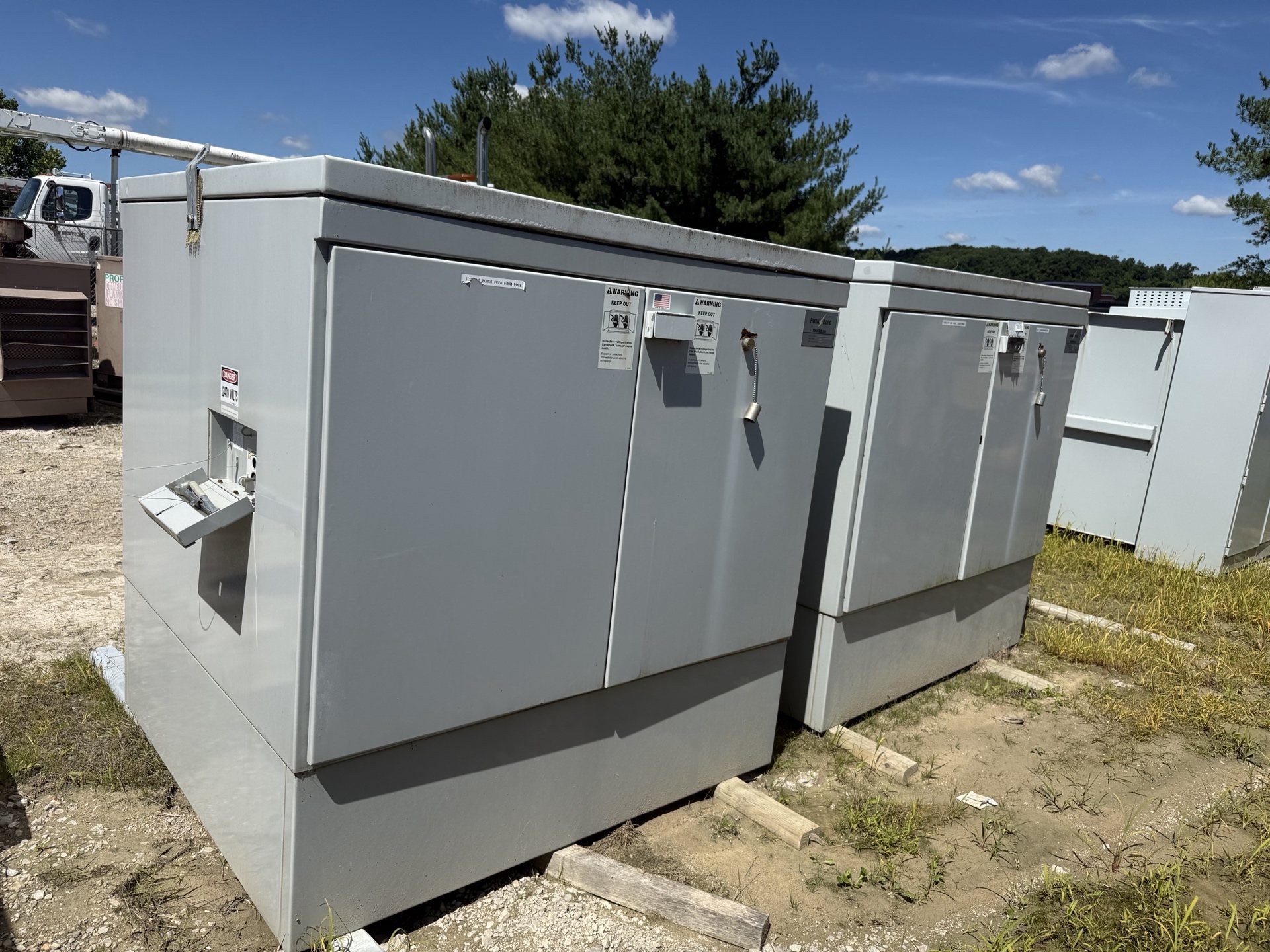
Separate the lineup from nearby electrical assets
An authorized owner in Hillsborough County can begin by distinguishing the industrial low-voltage lineup from equipment that merely shares its room, supports the same process, or connects to adjacent systems. A hypothetical seller might identify main and feeder sections as the equipment under consideration while treating transformers, control panels, bus duct, or building distribution gear as separate assets unless records clearly include them. The physical and commercial boundaries need not be identical.
That distinction matters because a lineup can be evaluated as a group, as identifiable sections, or as only part of a larger electrical installation. Existing accessible photographs, equipment schedules, or asset records may help describe what is included without requiring anyone to inspect or operate the equipment. If a record does not establish whether a neighboring item belongs to the lineup, mark that relationship unknown rather than assuming it is included.
Use identification records without treating them as a condition report
Nameplates can help distinguish the main section from feeder sections and provide identifying details for review, but they do not by themselves establish present condition, completeness, or resale suitability. An owner may share existing accessible nameplate photographs or transcribed information if available. Do not open an enclosure or approach equipment to obtain missing details; information that cannot be safely accessed by qualified personnel can remain unknown at the initial review stage.
Existing drawings may add useful context by showing section designations, feeder relationships, or the lineup’s place in a larger installation. Their date and status matter: an older drawing may not reflect later changes, and a marked-up copy may describe a proposed arrangement rather than the current one. Share available documents with that limitation noted. Florida Switchgear Buyers does not require sellers to test equipment, and no test result should be invented or inferred from paperwork.
Define ownership and authority before discussing a sale
A seller should establish that it owns the proposed assets or has authority to act for the owner. This is especially relevant when a facility operator, landlord, lender, contractor, or liquidation representative is involved; possession of records or access to a site does not necessarily establish the right to sell the lineup. If ownership is divided among entities or subject to a sale process, explain that status and identify what authorization remains outstanding.
The offer and the precise assets purchased depend on review, so a description of the lineup is not itself an acceptance or a commitment to buy every section. For a hypothetical seller, the main and feeders might be presented together while the seller asks whether a subset can be considered. Any proposed split should be described clearly, including uncertainty about shared components or records. The seller should not treat an informal equipment label as a final transaction boundary.
Set removal boundaries without undertaking electrical work
A potential equipment purchase is distinct from wholesale facility demolition or general electrical contracting. The discussion should identify the purchased assets and the boundary between those assets and equipment or infrastructure that will remain. For example, an owner may want a lineup considered for purchase while retaining adjacent distribution equipment; the parties would need to clarify the purchased scope during review rather than assume that the entire room or electrical system is included.
For equipment purchased, Florida Switchgear Buyers handles crane, rigging, disconnects, loading, freight, and hauling. That does not authorize a seller to perform or arrange unsafe handling, nor does it make the company a general electrical-services provider. Only qualified professionals should handle electrical equipment. The seller should not open, test, energize, isolate, disconnect, move, or otherwise handle the lineup to prepare it for a possible sale; removal planning belongs within the reviewed transaction scope.
Describe staged availability precisely
Industrial equipment may become available in stages, but the sequence should be presented as a planning condition rather than a confirmed schedule. A hypothetical seller might know that one group of feeder sections could be released before the main section, while another portion remains in service or subject to approval. State which assets are being discussed at each stage, what is confirmed, and what remains contingent; do not imply a date or promise availability that has not been established.
Staging can affect whether sections are offered together or separately and whether records correspond to the same group of assets. If a drawing covers the full lineup but only some sections may be released, identify that mismatch. If the seller does not know whether a section can be separated from the proposed scope, label the point unknown. A review can then focus on the actual proposed assets without turning an operational assumption into a sale commitment.
Prepare a useful review package
A concise package can bring together the seller’s authority, a section-by-section description, existing accessible nameplate images, available drawings, and a clear account of what is included, excluded, or not yet known. It can also explain whether availability is simultaneous or staged and identify any approvals still pending. These records support discussion; they do not substitute for a condition assessment or guarantee that any particular equipment will be purchased.
Florida Switchgear Buyers considers used, surplus, and decommissioned switchgear and related equipment across all voltage classes, including equipment from decommissioned data centers and closed power plants. It makes cash offers and pays upfront for equipment purchased; the offer and assets accepted remain subject to review. For a Hillsborough County equipment-sale discussion, contact (614) 715-3047 or saleselectricalbuyers@gmail.com. No seller testing is necessary.