Start With the Information Handoff
When drawings or equipment schedules are unavailable, an authorized seller in Lee County can still prepare a useful handoff by separating what can be seen in existing records from what remains unknown. The goal is not to reconstruct a technical history from memory. It is to give a decision maker and a potential buyer a clear, bounded account of the equipment being offered for review.
For example, a hypothetical seller may have a few photographs and a partial inventory but no current one-line diagram. The seller can identify those materials as incomplete, note who supplied them if known, and avoid treating an old label or recollection as proof of configuration. This distinction helps reviewers assess the information without mistaking a preliminary description for verified equipment data.
Use Accessible Labels and Existing Images
Legible external labels can provide useful identification details without requiring anyone to open or examine energized equipment. A seller may transcribe visible manufacturer, model, catalog, or serial markings when readable, while noting whether a character is obscured or uncertain. If a label cannot be read from available materials, mark that field unknown instead of filling it from a similar-looking unit or remembered specification.
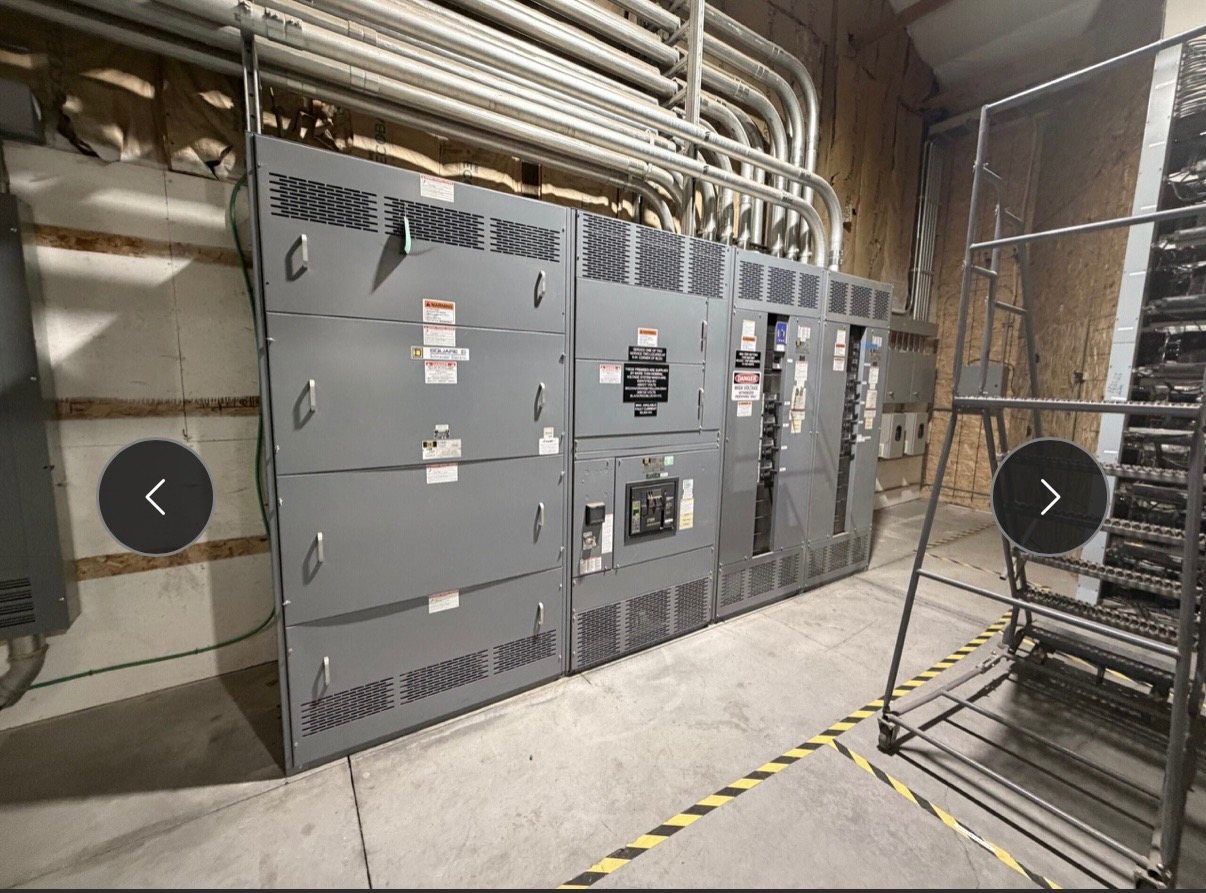
Existing photographs can show the overall lineup and visible exterior features, provided they are already accessible and can be shared safely. Pair each image with a plain caption such as the seller’s section identifier or the angle shown, if known. Do not infer internal contents, ratings, condition, or completeness from an exterior image; those matters may require qualified review and remain subject to buyer assessment.
Describe the Lineup Without Guessing
A section count is more useful when its basis is stated. The seller might report that an existing photo appears to show five sections, while making clear that the count has not been confirmed against a current drawing. If sections are grouped under a seller-created identifier, label it as an inventory reference rather than an original factory designation. This allows parties to discuss the same apparent grouping without overstating certainty.
Describe known conditions narrowly and attribute them to their source. A seller can say that a photograph shows a missing exterior panel, if that is plainly visible, but should not translate the image into a conclusion about internal damage or operating status. Where a condition is based on an old note, identify the note’s date if available; if timing or authorship is unknown, say so rather than presenting it as current inspection information.
Separate Records, Observations, and Unknowns
A compact information summary can distinguish three categories: details transcribed from labels or documents, visible observations in existing images, and unresolved questions. The categories matter because a copied value, a visual impression, and an assumption carry different levels of confidence. For instance, a voltage marking visible on a label is not interchangeable with a guessed system voltage based on a former application or another piece of equipment.
Unknowns should remain explicit even when they complicate an initial conversation. The seller may not know whether all pictured sections are included, whether loose components belong to the lineup, or whether documents relate to the current configuration. Listing these points as unconfirmed helps the decision maker avoid representing them as sale inclusions and lets a buyer identify what needs clarification before evaluating a potential purchase.
Coordinate the Seller and Decision Maker
Before sharing an offer package, the authorized seller and the person coordinating the transaction can agree on a consistent equipment description and identify who can answer questions about the available records. That coordination does not establish ownership of any particular facility; it simply reduces the risk that separate contacts provide conflicting counts, identifiers, or inclusion assumptions. If authority to offer the assets is not settled, clarify that internally before presenting them as available for sale.
Florida Switchgear Buyers reviews used, surplus, and decommissioned electrical switchgear and related equipment across voltage classes, including equipment from decommissioned data centers and closed power plants. A seller may share accessible documentation and photographs for review; seller testing is not required. An offer and the precise assets considered for purchase depend on that review, so an initial inventory should not be framed as confirmation of acceptance or value.
Plan the Transaction Without Handling Equipment
If equipment is purchased, Florida Switchgear Buyers handles crane, rigging, disconnects, loading, freight, and hauling for the purchased assets. That scope concerns removal and transport of equipment included in a purchase, not wholesale facility demolition or general electrical contracting. Sellers should not open, test, energize, isolate, disconnect, move, or otherwise handle switchgear to improve an information package; only qualified professionals should handle electrical equipment.
A hypothetical seller with sparse records can send the available label information, section-count basis, condition notes, and clearly marked unknowns to Florida Switchgear Buyers at (614) 715-3047 or saleselectricalbuyers@gmail.com. Cash offers are made, and payment for equipment purchased is upfront. Because the offer and included assets depend on review, keep the handoff factual and limited to what the seller is authorized to represent.