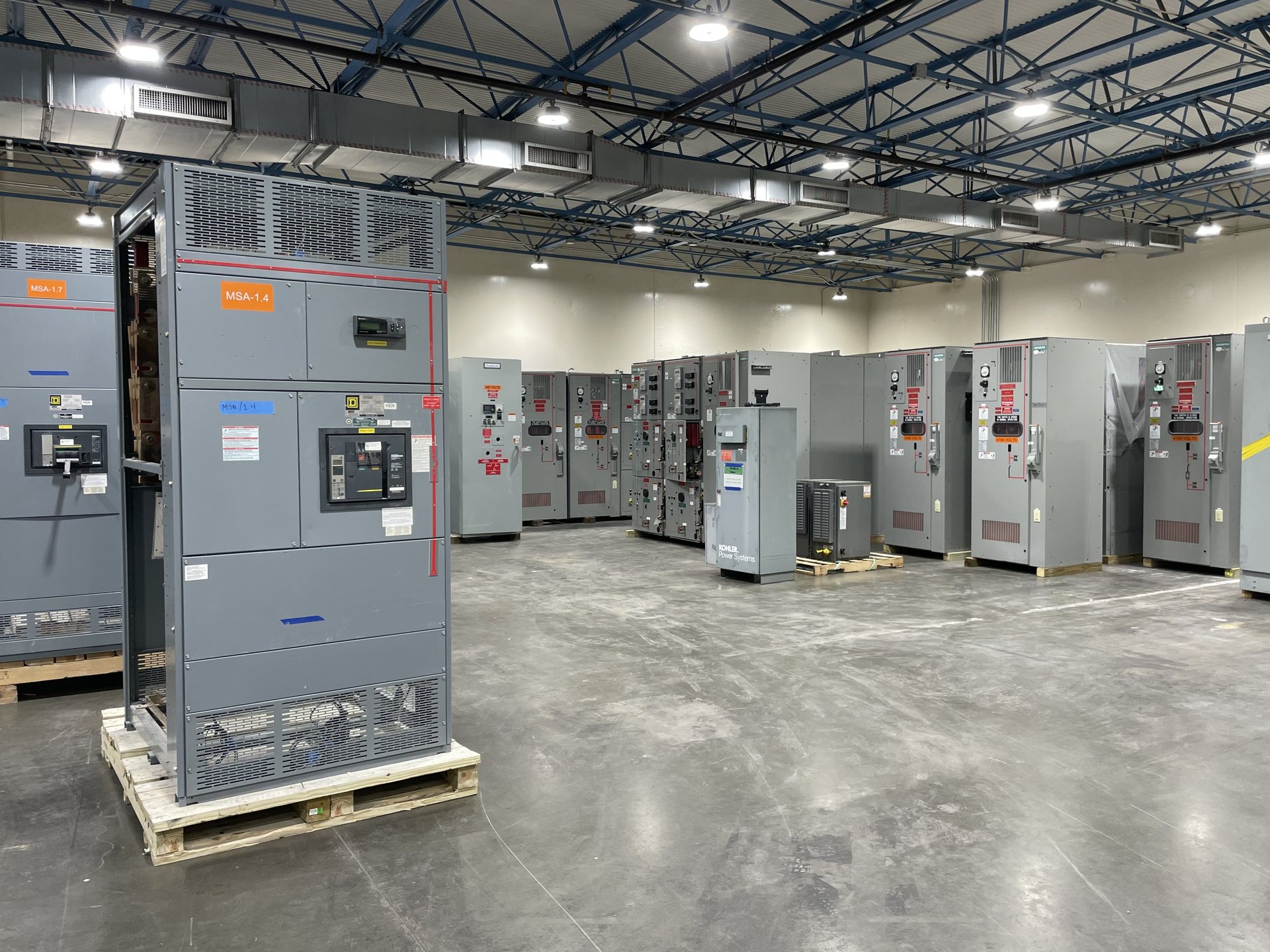
Identify the enclosure as it stands
Pad-mounted switchgear may appear in an inventory as a complete outdoor enclosure, as one asset among several electrical items, or as equipment left after a site has stopped operating. Start with what can be observed from an existing exterior view: that the equipment is described as pad-mounted switchgear, its general location on the property, and whether it appears to be a single enclosure or part of a group. Do not infer its function or configuration from appearance alone.
If the inventory uses a facility tag, asset number, or description from an existing record, include that wording and distinguish it from information read directly from the equipment. A seller does not need to resolve uncertainty by approaching or handling the enclosure. If the equipment’s identity, status, or relationship to nearby electrical assets is unknown, say so; a clear unknown is more useful than a guessed specification.
Share readable identification details
A readable nameplate can help identify the equipment under review. Share an existing photograph or transcription of visible manufacturer, catalog or model designation, serial number, voltage marking, and other listed ratings, when legible. These details are identification information, not proof of present operating condition or suitability for another installation. If the plate is partly obscured, weathered, or unavailable in existing records, note that limitation rather than filling gaps from memory.
Names such as a manufacturer or product family may help distinguish one item from another, but they do not establish a business relationship or guarantee acceptance. A photo already available from a safe viewpoint can be useful; no new image is worth approaching equipment if access is unsafe or restricted. Florida Switchgear Buyers reviews the information provided to determine whether it can make an offer and which specific assets, if any, are included.
Describe known compartments without opening anything
Outdoor switching enclosures can be listed with different compartment arrangements, and sellers may have reliable records naming sections or functions. If documentation identifies compartments, describe those labels as recorded—for example, a switching section, metering section, or cable compartment only when that wording is actually supported. Do not assume that every enclosure contains the same sections, or that a visible door or panel reveals what is inside.
Do not open doors, remove covers, or ask staff to inspect internal components for a sale description. If compartment details are not documented, report them as unknown. Nearby transformers, protective devices, controls, or other equipment should not be attributed to the switchgear unless records or clear asset tags establish the distinction. That boundary matters when a buyer is reviewing a mixed inventory and deciding which individual assets may be considered.
Separate the offered asset from nearby equipment
A pad-mounted enclosure may sit beside other equipment that the owner also hopes to sell, such as a transformer, meter-related equipment, cables, or a separate control cabinet. List each item separately where possible, using existing asset records or visible labels to distinguish them. State plainly whether the seller is offering only the switchgear enclosure or asking for review of additional identified assets as well.
The scope of a purchase is determined by review, not by proximity or a broad description such as “the electrical yard.” Florida Switchgear Buyers buys used, surplus, and decommissioned switchgear and related equipment across voltage classes, including equipment from closed power plants and decommissioned data centers. This does not mean every adjacent item or an entire facility is included. The seller should identify the proposed assets and leave any uncertain boundary explicitly unresolved.
Report exterior condition and ownership accurately
Exterior notes can help make an inventory more useful without suggesting an internal inspection. Describe only conditions already known or visible from an existing, safe vantage point, such as apparent paint wear, a dent, corrosion, a missing exterior label, or damage recorded in maintenance documents. Avoid turning an observation into a conclusion about electrical or mechanical condition. If no condition record exists, say that condition information is unavailable.
Confirm who owns the equipment and who is authorized to discuss its sale, especially when it remains at a leased, shared, or formerly operated site. Existing bills of sale, asset registers, or decommissioning records may help establish ownership and identify restrictions, but do not assume that possession alone proves authority to sell. If title or responsibility is unresolved, disclose that before an offer is considered rather than treating it as settled.
Provide access context and next steps
Useful access information is descriptive, not a request for the seller to prepare equipment. Existing site notes may identify gates, escort requirements, operating hours, loading constraints, or whether a crane or rigging access point is known. State what is documented and what remains unconfirmed. Do not disconnect, isolate, move, or otherwise handle electrical equipment; only qualified professionals should handle it. No seller testing is necessary, and a seller is not expected to test the switchgear.
For a potential sale, share available photos and records and identify the exact assets being offered. Florida Switchgear Buyers makes cash offers and pays upfront for equipment it purchases; the offer and precise purchase scope depend on review. For purchased equipment, it handles crane, rigging, disconnects, loading, freight, and hauling. This concerns purchased assets, not whole-facility demolition or general electrical work. Contact (614) 715-3047 or saleselectricalbuyers@gmail.com to discuss the inventory.