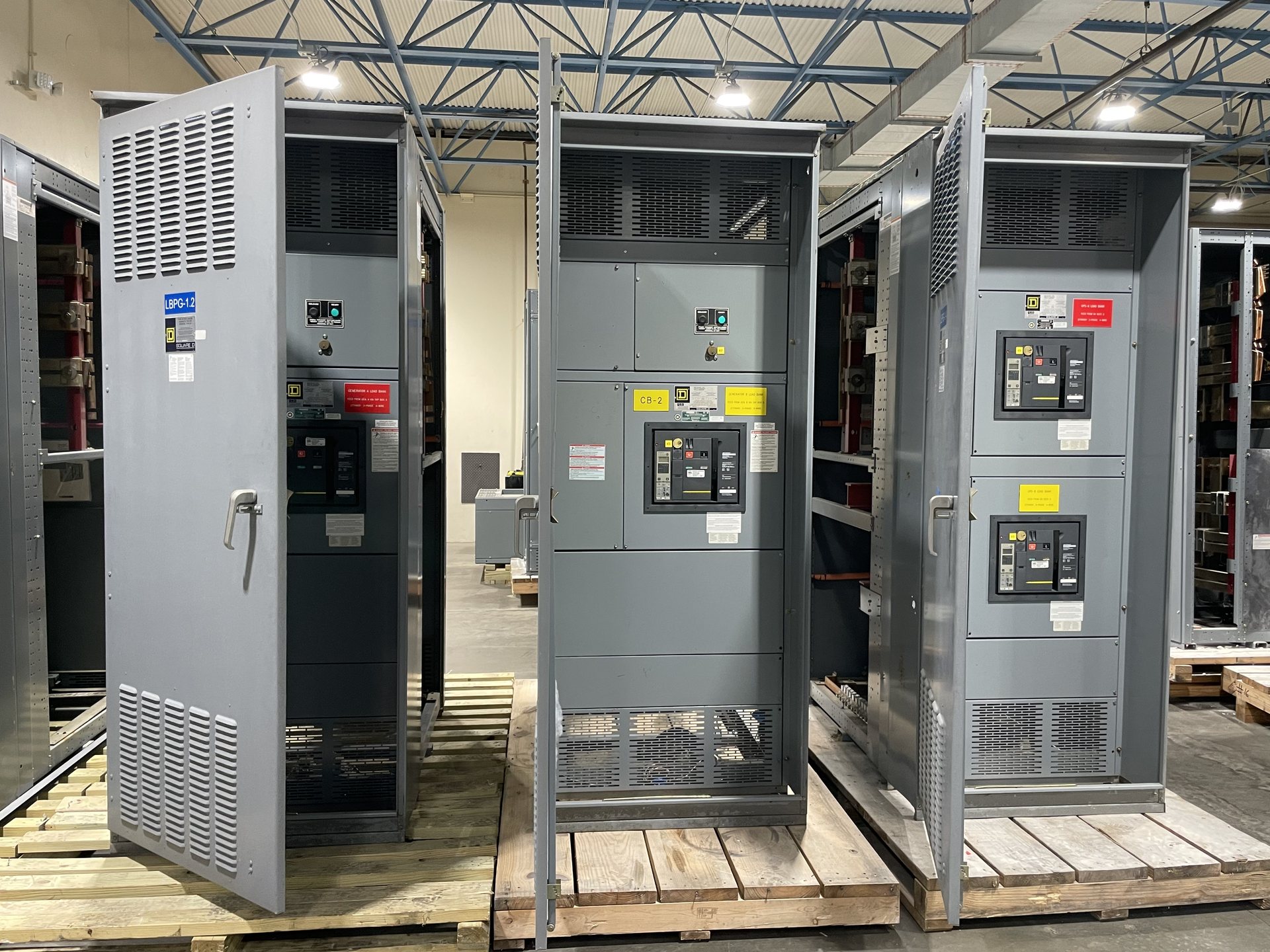
Scope the sale by asset identity
Start with the equipment the seller can identify from existing records or photographs, rather than treating every low-voltage drawout assembly as one item. A breaker, its cradle or removable mounting structure, and the cubicle or switchgear section may have separate identities and may not all be included in a sale. Record each as a distinct asset when documentation allows, and mark any relationship that is uncertain.
For example, an inventory may list several breakers while the associated cradles remain installed in cubicles, or it may describe complete sections without a separate breaker schedule. Neither description establishes that all pieces are available or that they will be purchased together. State what is offered, what is excluded, and what is unknown; the precise assets purchased depend on review.
Preserve identifying records
Useful information can come from existing asset registers, maintenance records, drawings, or accessible photographs of labels and equipment exteriors. Capture the wording as it appears, including manufacturer identification, catalog or type references, serial numbers, and any separate markings on breaker, cradle, and cubicle. Do not infer a model from resemblance or transfer an identifier from one component to another.
A clear record should also distinguish the source of each detail: a nameplate transcription, a drawing reference, or an inventory entry may carry different levels of certainty. If a label is obscured or a document conflicts with another, preserve that discrepancy rather than resolving it by guesswork. Sellers do not need to test equipment or create new technical documentation for a purchase discussion.
Separate rating from condition
A nameplate current rating is an identification detail, not a report of present operating condition. It does not establish that a breaker functions, that it has been maintained, or that it matches a particular installation. Keep recorded ratings attached to the component they identify, and avoid using a cubicle or switchgear rating as though it automatically describes every breaker associated with that assembly.
Condition information should be reported only to the extent already known from records or direct organizational knowledge. If the service history is unavailable, say so; if records describe prior maintenance, distinguish that history from a current assessment. Do not energize, test, open, rack, remove, or otherwise handle equipment to answer a buyer’s questions. Qualified professionals alone should handle electrical equipment.
Account for offered and missing components
An inventory is more useful when it names absent, excluded, or unconfirmed pieces explicitly. A listed breaker with no documented cradle is different from a breaker and cradle offered together; a cubicle without a confirmed breaker assignment is not proof that a breaker is missing from the site. Use terms such as “not documented” or “relationship unknown” when the records cannot settle the point.
The same care applies to accessories and related equipment. If existing paperwork identifies items as included, list them separately where practical; if it does not establish their presence, do not imply they are part of the offer. A buyer can review the proposed scope and available evidence, but acceptance and the exact equipment purchased remain contingent on that review.
Coordinate review without handling equipment
For a potential sale, gather the inventory, relevant documents, and photographs already available, then arrange a conversation about which assets are being considered. Mention access constraints, known exclusions, and any uncertainty about component relationships. This helps focus review on the actual proposed scope without asking the seller to inspect internal parts or make the equipment ready for removal.
Florida Switchgear Buyers purchases used, surplus, and decommissioned switchgear and related equipment across all voltage classes, including equipment from decommissioned data centers and closed power plants. For equipment it purchases, the company handles crane, rigging, disconnects, loading, freight, and hauling. This is equipment purchasing and removal for purchased assets, not a promise of facility demolition or general electrical services.
Prepare for a buyer conversation
A useful initial discussion can establish what is offered, which identities are documented, what records can be shared, and what remains unknown. Florida Switchgear Buyers makes cash offers and pays upfront for equipment purchased; the offer and purchase scope are subject to review, and no acceptance, price, or schedule should be assumed in advance. No seller testing is necessary, and the seller should not move or dismantle equipment to support the discussion.
To discuss an inventory, contact Florida Switchgear Buyers at (614) 715-3047 or saleselectricalbuyers@gmail.com. Share only accessible documentation and photographs, and describe uncertain details as uncertain. If a breaker’s nameplate data is clear but its service condition is not, keep those facts separate. That distinction gives the buyer a more accurate basis to review the proposed assets without turning incomplete records into claims.