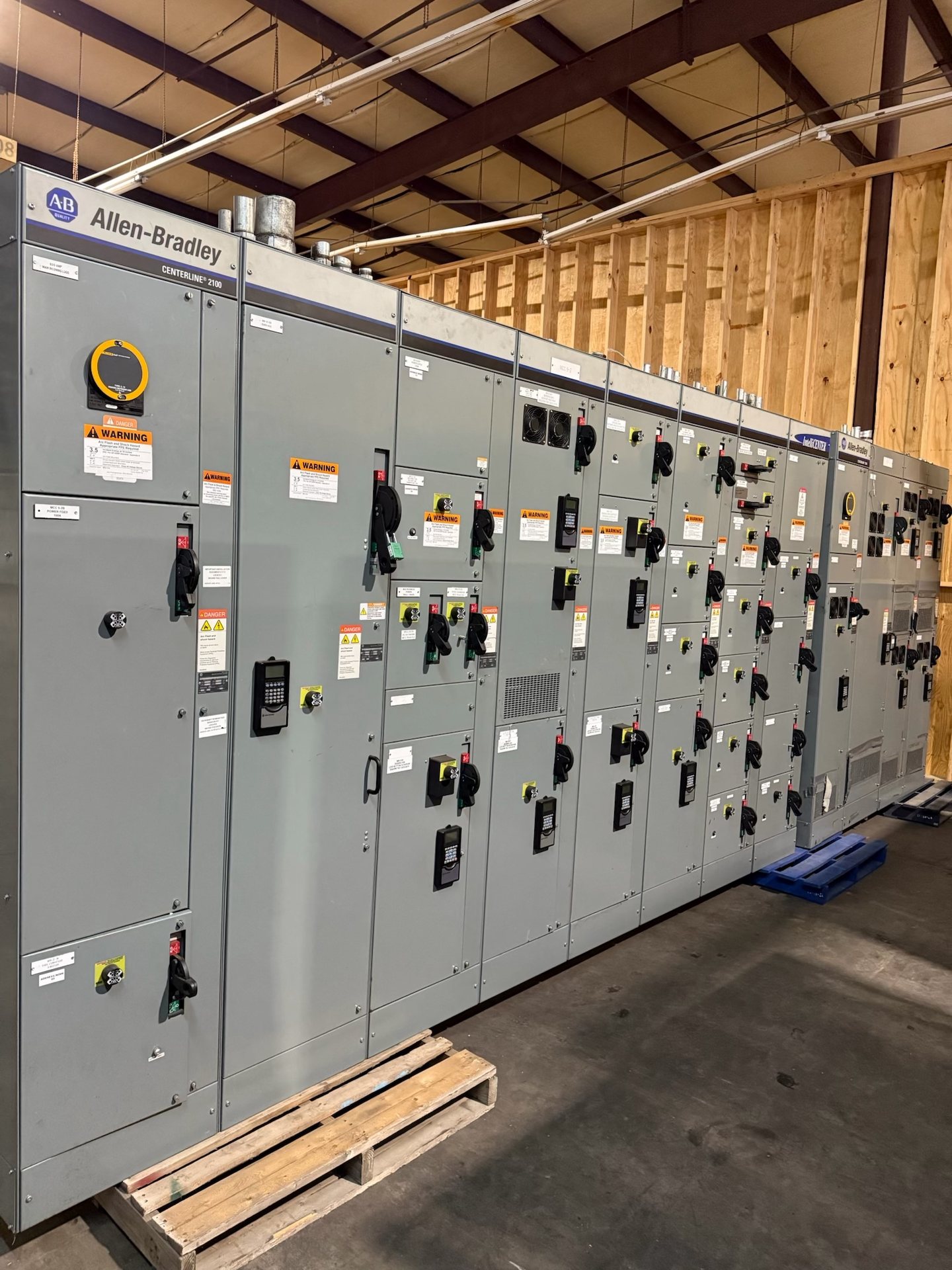
Separate the bucket label from the starter label
An MCC bucket label identifies a unit in a motor control center lineup; a controller or starter label may identify the control equipment or function associated with that unit. They can contain overlapping information, but they are not interchangeable records. When both labels are already safely accessible, photograph or transcribe them as separate items so a later reviewer can see which wording belongs to which component.
A starter description such as a motor or process designation does not, by itself, establish the bucket’s electrical rating, configuration, or suitability for another lineup. Likewise, a bucket identifier does not prove what starter components are present. Preserve the exact text, including abbreviations and punctuation, and mark any interpretation as an interpretation rather than copying it into the record as a confirmed specification.
Keep the information handoff traceable
A useful handoff lets the person coordinating a potential sale distinguish direct observations from later explanations. For each image or transcription, note whether it shows a bucket label, a starter or controller label, or a larger lineup identifier. If someone supplies a functional description from records or recollection, attribute it to that source and keep it separate from the visible label text.
The decision maker may be working from photographs rather than standing where the equipment is installed. A clear sequence—lineup identification, unit position if already documented, then individual labels—can make review easier without asking anyone to approach or handle electrical equipment. If a photograph does not show enough context to connect a label to a unit, state that limitation instead of assuming the relationship.
Record quantities without implying completeness
Count only what the existing inventory or safely obtained views support. If records list twelve buckets but photographs show labels for nine, report both figures and explain that the photographed set may be incomplete. Avoid converting a count of labels into a confirmed count of saleable units: labels can be absent, duplicated in records, or associated with equipment whose purchase status has not yet been reviewed.
Use consistent identifiers where they already exist, such as lineup name and bucket position from an inventory. If position is unknown, say so; do not infer it from a starter’s application name. Separate quantities by lineup when the documentation supports that distinction, and flag mixed or unassigned items for review. This lets a buyer assess the proposed group without treating uncertain counts as established facts.
Describe the parent lineup carefully
A bucket label is more informative when its parent MCC lineup can be identified, but the connection should be documented rather than presumed. An existing lineup tag, drawing reference, asset list, or photograph may provide context. Record which source connects the unit to the lineup. If a loose label, inventory row, or older document cannot be tied to a specific assembly, preserve that uncertainty instead of assigning it to the nearest apparent group.
Lineup association is not proof of interchangeability. Similar names or matching-looking identifiers do not establish that a bucket will fit, operate with, or be compatible with another MCC. Ratings and configuration must not be inferred from a parent lineup name or starter label alone. Where compatibility matters to a proposed transaction, leave the determination to qualified review of available information; the seller need not test equipment for a sale inquiry.
Make unknowns useful to the reviewer
A concise unknowns note can prevent a reviewer from mistaking silence for confirmation. For example, state that the bucket label is legible but the starter label is not visible in the existing image, or that a lineup identifier appears in a record but its relationship to a photographed unit is unconfirmed. If no rating, manufacturer, or model is documented, identify those fields as unknown rather than filling them from memory or a similar unit.
Share existing accessible photographs and records; there is no need to open equipment, energize it, test it, disconnect it, or move it to improve the file. Electrical equipment should be handled only by qualified professionals. If labels cannot be viewed safely, leave them undocumented and note why access was unavailable. A buyer can review the information provided and determine what further details, if any, are relevant to considering the assets.
Connect label records to a potential sale
Florida Switchgear Buyers purchases used, surplus, and decommissioned switchgear and related equipment across all voltage classes, including equipment from decommissioned data centers and closed power plants. It makes cash offers and pays upfront for equipment purchased; sellers are not required to test it. For purchased equipment, the company handles crane, rigging, disconnects, loading, freight, and hauling. Purchase scope and any offer depend on review, so a label packet supports evaluation but does not establish acceptance or value.
When the seller or another decision maker is ready to share the documented labels, quantities, lineup references, and known gaps, contact Florida Switchgear Buyers at (614) 715-3047 or saleselectricalbuyers@gmail.com. Keep the distinction between equipment sale and facility work clear: the stated service concerns purchasing and removal of equipment that is purchased, not wholesale facility demolition or general electrical services. Include only information already available and safe to share.