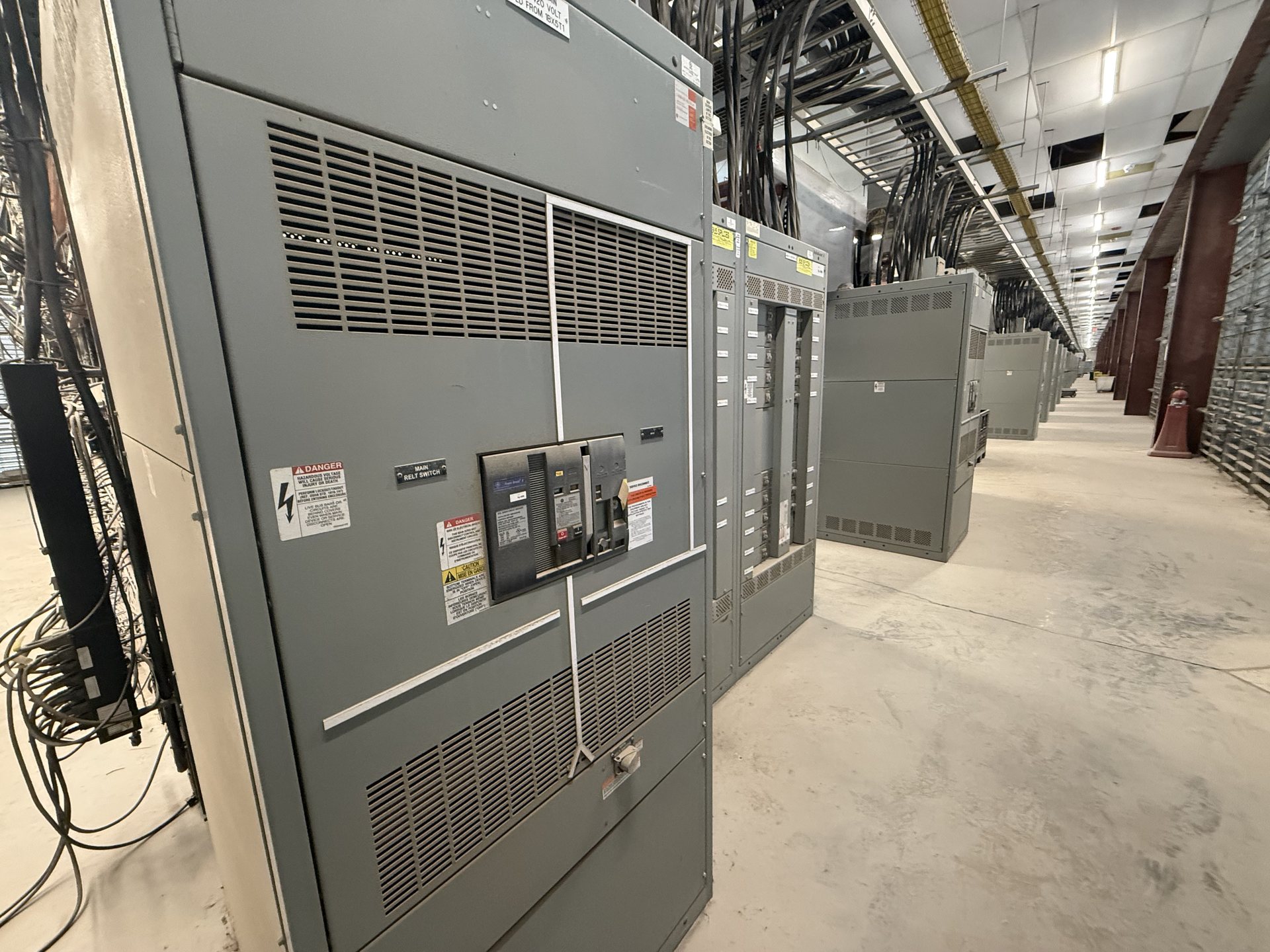
Sections Retained in Original Packaging
A stored switchboard section may remain in its original crate, wrapped in protective material, or partly covered after being removed from service. Packaging can help explain how the item has been kept, but it does not establish the section’s present condition. If exterior markings, shipping labels, or crate identifiers are accessible, record them as they appear. Avoid opening packaging or shifting the section to improve a photograph; an unknown interior condition should remain unknown.
For a potential sale, distinguish packaging that appears intact from packaging that is damaged, missing, or visibly disturbed. Note whether identification is on the crate, the equipment, or both, and whether the identifiers seem to correspond. If no readable markings are visible without handling, say so rather than inferring a manufacturer or configuration. Florida Switchgear Buyers reviews used, surplus, and decommissioned switchgear and related equipment in all voltage classes; any offer and the precise assets considered depend on review.
Visible Damage and Storage Exposure
Describe only what can be seen from the equipment’s accessible exterior and existing photographs. Examples might include a dented panel, scraped finish, torn protective wrap, or discoloration on a crate, if actually present. Separate an observation from its possible cause: a mark does not establish when it occurred or whether it affects internal components. Do not characterize equipment as operational, defective, or repairable based on appearance alone.
Storage history can add context when records or knowledgeable personnel can support it. If the section was kept indoors, in a covered area, or outdoors, report that only when known, and qualify any gaps in the timeline. Moisture exposure, temperature conditions, and prior movement may be undocumented. Being stored—whether briefly or for an extended period—does not verify electrical or mechanical condition, and the seller does not need to test the equipment before sharing it for review.
Labels, Identification, and Record Gaps
Visible nameplates, inventory tags, section numbers, and handwritten labels can help distinguish one stored section from another, especially when several similar-looking items are in a surplus inventory. Share readable information as recorded, along with photographs already available. If a label is obscured or absent, identify that as a limitation instead of supplying a likely value. A partial identifier can still be useful when its uncertainty is clearly stated.
Existing records may include purchase or decommissioning paperwork, storage notes, drawings, or an inventory description, but their presence and completeness vary. Do not assume a document describes the exact section unless its identifiers align. Where the record set is incomplete, note which details are confirmed and which remain unknown, such as storage duration or configuration. This lets a buyer review the actual information available without turning assumptions into equipment specifications.
Covers and Other Included Items
A stored section may be accompanied by covers, doors, trim, barriers, or other pieces that were retained separately; these are examples, not a guaranteed bill of materials. Record items that are visibly present and whether they are attached, packaged alongside the section, or simply listed in an inventory. If an item’s purpose or fit is uncertain, describe it neutrally rather than calling it a matching accessory. Do not open or alter the equipment to check completeness.
Accessory status can affect how an inventory should be presented, but a visual count is not proof that every required component is present. If covers are missing, damaged, or of uncertain association, state that plainly. If the section is photographed without a separate group of stored items, avoid implying that none exist elsewhere. Florida Switchgear Buyers can review related equipment as well as switchgear, while the specific assets included in any purchase remain subject to review.
Mixed Lots and Multiple Storage Locations
Stored sections may be offered individually, grouped by building, or mixed with other electrical equipment. A clear inventory separates each identifiable section and its known accompanying items, even when the seller is considering a combined sale. If one group shares a storage area but has different labels or packaging, preserve those distinctions in the description. Do not infer that neighboring items belong together merely because they were stored nearby.
When storage locations or histories differ, represent those differences rather than assigning one condition narrative to the entire lot. For example, if records identify separate storage periods, report them by section or group; if the history cannot be matched to individual pieces, say so. Photos and accessible documentation can be shared without handling equipment. For review, contact Florida Switchgear Buyers at (614) 715-3047 or saleselectricalbuyers@gmail.com; no seller testing is necessary.
Sale Review and Safe Boundaries
A useful sale inquiry gives a reviewer enough context to distinguish visible facts from unanswered questions: section identifiers, packaging, visible exterior condition, known storage history, and any covers or accessories believed to be included. An absent detail is not automatically a negative finding; label it unknown. Florida Switchgear Buyers makes cash offers for equipment it purchases and pays upfront for purchased equipment. Whether an offer is made and exactly which assets are purchased are determined through review, and no price can be assumed.
For purchased equipment, the company handles crane, rigging, disconnects, loading, freight, and hauling. That applies to assets it purchases and should not be confused with wholesale facility demolition or general electrical services. Sellers should not open, test, energize, isolate, disconnect, move, or otherwise handle switchgear to prepare it for sale. Electrical equipment must be handled only by qualified professionals; existing accessible records and photographs are sufficient to begin an informed discussion.