Match the lineup to its records
Before describing an MCC lineup for sale, establish which photographs, drawings, schedules, and equipment records refer to that specific lineup. A room may contain more than one assembly, while an old panel schedule may cover a former arrangement. Compare visible section labels and lineup identifiers with accessible records, and note when the connection is uncertain rather than assigning a document to the equipment by assumption.
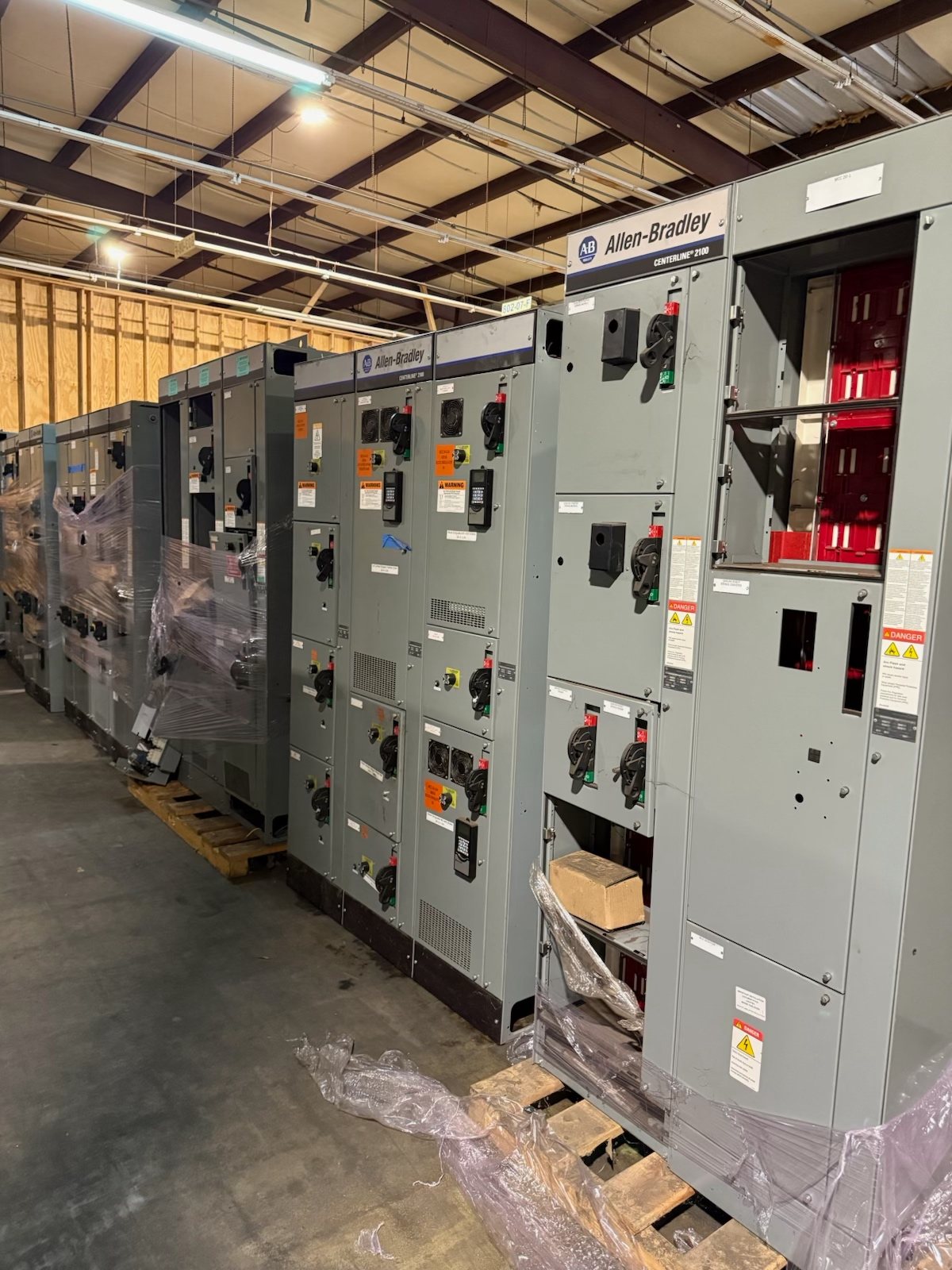
A useful description separates what is physically visible from what a record says. For example, a photograph may show several sections and open spaces, while a dated schedule lists bucket names that do not clearly match those positions. Preserve that distinction: identify the photograph or record and its date if known, then mark the relationship as confirmed, possible, or unknown. No seller testing is necessary to provide this basic context.
Describe positions without assuming completeness
Create a position-by-position account using only information available in existing records and safe, accessible views. For each position, state whether a bucket is visibly present, visibly absent, or not possible to determine from the material provided. If a designation is readable, reproduce it carefully; if it is obscured or illegible, say so instead of guessing. This helps a buyer assess the lineup as presented without implying that every listed component remains installed.
An empty position and an unknown position are not interchangeable. A clearly visible vacant space may be documented as empty, while an area concealed in a photograph or not represented in the records should remain unknown. Likewise, a missing bucket mentioned in an old note may not establish which present-day position is affected. Explain the source of each observation and avoid converting historical descriptions into claims about current configuration.
Record section nameplates and labels
Section nameplates can help identify the lineup and distinguish one section from another, but their information should be reported as observed, not expanded into unsupported specifications. Share readable text or clear existing photographs of the nameplate, including any visible identifier that links sections together. If a plate is damaged, blocked, or absent from the available images, describe that limitation. Do not infer a manufacturer model or rating from appearance alone.
Position labels, bucket legends, and equipment schedules can add useful context when they are legible and attributable to the assembly. Record the wording as it appears, including abbreviations, and flag conflicts between labels and documents. A label that names a former load does not by itself establish what is installed now, and a blank label does not establish that a position is unused. Qualified professionals should handle electrical equipment; sellers should rely on existing accessible information.
Explain visible condition and unknowns
Describe visible condition in neutral, specific terms: for instance, whether a photograph shows intact exterior covers, discoloration, dents, or areas that cannot be seen. These observations are not a condition assessment and do not establish internal condition, operational status, or suitability for reuse. Avoid calling a lineup complete, functional, or ready for service unless that conclusion is supported by qualified evaluation; no such evaluation is required simply to discuss a potential purchase.
Missing buckets do not prove either that the remaining assembly is usable or that it has no value. The effect depends on the particular equipment, configuration, and information available for review. An owner may know that positions were removed but not have records identifying their contents; that is a meaningful unknown to disclose, not a reason to fill gaps with a likely-sounding explanation. Keep known facts, historical notes, and unanswered questions visibly separate.
Set clear boundaries for a potential sale
Florida Switchgear Buyers purchases used, surplus, and decommissioned electrical switchgear and related equipment in all voltage classes, including equipment from decommissioned data centers and closed power plants. A potential transaction may include only assets identified and accepted after review; describing an entire lineup does not establish that every section, bucket, or associated item will be purchased. The business makes cash offers and pays upfront for equipment purchased, with offer and scope contingent on review.
The purchasing process is not a request for the seller to prove operation. Sellers do not need to test the equipment, and should not open, energize, isolate, disconnect, move, or otherwise handle it to gather information. Existing accessible photographs and documentation may be shared, with missing details marked unknown. For purchased equipment, the company handles crane, rigging, disconnects, loading, freight, and hauling; this is removal tied to purchased assets, not wholesale facility demolition or general electrical service.
Prepare a useful handoff
A concise handoff can identify the lineup, describe the number of visible sections if known, and attach available nameplate images, position schedules, and photographs that show the exterior and open spaces. Include document dates when available and say whether a count comes from a record or a photograph. If images cover only part of the assembly, state that plainly. This gives reviewers a basis to ask focused questions without requiring unsafe access or unsupported claims.
When records disagree or positions cannot be seen, retain the uncertainty rather than selecting the most convenient version. A potential buyer can review the material and determine what assets, if any, fit an offer; neither a missing bucket nor a detailed inventory guarantees acceptance, value, or a particular purchase scope. To discuss available information, contact Florida Switchgear Buyers at (614) 715-3047 or saleselectricalbuyers@gmail.com.